Cultivating opportunity in agriculture




This article has been supplied and will be available for a limited time only on this website.
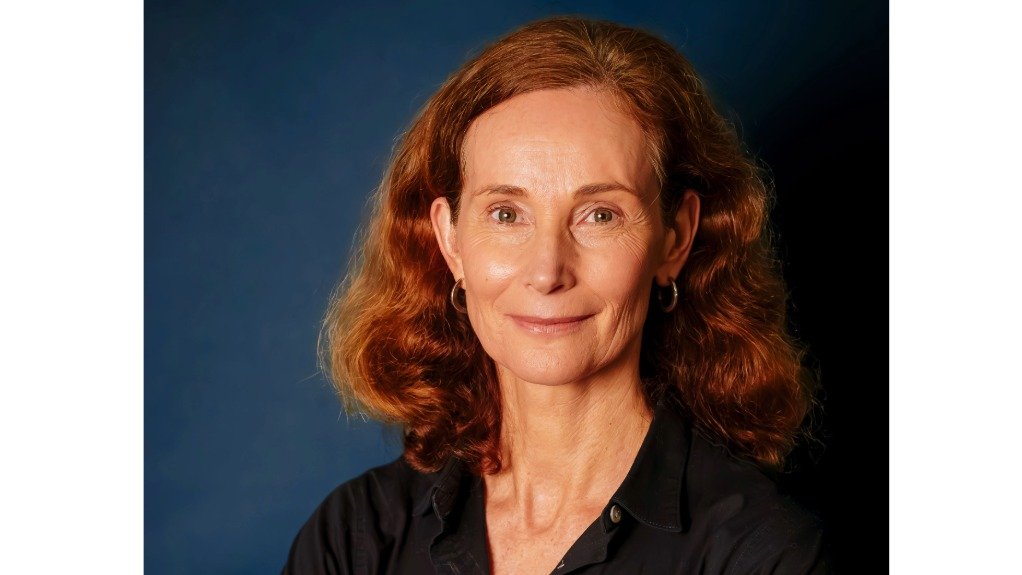
United Exports, a global leader in agriculture, is playing a significant role in developing skills within South Africa’s agricultural sector, creating opportunities for employees to gain recognised qualifications, strengthen their capabilities and progress in their careers.
For Lucy Blackburn, Learning and Development Manager at United Exports, one of the most meaningful outcomes of this strategy is seeing people develop the skills, confidence and experience to advance. The company has already developed a significant number of women through its internship, graduate and learnership programmes, with many progressing into junior and middle-management positions.
Blackburn established a learning and development function that did not previously exist within the company, making workplace learning an integral part of United Exports’ approach to developing its employees and surrounding communities.
From classroom to corporate learning
Blackburn’s own career began in the late 1990s. She started as a primary school teacher before becoming a university lecturer in primary school education and later developing educational materials for educational publishers.
“United Exports recognised the value of my background in education. They understood that the experience I had gained as a teacher, lecturer and materials developer — particularly my understanding of how people learn and develop skills — could be applied to the workplace,” she explains.
With the support of her colleagues, she built the function from the ground up. It has since grown into a broad portfolio encompassing adult literacy and numeracy, bursaries, internships, graduate programmes, plant production learnerships and leadership development.
Learning that develops confidence
For Blackburn, however, the true success of these skills development initiatives lies beyond the number delivered or qualifications achieved.
“Its real value lies in what happens to people as a result of learning — the confidence they develop, the opportunities they pursue and the careers they build,” she says.
She has seen this relationship between learning and confidence repeatedly. More than 80 United Exports employees have participated in learnership programmes culminating in a National Diploma in Plant Production. Some are now aspiring to complete their matric certification while others are applying for bursaries for part-time study in higher education.
“They have been in a learning environment and realised that they can do this. Now they want to do more,” Blackburn says.
“Empowering skills”
This transformation is also evident through United Exports’ Adult Education and Training (AET) programmes, which have been running for five years in partnership with Triple E Training. Employees can develop foundational literacy and numeracy skills while remaining in employment and earning an income.
For Blackburn, the value of AET extends beyond the acquisition of basic skills. Literacy and numeracy are fundamental to building confidence, independence and the ability to engage more effectively both in the workplace and in everyday life.
“That is empowering,” she says.
Blackburn sees these capabilities as part of what are commonly referred to as “soft skills”, although she prefers the term “empower skills”. In her view, literacy and numeracy, communication, confidence and the ability to apply knowledge in practical situations are all important to helping people realise their potential.
“You can have all the knowledge in the world, but you cannot always put it into practice or communicate it to others,” she says.
Bringing learning to the workplace
Making learning accessible is particularly important for women, many of whom are sole breadwinners and cannot afford to stop working to study. United Exports therefore brings learning into the workplace. Literacy and numeracy classes are held before shifts begin, learnerships are structured around employees’ working lives, and bursaries support part-time study.
“This is critically important,” Blackburn says. “We need to give women the time and opportunity to grow and learn while they are working.”
For agriculture, where historical inequalities remain evident, creating this space for growth and development is particularly significant. Blackburn has seen encouraging change at United Exports, with women progressing through internship and graduate programmes into junior and middle-management roles.
The company is also challenging traditional assumptions about which agricultural jobs are suitable for women. Increasing numbers of women are completing training in tractor driving, forklift operation and irrigation-system management — roles historically dominated by men.
“We continue encouraging women who want to do this work to do so and helping them overcome those barriers,” she says.
Creating pathways to leadership
For Blackburn, creating these opportunities is also about giving women the skills, confidence and support to progress within the company and take on greater responsibility. This makes leadership development an important extension of the broader approach to workplace learning.
She believes the experiences of women balancing employment and family responsibilities can develop qualities such as empathy, responsibility and the ability to manage competing demands. However, she is cautious about suggesting that these qualities make women inherently better leaders, believing instead that leadership is a skill that can be developed by anyone.
“Leadership development should be available to everyone,” she says. “Very few people are born with natural leadership abilities. Many of us need guidance on how to lead ourselves and others.”
Leadership is therefore a continuous process of encouragement, self-reflection and openness to constructive criticism, rather than simply attaining a management position.
Learning as a shared journey
For companies, this means taking continuous learning seriously. Blackburn believes companies need to identify women who can benefit from development initiatives, link learning to succession planning and provide meaningful mentoring and leadership support.
“It must bean explicit strategy, and then you have to implement it,” she says.
Her own experience demonstrates that development is reciprocal. While Blackburn has helped establish programmes that have changed the professional trajectories of employees, she says her own learning has been equally significant.
“I often think that my own professional and personal learning and development has surpassed that of many of the learners who have participated in our programmes,” she says.
Blackburn has expanded her knowledge of agriculture, digital learning platforms, South Africa’s skills-development landscape and HR, while becoming more effective at managing herself and others.
Among her greatest inspirations are the women participating in United Exports’ learning programmes. She recalls visiting a farm where women arrived early, having left home before dawn with their books. They were punctual and enthusiastic, singing hymns and praying before beginning their studies, then completing a full day’s work before returning home to another set of household responsibilities.
“They are a major motivation and inspiration for me,” she says.
Learning must lead to opportunity
Their determination reinforces Blackburn’s belief that workplace learning must ultimately lead to opportunity. She would like to see a clearer pathway between learning and employment, particularly for young people.
“While there are opportunities to gain skills, permanent employment remains a challenge,” she says.
United Exports responds by taking a limited number of interns and graduates with the intention of permanently employing them after they complete their programmes.
Learning today in preparation for tomorrow
For women entering the workplace, Blackburn’s advice is simple: follow your affinity, learn as much as possible, gain experience and ask questions.
“There is no such thing as a stupid question,” she says. “And while management can be one avenue for progression, it should never be regarded as the only measure of success. There are many ways to grow.”
For Blackburn, the future is about creating more opportunities for women to develop and reach senior positions, while preparing people for jobs that may not yet exist.
Article Enquiry
Email Article
Save Article
Feedback
To advertise email advertising@creamermedia.co.za or click here



Latest Multimedia

Latest News

Showroom
Rentech provides renewable energy products and services to the local and selected African markets. Supplying inverters, lithium and lead-acid...
VISIT SHOWROOM
Roytec Global is an international company specializing in liquid / solid and mineral separation technologies for the Mining and Industrial sectors.
VISIT SHOWROOM



Announcements
What's On
Subscribe to improve your user experience...
Option 1 (equivalent of R125 a month):
Receive a weekly copy of Creamer Media's Engineering News & Mining Weekly magazine
(print copy for those in South Africa and e-magazine for those outside of South Africa)
Receive daily email newsletters
Access to full search results
Access archive of magazine back copies
Access to Projects in Progress
Access to ONE Research Report of your choice in PDF format
Option 2 (equivalent of R375 a month):
All benefits from Option 1
PLUS
Access to Creamer Media's Research Channel Africa for ALL Research Reports, in PDF format, on various industrial and mining sectors
including Electricity; Water; Energy Transition; Hydrogen; Roads, Rail and Ports; Coal; Gold; Platinum; Battery Metals; etc.
Already a subscriber?
Forgotten your password?
Receive weekly copy of Creamer Media's Engineering News & Mining Weekly magazine (print copy for those in South Africa and e-magazine for those outside of South Africa)
➕
Recieve daily email newsletters
➕
Access to full search results
➕
Access archive of magazine back copies
➕
Access to Projects in Progress
➕
Access to ONE Research Report of your choice in PDF format
RESEARCH CHANNEL AFRICA
R4500 (equivalent of R375 a month)
SUBSCRIBEAll benefits from Option 1
➕
Access to Creamer Media's Research Channel Africa for ALL Research Reports on various industrial and mining sectors, in PDF format, including on:
Electricity
➕
Water
➕
Energy Transition
➕
Hydrogen
➕
Roads, Rail and Ports
➕
Coal
➕
Gold
➕
Platinum
➕
Battery Metals
➕
etc.
Receive all benefits from Option 1 or Option 2 delivered to numerous people at your company
➕
Multiple User names and Passwords for simultaneous log-ins
➕
Intranet integration access to all in your organisation