Ferroalloys industry faces further rapid decline without intervention

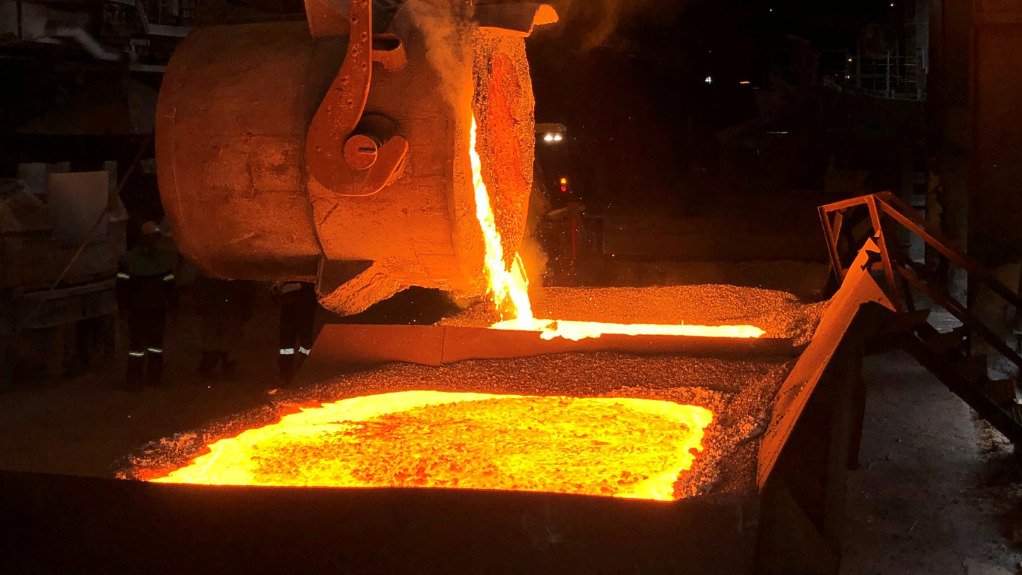
HOT TOPIC The decline of South Africa's farroalloy sector is being driven by a combination of structural factors


Owing to low levels of competitiveness as a result of years of uncontrolled power price escalations and lack of duties related to imported alloys and finished goods, the domestic ferroalloys sector is in a state of rapid decline, says industry body Ferro-Alloy Producers Association (FAPA) chairperson Nellis Bester.
The industry’s decline is driven by a combination of structural factors including rapidly escalating electricity costs, logistics constraints, increasing international competition from countries with significantly lower production costs, unprotected importation of goods and uncertainty surrounding long-term industrial policy, he adds.
Bester emphasises that although the recently introduced electricity pricing relief for the ferrochrome industry is a welcome and positive step, it has largely served to prevent further decline rather than create the conditions needed for renewed growth. As such, he says it should be regarded as a short-term measure rather than a long-term solution.
South Africa’s silicon and manganese alloy sectors continue to experience significant challenges, with several operations already suspended and others facing the prospect of permanent closure, says Bester, adding that unless decisive action is taken by government and State-owned power utility Eskom within weeks, the sector will decline further with direct impact on rising unemployment figures.
The steps needed to secure the future of such smelters include a competitive electricity tariff, importation duties, improved commodities logistics options and better infrastructure to service smelters to decrease carbon footprints.
Besides power constraints and rising costs, other impacts stifling growth and the sustainability of ferroalloy smelters in South Africa, include rail inefficiency and port congestion for exports.
This means expensive road transport alternatives are increasingly needed, thereby extending delays in exporting goods to international customers, he says.
Bester says that logistics inefficiencies and rising fuel costs, particularly within the rail and port systems, have increased transport costs, reduced reliability and delayed export timelines to international customers.
Industrial policy certainty is equally important, with large-scale smelting investments requiring confidence that competitive operating conditions in South Africa will be maintained over several decades, he points out.
While South Africa possesses “world-class mineral resources, technical expertise and installed smelting capacity”, Bester says these competitive advantages are increasingly being outweighed by structural cost disadvantages that can, and should, be addressed through coordinated government and industry action.
As a whole, poor infrastructure, high electricity tariffs and the lack of competitiveness must be addressed by both government and key role players in the sector, he adds. What is needed is an immediate short-term intervention that could be supported by a medium- to long-term permanent solution that is already in development.
However, while the ferroalloys industry is not seeking permanent support or protection, he says a competitive operating environment that allows South African producers to compete fairly with international producers will serve to preserve hundreds of thousands of skilled jobs.
Furthermore, while import tariffs on finished products have been under discussion for more than a decade, Bester notes that the only successful outcome to date has been the implementation of some tariffs on limited steel finished goods.
Article Enquiry
Email Article
Save Article
Feedback
To advertise email advertising@creamermedia.co.za or click here

Latest Multimedia
Latest News

Showroom
ECG provides specialised electrical engineering services to the Mining, Utilities, Materials Handling and Industrial industries, with extensive and...
VISIT SHOWROOM
M and J Mining are leading suppliers of physical support systems as used by the underground mining industry. Our selection of products are not...
VISIT SHOWROOM

Announcements
What's On
Subscribe to improve your user experience...
Option 1 (equivalent of R125 a month):
Receive a weekly copy of Creamer Media's Engineering News & Mining Weekly magazine
(print copy for those in South Africa and e-magazine for those outside of South Africa)
Receive daily email newsletters
Access to full search results
Access archive of magazine back copies
Access to Projects in Progress
Access to ONE Research Report of your choice in PDF format
Option 2 (equivalent of R375 a month):
All benefits from Option 1
PLUS
Access to Creamer Media's Research Channel Africa for ALL Research Reports, in PDF format, on various industrial and mining sectors
including Electricity; Water; Energy Transition; Hydrogen; Roads, Rail and Ports; Coal; Gold; Platinum; Battery Metals; etc.
Already a subscriber?
Forgotten your password?
Receive weekly copy of Creamer Media's Engineering News & Mining Weekly magazine (print copy for those in South Africa and e-magazine for those outside of South Africa)
➕
Recieve daily email newsletters
➕
Access to full search results
➕
Access archive of magazine back copies
➕
Access to Projects in Progress
➕
Access to ONE Research Report of your choice in PDF format
RESEARCH CHANNEL AFRICA
R4500 (equivalent of R375 a month)
SUBSCRIBEAll benefits from Option 1
➕
Access to Creamer Media's Research Channel Africa for ALL Research Reports on various industrial and mining sectors, in PDF format, including on:
Electricity
➕
Water
➕
Energy Transition
➕
Hydrogen
➕
Roads, Rail and Ports
➕
Coal
➕
Gold
➕
Platinum
➕
Battery Metals
➕
etc.
Receive all benefits from Option 1 or Option 2 delivered to numerous people at your company
➕
Multiple User names and Passwords for simultaneous log-ins
➕
Intranet integration access to all in your organisation