Engineering beyond products - When a gearbox became part of a system

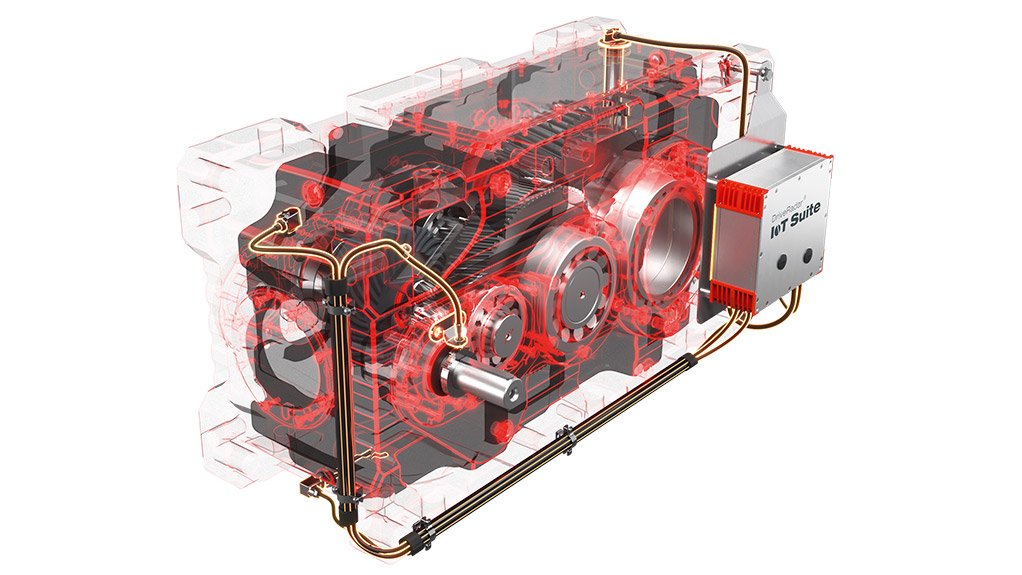


At its simplest, industrial drive technology performs a very old mechanical task. Electric motors generally operate efficiently at relatively high rotational speeds, while most industrial machinery needs lower speed and considerably greater torque. Gearing converts one into the other. The engineering challenge lies in everything surrounding that apparently simple exchange.
How much torque is required? How variable is the load? What happens during startup? Is the machine exposed to shock loading? How many hours will it operate? What thermal conditions will it experience? How accurately must speed be controlled? Does one drive need to synchronise with another?
Forty years ago, many of these questions could be resolved primarily through mechanical engineering. Today, they require mechanical, electrical and digital disciplines to work together.
SEW-EURODRIVE national sales and marketing manager Jonathan McKey says the technical development of the group’s South African operations reflects that shift clearly.
Its original geared motor capability was built around modularity. Gear units, motors and associated components could be configured in numerous combinations to suit different machine requirements. The move into industrial gear units added another level of mechanical engineering. Larger applications meant heavier components, higher transmitted torque and much closer consideration of individual operating conditions.
At the same time, industrial control itself was also changing. In 2005, mechatronic drive technology entered SEW-EURODRIVE’s South African offering.
The concept challenged the traditional separation between the mechanical drive and the electronics controlling it. Rather than installing a motor at the machine and placing its inverter remotely in a central control cabinet, decentralised solutions allowed control electronics to move onto or closer to the motor itself.
The significance extended well beyond tidier wiring. Centralised drive architectures can require substantial cable runs between cabinets, motors and sensors. In conveyor-intensive installations with many distributed drives, that cabling adds installation complexity, cost and additional connection points. Decentralisation allows control functions to sit closer to the point where motion occurs.
MOVIMOT® was an early expression of this philosophy, integrating inverter functionality with the motor. MOVIGEAR® developed the concept further into a highly integrated mechatronic drive system.
For South African customers, however, the important development was not only access to the technology, but also the progressive localisation of the capability required to support it. Advanced equipment that must be returned overseas whenever support is required can only be partially localised, irrespective of where it was sold.
“Technology on its own has limited value if the engineering capability to support it sits somewhere else in the world. True localisation means being able to assemble, commission, support and troubleshoot that technology in South Africa,” says McKey.
By around 2015, SEW-EURODRIVE South Africa had developed the ability to assemble MOVIGEAR® locally, shortening lead times and giving local technicians direct familiarity with a technology they had by then supported for years. The engineering model was changing from mechanical component supply towards integrated motion.
Variable speed drives added another important capability because many industrial processes do not need to operate continuously at one fixed speed. Matching equipment output more closely to process demand can improve control and, depending on the application, reduce unnecessary energy consumption and mechanical stress. Servo technology extends the principle into applications requiring highly accurate position, speed or torque control.
MOVI-C® brings these increasingly complex requirements into a broader automation platform, connecting drive technology, control, communications and software.
This is why describing modern SEW-EURODRIVE simply as a gearbox company no longer captures the engineering reality. The gearbox remains fundamental, as does the motor. However, industrial performance depends on how effectively the mechanical drive, electrical system, automation and process are engineered into a single system.
Article Enquiry
Email Article
Save Article
Feedback
To advertise email advertising@creamermedia.co.za or click here
Projects
Latest Multimedia
Latest News
Showroom
AirNox (Pty) Ltd is a level 1 BBBEE manufacturer of complete AdBlue® solutions for operators of SCR diesel engines and AUS40 across South Africa...
VISIT SHOWROOM
Iritron delivers advanced automation, control, and optimisation solutions to the Mining, Minerals & Metals, Consumer Package Goods and...
VISIT SHOWROOM
Announcements
What's On
Subscribe to improve your user experience...
Option 1 (equivalent of R125 a month):
Receive a weekly copy of Creamer Media's Engineering News & Mining Weekly magazine
(print copy for those in South Africa and e-magazine for those outside of South Africa)
Receive daily email newsletters
Access to full search results
Access archive of magazine back copies
Access to Projects in Progress
Access to ONE Research Report of your choice in PDF format
Option 2 (equivalent of R375 a month):
All benefits from Option 1
PLUS
Access to Creamer Media's Research Channel Africa for ALL Research Reports, in PDF format, on various industrial and mining sectors
including Electricity; Water; Energy Transition; Hydrogen; Roads, Rail and Ports; Coal; Gold; Platinum; Battery Metals; etc.
Already a subscriber?
Forgotten your password?
Receive weekly copy of Creamer Media's Engineering News & Mining Weekly magazine (print copy for those in South Africa and e-magazine for those outside of South Africa)
➕
Recieve daily email newsletters
➕
Access to full search results
➕
Access archive of magazine back copies
➕
Access to Projects in Progress
➕
Access to ONE Research Report of your choice in PDF format
RESEARCH CHANNEL AFRICA
R4500 (equivalent of R375 a month)
SUBSCRIBEAll benefits from Option 1
➕
Access to Creamer Media's Research Channel Africa for ALL Research Reports on various industrial and mining sectors, in PDF format, including on:
Electricity
➕
Water
➕
Energy Transition
➕
Hydrogen
➕
Roads, Rail and Ports
➕
Coal
➕
Gold
➕
Platinum
➕
Battery Metals
➕
etc.
Receive all benefits from Option 1 or Option 2 delivered to numerous people at your company
➕
Multiple User names and Passwords for simultaneous log-ins
➕
Intranet integration access to all in your organisation