Critical minerals present new opportunities for increased manufacturing

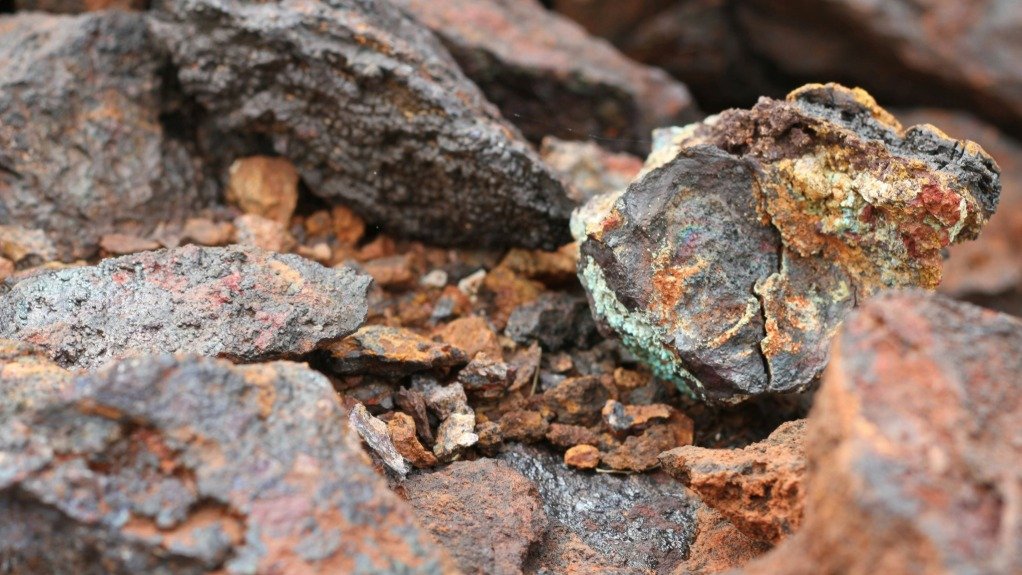
UNLOCKING OPPORTUNITY Capturing the full value of critical minerals require mining and manufacturing to form one industrial strategy, linking production with demand, regional supply chains and value-added manufacturing



With the global race for critical minerals entering a new phase, the next opportunity will be turning resources into processing, manufacturing and long-term growth.
In addition to critical mineral reserves, the industry is now being shaped by geopolitics and industrial policy aimed at ensuring resilient supply chains for electric vehicles (EVs), renewables and advanced manufacturing.
For Africa, rich in lithium, cobalt, manganese, graphite, platinum group metals and rare earths, the opportunity goes far beyond extraction.
However, capturing that value requires mining and manufacturing to form one industrial strategy, linking production with demand, regional supply chains and value-added manufacturing.
Consequently, African Association of Automotive Manufacturers CEO and Mining Indaba steering committee member Victoria Backhaus-Jerling says Africa must rethink its mineral wealth.
“Africa has spent decades asking how to extract more minerals. The next question is how those minerals can drive industrialisation through processing, manufacturing and value addition on the continent,” she says.
“Industrial buyers create the long-term demand needed to justify investment in refining, processing and manufacturing. If Africa is to capture more value, mining and manufacturing must be planned together.”
Southern Africa is well placed to lead, with major critical mineral reserves, automotive hubs, growing industrial capability and African Continental Free Trade Area- (AfCFTA-) backed conditions for regional value chains.
AfCFTA’s approved automotive Rules of Origin (RoOs) add momentum by giving investors greater certainty to build capacity, source regionally and add value across African markets.
“One country may mine lithium, another refines battery materials, another manufacture components and another assembles vehicles. The RoOs make that model more viable by encouraging regional sourcing and African industries to supply one another,” Backhaus-Jerling explains.
As manufacturers reconfigure supply chains around the energy transition, geopolitics and responsible sourcing, Africa can attract investment into processing, battery materials, automotive manufacturing and advanced production.
Since mineral reserves alone will not determine where that investment flows, investors also need policy certainty, competitive logistics, reliable energy, skilled labour, supplier development and regional market access.
“Africa’s advantage should be more than minerals. It should be the ability to source inputs, build competitively and serve a continental market of more than 1.4-billion people — a far stronger proposition than exporting raw commodities.”
Focused Discussion
Mining Indaba has long brought together mining companies, industrial buyers, manufacturers, governments, investors and financiers to strengthen collaboration across the value chain.
At the upcoming Investing in African Mining Indaba 2027, themed Stronger Together: Partnerships in Practice, focus will expand into practical partnerships that accelerate industrialisation, investment and regional value chains across Africa.
Mining Indaba industry director Laura Nicholson says success now depends less on discussion and more on execution.
“Mining Indaba has always brought together the mining value chain. Today, the focus is on practical partnerships that turn collaboration into investment, industrial development and shared value across Africa,” she elaborates.
“As competition for critical minerals intensifies, Africa can strengthen value chains, attract downstream investment and accelerate industrialisation. That is what Stronger Together: Partnerships in Practice represents.”
Turning that opportunity into reality will require coordinated action across the public and private sectors.
Governments must provide stable policy, mining companies bring resource security, manufacturers create demand, financiers mobilise capital, while development partners build capability, skills and innovation.
Backhaus-Jerling believes those partnerships need to begin much earlier in the investment cycle.
“Mining investment decisions should consider future industrial demand, while manufacturing strategies should align with regional mineral development. That coordination turns resource wealth into industrial growth.”
Africa’s long-term competitiveness will be measured not by minerals shipped, but by the industries, technologies and skilled jobs they create.
Backhaus-Jerling says success means positioning Southern Africa as a competitive manufacturing hub, not only a critical minerals supplier.
“Success is when Southern Africa is recognised as a globally competitive manufacturing region producing batteries, automotive components, EVs and advanced industrial products.
“That means higher-value exports, stronger supply chains, more technology transfer, skilled employment and resilience against global disruption.
“The AfCFTA provides the framework, RoOs the mechanism, and mining-manufacturing partnerships the catalyst for sustainable industrial growth.
“Africa’s competitive advantage should not end at the mine gate; it should extend all the way to the factory floor.”
As Africa enters the next chapter of the critical minerals economy, its greatest opportunity lies in building the industries of the future, Backhaus-Jerling concludes.
Article Enquiry
Email Article
Save Article
Feedback
To advertise email advertising@creamermedia.co.za or click here

Projects
Latest Multimedia

Latest News
Showroom

We at Hawk High Pressure Pumps specialise in industrial pumps and pumping systems. Our high pressure washing equipment is locally manufactured and...
VISIT SHOWROOM
SafeQuip is a leading distributor and manufacturer of fire safety solutions, offering a comprehensive range of products designed to meet all...
VISIT SHOWROOM
Press Office
Announcements
What's On
Subscribe to improve your user experience...
Option 1 (equivalent of R125 a month):
Receive a weekly copy of Creamer Media's Engineering News & Mining Weekly magazine
(print copy for those in South Africa and e-magazine for those outside of South Africa)
Receive daily email newsletters
Access to full search results
Access archive of magazine back copies
Access to Projects in Progress
Access to ONE Research Report of your choice in PDF format
Option 2 (equivalent of R375 a month):
All benefits from Option 1
PLUS
Access to Creamer Media's Research Channel Africa for ALL Research Reports, in PDF format, on various industrial and mining sectors
including Electricity; Water; Energy Transition; Hydrogen; Roads, Rail and Ports; Coal; Gold; Platinum; Battery Metals; etc.
Already a subscriber?
Forgotten your password?
Receive weekly copy of Creamer Media's Engineering News & Mining Weekly magazine (print copy for those in South Africa and e-magazine for those outside of South Africa)
➕
Recieve daily email newsletters
➕
Access to full search results
➕
Access archive of magazine back copies
➕
Access to Projects in Progress
➕
Access to ONE Research Report of your choice in PDF format
RESEARCH CHANNEL AFRICA
R4500 (equivalent of R375 a month)
SUBSCRIBEAll benefits from Option 1
➕
Access to Creamer Media's Research Channel Africa for ALL Research Reports on various industrial and mining sectors, in PDF format, including on:
Electricity
➕
Water
➕
Energy Transition
➕
Hydrogen
➕
Roads, Rail and Ports
➕
Coal
➕
Gold
➕
Platinum
➕
Battery Metals
➕
etc.
Receive all benefits from Option 1 or Option 2 delivered to numerous people at your company
➕
Multiple User names and Passwords for simultaneous log-ins
➕
Intranet integration access to all in your organisation