Critical mineral security must become a boardroom priority, says BCG


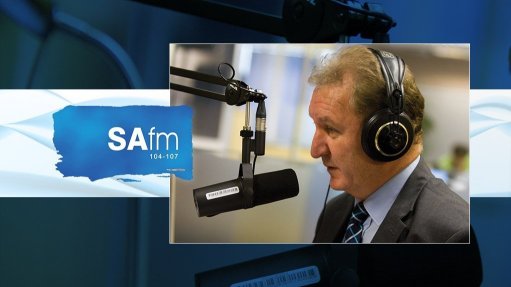
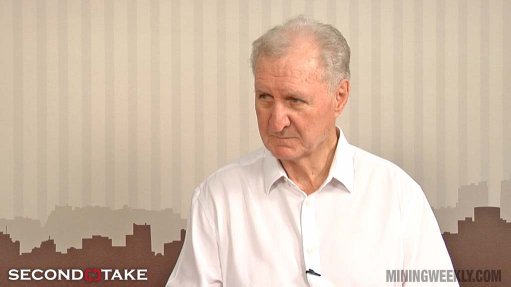
Boston Consulting Group (BCG) Johannesburg Partner and Director Tycho Moencks



Critical mineral supply risks are increasing as demand grows, geopolitical tensions intensify and supply chains remain concentrated in a handful of countries, Boston Consulting Group (BCG) Johannesburg Partner and Director Tycho Moencks has warned.
Speaking to Mining Weekly publishing editor Martin Creamer during an At Top Level interview, Moencks discussed BCG’s report, ‘Why Critical Mineral Shortages Are a CEO Issue’, which examines how companies can strengthen supply security and turn mineral shortages into business opportunities.
The report identifies three blind spots that leave companies vulnerable. These are an overemphasis on major commodities, while overlooking smaller-volume but essential materials; insufficient visibility beyond first-tier suppliers; and a failure to distinguish between where minerals are mined and processed and who owns the relevant assets.
Moencks cited nickel as an example, noting that while China physically accounts for about 31% of global nickel refining, Chinese interests control, directly or indirectly, about 76% of refining assets worldwide.
Companies that over-look these factors risk under-estimating their exposure. Moencks argued that critical minerals should be treated not simply as a procurement cost, but as a strategic opportunity.
Demand Pressures Intensify Supply Risks
Electrification, electric vehicles and changing energy-generation technologies are increasing demand for critical minerals. AI is adding further pressure.
“AI requires data centres, and all those data centres require a host of critical minerals,” Moencks said.
Growing defence expenditure is also increasing demand for specialised materials. BCG projects that supply-demand gaps for some materials could reach between 120% and 250% by 2040 if significant additional measures are not taken. Supply concentration compounds the risk, with more than 85% to 90% of rare-earth volumes ultimately flowing to China.
Smaller-volume materials can be equally vulnerable. About 60% of global production of a particular high-purity arsenic product used in semiconductor manufacturing comes from a single facility in Japan.
The African Opportunity
For African countries, rising demand creates an opportunity.
Moencks identified South Africa, Zambia and the Democratic Republic of Congo, among other countries, as potential beneficiaries. The opportunity extends beyond mining to refining, semi-fabrication and manufacturing.
However, high investment-risk perceptions remain a barrier. Moencks said required internal rates of return could rise from 10% to 12% in some jurisdictions to 25%, 30% or even 35% for African projects.
Public-sector support can help reduce these risks. Governments must, however, balance local value-add ambitions with commercial viability. Requiring investors to establish entire value chains immediately could discourage investment.
Instead, countries should progressively develop pro-cessing and downstream industries alongside mining.
“It’s really a careful navigation of policies and of shaping a development path for respective countries,” Moencks said.
As a result, BCG recommends five measures.
Companies should first map their exposure and identify supply-chain bottlenecks. Second, they should diversify suppliers while ensuring that different suppliers do not depend on the same source.
Third, businesses should consider product designs that allow material substitution, such as switching between copper and aluminium where technically appropriate. Fourth, circular-economy models can help recover and recycle valuable materials. Moencks cited platinum-group-metal catalysts that are leased to users and returned to manufacturers for recycling once spent.
And finally, companies can consider upstream equity investments to secure direct access to raw materials. However, these decisions require careful analysis rather than reactions to price spikes.
Moencks cited an automotive-sector example in which a company avoided a lithium investment after market analysis indicated that proceeding could have resulted in a multibillion-dollar write-off about 18 months later.
Collaboration Offers Mutual Benefits
Meanwhile, Moencks states that collaboration between mining companies and customers can improve supply security while making projects easier to finance.
Producers face price volatility that complicates investment decisions, while buyers worry about securing sufficient materials. He advocates agreements guaranteeing volumes at market-linked prices with agreed floors and ceilings.
“Ultimately, critical mineral security must be treated as a strategic priority rather than solely a procurement concern.
“The true takeaway is the critical minerals topic needs to be a CEO and board topic,” Moencks said.
For Africa, closer collaboration between governments and private-sector stakeholders could help develop mineral value chains that support sustainable economic growth while meeting global demand.
Article Enquiry
Email Article
Save Article
Feedback
To advertise email advertising@creamermedia.co.za or click here
Research Reports

Projects


Latest News

Showroom

ESAB South Arica, the leading supplier of high-end welding and cutting products to the Southern African industrial market is based in...
VISIT SHOWROOM
Press Office
Announcements
What's On
Subscribe to improve your user experience...
Option 1 (equivalent of R125 a month):
Receive a weekly copy of Creamer Media's Engineering News & Mining Weekly magazine
(print copy for those in South Africa and e-magazine for those outside of South Africa)
Receive daily email newsletters
Access to full search results
Access archive of magazine back copies
Access to Projects in Progress
Access to ONE Research Report of your choice in PDF format
Option 2 (equivalent of R375 a month):
All benefits from Option 1
PLUS
Access to Creamer Media's Research Channel Africa for ALL Research Reports, in PDF format, on various industrial and mining sectors
including Electricity; Water; Energy Transition; Hydrogen; Roads, Rail and Ports; Coal; Gold; Platinum; Battery Metals; etc.
Already a subscriber?
Forgotten your password?
Receive weekly copy of Creamer Media's Engineering News & Mining Weekly magazine (print copy for those in South Africa and e-magazine for those outside of South Africa)
➕
Recieve daily email newsletters
➕
Access to full search results
➕
Access archive of magazine back copies
➕
Access to Projects in Progress
➕
Access to ONE Research Report of your choice in PDF format
RESEARCH CHANNEL AFRICA
R4500 (equivalent of R375 a month)
SUBSCRIBEAll benefits from Option 1
➕
Access to Creamer Media's Research Channel Africa for ALL Research Reports on various industrial and mining sectors, in PDF format, including on:
Electricity
➕
Water
➕
Energy Transition
➕
Hydrogen
➕
Roads, Rail and Ports
➕
Coal
➕
Gold
➕
Platinum
➕
Battery Metals
➕
etc.
Receive all benefits from Option 1 or Option 2 delivered to numerous people at your company
➕
Multiple User names and Passwords for simultaneous log-ins
➕
Intranet integration access to all in your organisation