SAWEM trading platform opens to 85 external entities for pre-launch testing

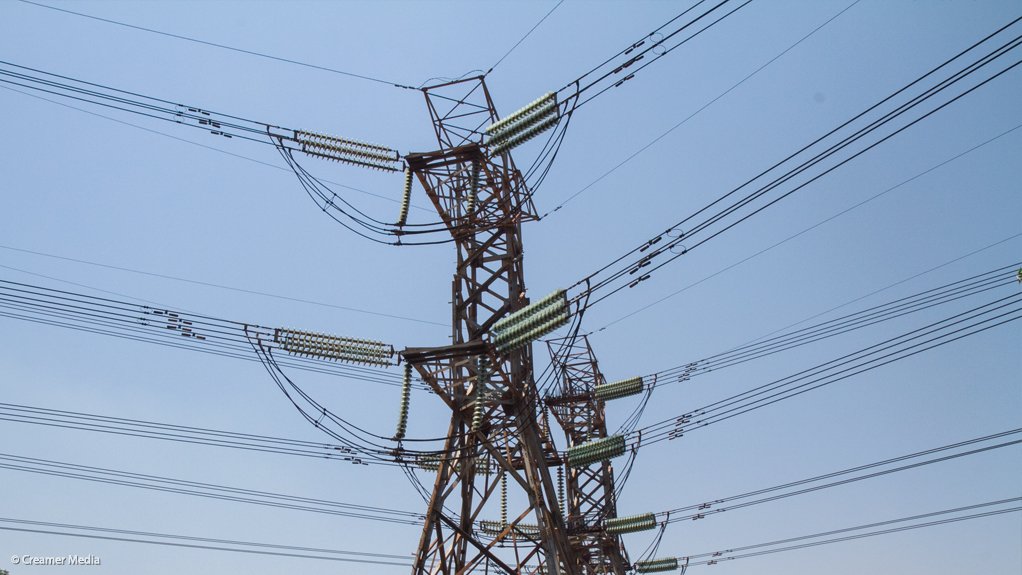


Ahead of the scheduled launch of the South African Wholesale Electricity Market (SAWEM) in April 2027, the trading platform is being opened to external participants in addition to Eskom Generation and Eskom Distribution, which have been participating on the platform since April this year.
The Presidency’s Saul Musker reports that invitations have been issued to 85 external entities to participate in the pre-launch simulation and testing phase, while various regulatory and institutional mechanisms are finalised in parallel.
The SAWEM platform has been developed by the National Transmission Company South Africa (NTCSA), which has been licensed as the Market Operator.
Presenting an Operation Vulindlela progress report for the second quarter, Musker noted that various regulatory and institutional initiatives were under way in parallel, including the publication by the National Energy Regulator of South Africa (Nersa) of the Electricity Trading Platform Regulatory Framework for public consultation on October 4.
“The framework provides the basis for oversight of the SAWEM, establishing the minimum regulatory, governance, operational and technical requirements that the trading platform must satisfy. This is to ensure that the trading platform operates in a manner that is fair, transparent, and efficient,” he explained.
In addition, the Electricity Trading Rules and Market Code are expected to be finalised by Nersa in November, while the Wholesale Electricity Pricing Methodology and the Vesting Contract Framework should follow in December 2026.
“Once all of those instruments are in place – some by the end of this year, some in early 2027 – we will be in a position to open the market for external participation,” Musker said, while describing the upcoming launch as a key milestone in introducing electricity market competition.
Rudi Dicks, who heads the project management office in the private office of the President, acknowledged that there were still design and implementation risks to the SAWEM’s effectiveness.
However, Dicks stressed that the launch was not intended to be a “big bang” but rather part of an incremental process, whereby changes would be made to address problems that emerged once the market was in operation.
Some of these risks were outlined in a recent briefing note by Meridian Economics, which warned that the potential benefits of the electricity market reforms, including lowering system costs and shifting the consequences of poor investment decisions away from captive consumers and taxpayers, were not automatic.
Meridian listed several risks, including the potential for Eskom to abuse its market dominance, as well as the threat that the transitional mechanism being created to mitigate this risk, namely the vesting contracts, could prove ineffective owing to poor design choices or inadequate monitoring and enforcement.
Musker indicated that government and Nersa were alive to these concerns and that various regulatory, institutional and governance actions were being pursued to help address them.
He reported, for instance, that measures were being developed to ensure the functional independence of the NTCSA ahead of its full unbundling from Eskom Holdings.
UNBUNDLING PROGRESS
The unbundling was progressing following the adoption by President Cyril Ramaphosa of the Eskom Restructuring Task Team (ERTT) Phase I report, which indicated that the Transmission System Operator (TSO) should be separated from Eskom Holdings with the transmission assets.
The Phase II report, which will include a detailed implementation plan for the establishment of the TSO, is scheduled to be completed by the ERTT in December. In parallel, a process is under way to appoint a transaction adviser to support government with the transaction to separate the NTCSA from Eskom Holdings.
During the transition period, when NTCSA would remain an Eskom Holdings subsidiary, Musker said the focus would be on ensuring that the NTCSA’s independence was strengthened.
This could be achieved, he said, through the Market Operator licence conditions, the establishment of a market surveillance unit within the Market Operator, and through governance changes stipulating that no Eskom managers or Eskom directors be allowed to serve on the NTCSA board.
Changes, he indicated, could be made to the delegation of authority to ensure that NTCSA had full operational autonomy, while a code of conduct could be put in place to govern any interactions between NTCSA and Eskom employees.
“Then, of course, there are other instruments to prevent Eskom's abuse of dominance while it remains the dominant generator, with the main one being the vesting contracts with each Eskom generator. The vesting contracts framework has been published by Nersa and is being finalised now, taking into account public comments,” he said.
Article Enquiry
Email Article
Save Article
Feedback
To advertise email advertising@creamermedia.co.za or click here
Research Reports

Projects


Latest Multimedia

Latest News

Showroom
We supply customers with practical affordable solutions for their testing needs. Our products include benchtop, portable, in-line process control...
VISIT SHOWROOM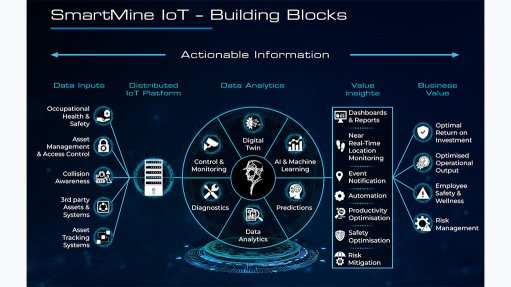
SmartMine IoT has been developed with the mining industry in mind, to provides our customers with powerful business intelligence and data modelling...
VISIT SHOWROOM
Press Office
Announcements
What's On
Subscribe to improve your user experience...
Option 1 (equivalent of R125 a month):
Receive a weekly copy of Creamer Media's Engineering News & Mining Weekly magazine
(print copy for those in South Africa and e-magazine for those outside of South Africa)
Receive daily email newsletters
Access to full search results
Access archive of magazine back copies
Access to Projects in Progress
Access to ONE Research Report of your choice in PDF format
Option 2 (equivalent of R375 a month):
All benefits from Option 1
PLUS
Access to Creamer Media's Research Channel Africa for ALL Research Reports, in PDF format, on various industrial and mining sectors
including Electricity; Water; Energy Transition; Hydrogen; Roads, Rail and Ports; Coal; Gold; Platinum; Battery Metals; etc.
Already a subscriber?
Forgotten your password?
Receive weekly copy of Creamer Media's Engineering News & Mining Weekly magazine (print copy for those in South Africa and e-magazine for those outside of South Africa)
➕
Recieve daily email newsletters
➕
Access to full search results
➕
Access archive of magazine back copies
➕
Access to Projects in Progress
➕
Access to ONE Research Report of your choice in PDF format
RESEARCH CHANNEL AFRICA
R4500 (equivalent of R375 a month)
SUBSCRIBEAll benefits from Option 1
➕
Access to Creamer Media's Research Channel Africa for ALL Research Reports on various industrial and mining sectors, in PDF format, including on:
Electricity
➕
Water
➕
Energy Transition
➕
Hydrogen
➕
Roads, Rail and Ports
➕
Coal
➕
Gold
➕
Platinum
➕
Battery Metals
➕
etc.
Receive all benefits from Option 1 or Option 2 delivered to numerous people at your company
➕
Multiple User names and Passwords for simultaneous log-ins
➕
Intranet integration access to all in your organisation