Roadmap outlined to turn gas supply crisis into transformative opportunity


Competitive gas supply could unlock up to 3% in additional yearly GDP growth by the late 2030s, restore energy reliability for key industries and enable lower-carbon, dispatchable power generation to complement renewables
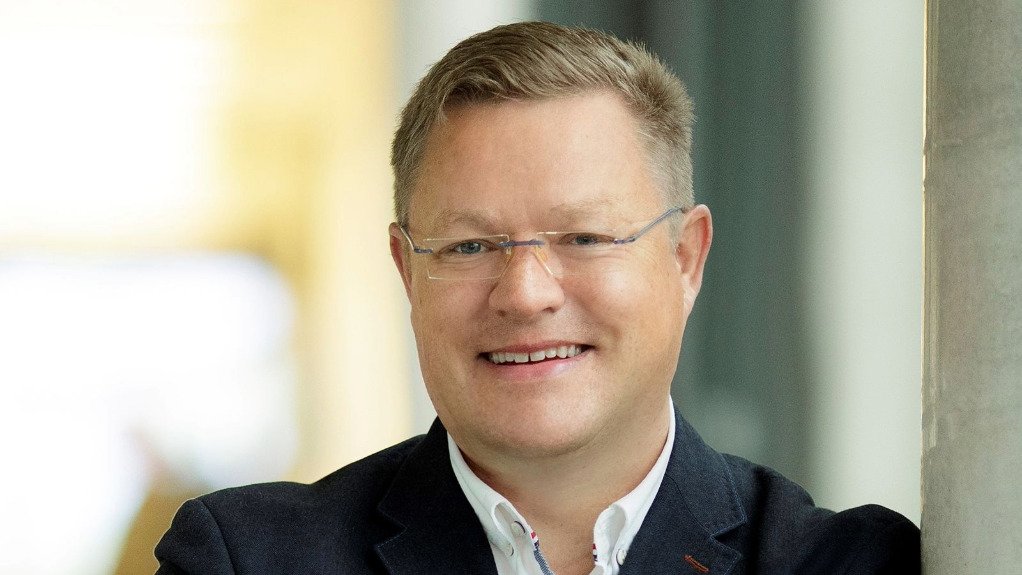
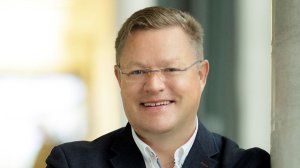
IGUA-SA executive officer Jaco Human emphasises the importance of firmer timelines, and collaboration between the private sector and government as the country navigates the looming gas cliff



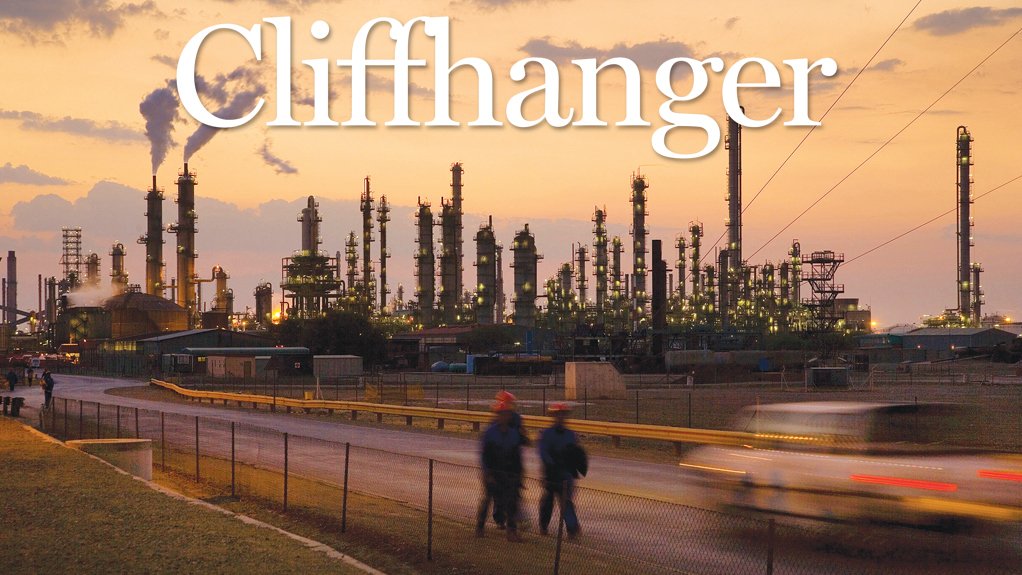
As South Africa faces a gas cliff – precipitated by waning supply from Mozambique’s Pande and Temane fields – some in the local gas sector believe the challenge could be leveraged to help transform and strengthen the industry.
In its updated Gas Roadmap, published earlier this year, the Industrial Gas Users Association-Southern Africa (IGUA-SA) describes natural gas as one of the most immediate levers for South Africa’s industrial and economic renewal.
The roadmap argues that, if South Africa implements a balanced supply solution – combining imported liquefied natural gas (LNG) with the accelerated development of domestic and regional gas resources – it could lay a foundation for stable energy supply, reindustrialisation and long-term growth.
It estimates that competitive gas supply could unlock up to 3% in additional yearly GDP growth by the late 2030s, restore energy reliability for key industries and enable lower-carbon, dispatchable power generation to complement renewables.
However, IGUA-SA argues that this potential requires decisive and immediate action.
With existing supplies from the Pande and Temane fields expected to cease by mid-2028, and energy company Sasol’s methane-rich gas (MRG) expected to bridge the gap for only about two years thereafter, IGUA-SA warns that, without a government-led, financially supported and coordinated national effort, South Africa faces a cascading energy and GDP crisis.
“The loss of industrial gas supply would force plant closures, trigger widespread job losses and erode investor confidence, driving the economy toward a ‘GDP cliff’,” the report warns.
IGUA-SA identifies the Matola or Inhassoro option, connected through the existing Republic of Mozambique Pipeline Investments Company (ROMPCO) pipeline, as the first development priority, with LNG supply commencing in 2030, provided demand commitments and fiscal support are confirmed by the end of 2026.
However, IGUA-SA now expects that, even if those decisions were taken today, no LNG option could deliver gas before 2031.
Without coordinated, bankable gas-to-power (GtP) demand, no LNG terminal – whether in Matola or elsewhere – can proceed to a final investment decision.
Terminal developers require long-term offtake commitments from power generation to anchor projects and secure financing. Industrial demand, while significant, is too fragmented and price sensitive to derisk these investments on its own.
Demand Profile
It is also unclear how much demand could be sustained should imports from Mozambique be replaced by LNG, which would be significantly more expensive. Sasol, for instance, which uses gas alongside coal to produce fuels and chemicals, has indicated that LNG would not be a commercially viable input once supply from Mozambique to its plants ends in the mid-2030s.
The report therefore emphasises the urgent need to define a gas energy demand profile for South Africa and aggregate demand through a shared-risk platform. It notes that the industry will continue to advance the GasHub aggregator model, but says that, to support the demand stack required to make progress, it is vital that short-term decisions are made regarding GtP and the sequencing of gas corridor demand alongside industrial demand.
This requires the development of appropriate risk-sharing models.
“We need to develop policy to support our long-term energy security. A Gas Master Plan must function as a medium-term policy position, and policy must be integrated across the Integrated Resource Plan, industry and logistics functions.
This requires us to prioritise domestic and regional gas opportunities to maximise economic impact and properly assess the feasibility of West Coast gas monetisation,” IGUA-SA says.
IGUA-SA executive officer Jaco Human emphasises the importance of firmer timelines, and collaboration between the private sector and government as the country navigates the looming gas cliff.
Speaking at a discussion on South Africa’s natural gas landscape, hosted last month by the African Energy Leadership Centre and IGUA-SA, Human said the LNG terminals – Inhassoro and Matola, in Mozambique, and the Zululand Energy Terminal (ZET), in Richards Bay, KwaZulu-Natal – will not be ready by June 2030, when Sasol’s MRG supply ends. ZET is a joint venture between Vopak Terminal Durban and Transnet Pipelines to develop the LNG import terminal at the Port of Richards Bay.
“It seems impossible, at this point, from a practical and bankability perspective and a construction perspective. We see the right moves, but it is clear that we are now on the gas cliff. The question is not if the gas cliff is going to arise; the question now that industry is faced with is how do we navigate this gas cliff?” he said.
Human outlined a potential two-pronged approach to gas development, with the East Coast focused on energy security and the West Coast on unlocking economic growth.
“The one is more immediate, where we’re looking to secure gas energy through LNG infrastructure and import developments on the East Coast, and of course looking to unlock longer-term . . . economic growth potential for South Africa through gas from the West Coast,” he said, adding that LNG was envisaged to be imported through terminals in Mozambique and Richards Bay.
He also highlighted the importance of leveraging the oil and gas potential of the West Coast Orange basin.
The report describes the West Coast as a transformative opportunity for sustainable economic and industrial growth.
IGUA-SA notes that Namibia is already a frontrunner in developing Orange basin resources, adding that South Africa should expand its planning to incorporate regional cooperation and shared infrastructure.
According to the report, economic modelling suggests that if West Coast gas can be delivered at competitive prices of about $7/GJ, the project can add between 1.5% and 3% to South Africa’s yearly GDP growth by the late 2030s.
Human called for the alignment of demand and infrastructure and for legislative reform to fast-track energy infrastructure projects in South Africa: “Collaboration between the State and the private sector is more critical than ever, now that we know that we will face the gas cliff. We’ve missed the boat.”
Further Considerations
Wits Business School head and director Professor Maurice Radebe, also a speaker at the webinar, highlighted the implications of Sasol’s warning that declining output from Mozambique’s gasfields would force it to phase out pipeline supplies to third-party industrial users by 2028, reserving the remaining volumes for its own Secunda operations.
This leaves over 300 industrial buyers in Gauteng and Mpumalanga facing a severe supply deficit.
“We can’t waste any further time,” he warned.
Radebe identified several key challenges facing the sector, such as pipeline and distribution bottlenecks, pricing disparities, and legal and environmental hurdles.
However, while the sector is navigating these challenges, WBS interim head and director Professor Logan Rangasamy said, there are signs of development, such as the GtP procurement programme having drawn four bids offering about 2 800 MW against a target of 2 000 MW.
Legislation to modernise the Gas Act is before Parliament, while discussions on LNG import terminals and the repurposing of existing pipelines are also progressing.
“But we must be candid: legislation alone will not build the infrastructure, and bids alone will not deliver the results we so desperately seek. What matters now more than at any previous time is coordination, clear decisions and bankable frameworks,” he elaborated.
Rangasamy also noted that Mozambique has the potential to become a significant player over the next decade, following the restart of its LNG project, with other developments in Tanzania, Nigeria, Senegal, Angola and Namibia also in the pipeline.
“South Africa has the building blocks for a viable gas future: domestic reserves, regional partnerships, industrial and power demand for gas, and the potential to attract investment.
“Finalising energy policy and regulatory instruments, fast-tracking LNG infrastructure, and creating risk-sharing models are non-negotiables if the country is to stabilise its gas supply and protect its industrial economy,” IGUA-SA says in the report.
Projects
During the webinar, Petroleum Agency South Africa CEO Dr Bongani Sayidini noted that South Africa is estimated to have at least 27-billion barrels in prospective oil resources along its coastline.
He added that the country is estimated to have about 60-trillion cubic feet in prospective offshore gas resources.
“The opportunity is there in terms of the prospectivity; the challenge in terms of gas for this country has been a market. So, we have resources that are stranded on the back of a lack of a market,” he said.
On the midstream side, State-owned Transnet Pipelines business development head Kresen Naicker noted that there is an opportunity to repurpose existing infrastructure associated with the Lilly pipeline.
Stage 1 of Lilly’s development is already creating a significant opportunity to increase capacity, while Transnet Pipelines is aiming to increase its capacity from 23 petajoules (PJ) to 60 PJ, largely owing to the intake pressure coming in from ZET.
He reiterated the importance of regional collaboration to exploit infrastructure synergies.
“We need binding commitments and regulatory alignment to unlock the execution towards a commercial operation date of mid-2030,” said Naicker.
Article Enquiry
Email Article
Save Article
Feedback
To advertise email advertising@creamermedia.co.za or click here
Projects
Latest Multimedia
Showroom
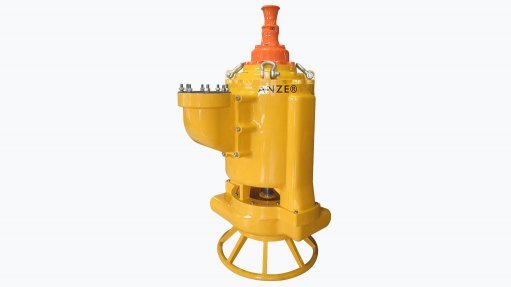
Goodwin Submersible Pumps Africa is sole distributors for Goodwin electrically driven, submersible, abrasion resistance slurry pumps.
VISIT SHOWROOM
Established in 1983, the ASTPM is an industry association and representative body of the welded carbon steel tube and pipe manufacturers of South...
VISIT SHOWROOM
Announcements
What's On
Subscribe to improve your user experience...
Option 1 (equivalent of R125 a month):
Receive a weekly copy of Creamer Media's Engineering News & Mining Weekly magazine
(print copy for those in South Africa and e-magazine for those outside of South Africa)
Receive daily email newsletters
Access to full search results
Access archive of magazine back copies
Access to Projects in Progress
Access to ONE Research Report of your choice in PDF format
Option 2 (equivalent of R375 a month):
All benefits from Option 1
PLUS
Access to Creamer Media's Research Channel Africa for ALL Research Reports, in PDF format, on various industrial and mining sectors
including Electricity; Water; Energy Transition; Hydrogen; Roads, Rail and Ports; Coal; Gold; Platinum; Battery Metals; etc.
Already a subscriber?
Forgotten your password?
Receive weekly copy of Creamer Media's Engineering News & Mining Weekly magazine (print copy for those in South Africa and e-magazine for those outside of South Africa)
➕
Recieve daily email newsletters
➕
Access to full search results
➕
Access archive of magazine back copies
➕
Access to Projects in Progress
➕
Access to ONE Research Report of your choice in PDF format
RESEARCH CHANNEL AFRICA
R4500 (equivalent of R375 a month)
SUBSCRIBEAll benefits from Option 1
➕
Access to Creamer Media's Research Channel Africa for ALL Research Reports on various industrial and mining sectors, in PDF format, including on:
Electricity
➕
Water
➕
Energy Transition
➕
Hydrogen
➕
Roads, Rail and Ports
➕
Coal
➕
Gold
➕
Platinum
➕
Battery Metals
➕
etc.
Receive all benefits from Option 1 or Option 2 delivered to numerous people at your company
➕
Multiple User names and Passwords for simultaneous log-ins
➕
Intranet integration access to all in your organisation