Charging infrastructure, global NEV market moves are there but supportive policy lags – automotive panel

Automotive industry experts discuss localisation imperatives and factors influencing the sector’s continued growth.


New-energy vehicles (NEVs) should be a key focus area if South Africa’s automotive industry is to maintain its export strength and increase domestic market share, automotive industry experts say as the Department of Trade, Industry and Competition finalises a major review of South Africa’s key pieces of automotive policy – both the South African Automotive Masterplan and the Automotive Production and Development Plan.
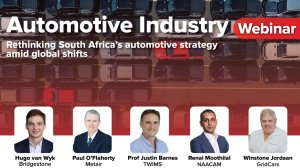
In a webinar hosted by Creamer Media on September 1, a panel of automotive experts raised key points for consideration on how to position the industry for growth, with tyre manufacturer Bridgestone core tyre division finance head and panel facilitator Dr Hugo van Wyk pointing out that NEV sales comprised about 6% of new-vehicle purchases in the country, with sales in July alone having doubled to 3 000 NEVs year-on-year.
BEV charging network operator GridCars CEO Winstone Jordaan, specialised business school Toyota Wessels Institute for Manufacturing Studies executive director Professor Justin Barnes, National Association of Automotive Component and Allied Manufacturers CEO Renai Moothilal and automotive components manufacturer Metair Investments CEO Paul O’Flaherty joined Van Wyk on the panel of speakers.
The webinar was sponsored by Metair.
Van Wyk pointed out that NEV sales in South Africa grew by 88% in the first seven months of this year, with 16 289 units having been sold. Conventional hybrids are leading the market with a 50% share, or 8 000 units, followed by plug-in hybrids capturing a 36% market share of these sales.
Plug-in hybrid vehicle sales increased by 432% year-on-year to 5 851 units between January and July, while battery electric vehicle (BEV) sales reached 2 360 units sold – marking a 268% year-on-year increase.
From a consumer perspective, Van Wyk mentioned the increasing affordability of NEVs, particularly BEVs, with these vehicles having decreased from an average price of R800 000 to R350 000. BEVs and hybrid vehicles are also becoming more viable for consumers amid high petrol and diesel costs.
Jordaan said that, globally, BEVs were nearing the 30% share of new-vehicle sales, which meant an average one in three cars bought were electric. In South Africa, however, the figure remains at about 1% of the new-vehicle market.
“It is not reasonable to stay at this figure given the global movements. By merely aligning South Africa’s NEV market with what is happening globally, thousands more vehicles can be produced. We are heading for massive NEV demand growth, ten-fold growth even, to which South Africa should not be caught lagging behind on.
“At world averages, South Africa could be selling 75 000 electric vehicles this year,” Jordaan said.
For him, a vital part of supporting this transition is demystifying the myths around BEVs and charging infrastructure, including concerns about whether there are sufficient charging stations available.
“People often do not know what charging infrastructure looks like and do not bother to check the actual coverage in their area. We have more than 800 chargers across the country. In fact, the charging infrastructure is ahead of where the vehicle sales are. Vehicles can triple in sales and there would still be enough charging infrastructure.
“If the general public adopts NEVs, particularly BEVs, faster, local manufacturing becomes critical and stimulating. We need to be responding quicker,” Jordaan said.
GridCars had been building charging infrastructure for the last 12 years in anticipation of an electric mobility transition, such that charging points in the country currently cater for eight vehicles per station, compared with what it was designed for at between 25 to 30 vehicles per station.
Jordaan said it remained very competitive to build out a charging network and have it cover its own costs; however, as utilisation increased, profitability and return on investment would increase. “A lot of the work has been to make sure charging is in the correct places once volumes tick up.”
Another myth consumers sometimes bought into was that there was queuing for charging infrastructure when, in fact, the actual clashes were single-figure times for BEV drivers over an extended period, he said.
Some key advantages that South Africa had in accelerating a local NEV market was its endowment of raw materials – the critical minerals required for BEV batteries, its big transport fleets that needed periodic updating and its location at the southern tip of the African continent, stated Barnes.
However, he mentioned a key challenge to greater NEV adoption as being the market structure and taxation by the National Treasury, with excessive taxation heavily influencing consumer choices.
He argued that stimulating demand through tax relief could increase production and market demand.
Moothilal referred to Chinese automaker Chery’s entry into the South African manufacturing market with the acquisition of Nissan’s production site.
He said such manufacturers come with new technology and products that have not been made in the country before – including products that are NEV-specific.
“What we need right now is clear policy direction about how those localisation opportunities can be unlocked,” Moothilal stated.
O’Flaherty affirmed the need to create the scale and landscape for component manufacturers to respond to changing market dynamics, including increasing adoption of NEVs.
He said component manufacturers in South Africa were largely technology agnostic, meaning they could adapt and invest in new capabilities if the scale made sense.
However, O’Flaherty pointed out the major challenge to NEV component manufacturing as being the structural issues of high electricity charges and logistics inefficiency, which were already plaguing the industry.
“Manufacturers are focused on getting absolute efficiency out of plants and labour, and without certainty of support and scale, there cannot be meaningful growth.”
Article Enquiry
Email Article
Save Article
Feedback
To advertise email advertising@creamermedia.co.za or click here

Projects

Latest Multimedia


Latest News


Showroom

Virtual Gas Network supplies compressed natural gas via a virtual gas distribution network.
VISIT SHOWROOM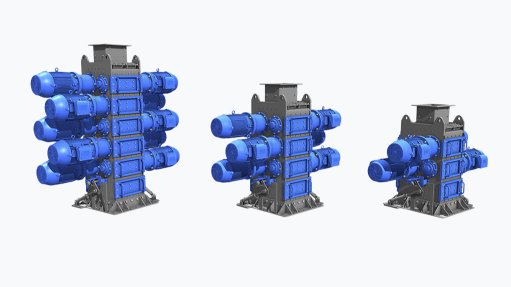
Energy and Densification Systems (EDS) has developed equipment for crushing, milling, blending and densifying products. Based on its globally...
VISIT SHOWROOM


Announcements
What's On
Subscribe to improve your user experience...
Option 1 (equivalent of R125 a month):
Receive a weekly copy of Creamer Media's Engineering News & Mining Weekly magazine
(print copy for those in South Africa and e-magazine for those outside of South Africa)
Receive daily email newsletters
Access to full search results
Access archive of magazine back copies
Access to Projects in Progress
Access to ONE Research Report of your choice in PDF format
Option 2 (equivalent of R375 a month):
All benefits from Option 1
PLUS
Access to Creamer Media's Research Channel Africa for ALL Research Reports, in PDF format, on various industrial and mining sectors
including Electricity; Water; Energy Transition; Hydrogen; Roads, Rail and Ports; Coal; Gold; Platinum; Battery Metals; etc.
Already a subscriber?
Forgotten your password?
Receive weekly copy of Creamer Media's Engineering News & Mining Weekly magazine (print copy for those in South Africa and e-magazine for those outside of South Africa)
➕
Recieve daily email newsletters
➕
Access to full search results
➕
Access archive of magazine back copies
➕
Access to Projects in Progress
➕
Access to ONE Research Report of your choice in PDF format
RESEARCH CHANNEL AFRICA
R4500 (equivalent of R375 a month)
SUBSCRIBEAll benefits from Option 1
➕
Access to Creamer Media's Research Channel Africa for ALL Research Reports on various industrial and mining sectors, in PDF format, including on:
Electricity
➕
Water
➕
Energy Transition
➕
Hydrogen
➕
Roads, Rail and Ports
➕
Coal
➕
Gold
➕
Platinum
➕
Battery Metals
➕
etc.
Receive all benefits from Option 1 or Option 2 delivered to numerous people at your company
➕
Multiple User names and Passwords for simultaneous log-ins
➕
Intranet integration access to all in your organisation