Capped at home, China extends its aluminium dominance abroad, Reuters says



LONDON - China's aluminium smelters have been running red hot this year. The Shanghai aluminium price is nudging three-month highs, raw material costs are historically low and margins are strong.
Every producer is incentivised to operate their plant at maximum capacity.
Indeed, national output has exceeded Beijing's 45-million-ton capacity cap for the past couple of months, as smelters flex their full production potential.
The mandated ceiling, however, remains in place.
Chinese producers have accepted that reality and are now investing heavily in smelter projects abroad.
While President Donald Trump complains the United States "desperately" needs more aluminium, the world's largest producer is consolidating its dominant position in the global supply chain.
AT THE LIMIT
China's capacity cap dates back to 2017, when the sector was in the throes of a chaotic boom. Everyone, it seemed, wanted to build their own aluminium smelter, placing ever greater stress on the country's power system.
Beijing drew a 45-million-ton line in the sand.
By the end of the year, the authorities had halted 5.37-million tons of "illegal" capacity and 6.19-million tons of "non-compliant" capacity, according to Wen Xianjin, vice chairperson of the China Nonferrous Metals Industry Association.
The new rule was that if you wanted to build a greenfield smelter, you had to close an old one with the same capacity.
The regulations have been rigorously enforced ever since and have led to a collective upgrade of smelter technology as new plants replaced less efficient ones.
That technology is now being flexed.
Aluminium smelter capacity, to quote consultants AZ Global, "is not an immutable physical limit". A series of operating improvements can easily allow actual output to rise above nameplate capacity.
Such collective capacity creep explains why national output has been running above the 45-million-ton mark since March.
AZ Global estimates that China's smelters operated at 99.7% of their effective capacity of 45.26-million tons in August.
The irony is that China's smelters are benefiting from both their own capacity cap and the absence of a complementary limit on domestic alumina production.
The core input to the smelting process is in chronic oversupply and the price is correspondingly at bombed-out levels.
Whether China's smelters can sustain these levels of capacity utilization is a moot point, but it is clear that any production upside is now highly limited.
POWERING UP IN INDONESIA
Chinese producers understand that if they want to expand, they now have to go abroad.
Investment has primarily flowed into Indonesia, where new aluminium smelters can be sited in the same Chinese-built industrial parks used to process nickel.
Tsingshan Group, the powerhouse behind Indonesia's nickel boom, has teamed up with Chinese aluminium producers Huafon Group and Xinfa Group to build the new Hua Chin and Juwan smelters, respectively.
Existing power and logistics infrastructure has enabled rapid construction.
Hua Chin was commissioned last year with 480 000 tons of annual capacity. It applied in May to list its "HCAI" brand with the London Metal Exchange.
Juwan shipped its first aluminium to the US in March. PT Alamtri Resources Indonesia, in which China's Zhejiang Lygend Mining holds a minority interest, did the same in June.
CAPACITY SWAP
Chinese aluminium smelter projects are also cropping up further afield.
In Kazakhstan, Xinfa is preparing a full-cycle industrial park with planned aluminium capacity of 2.4-million tons a year. Meanwhile, East Hope Group is working on a huge integrated project running from bauxite through alumina to aluminium.
In Angola, a Chinese consortium led by Hebei Huatong Wire and Cables Group is backing a new smelter in the Barra do Dande free-trade zone.
The first 120 000-ton phase was constructed using equipment transferred from China, likely from an older smelter that was sacrificed for a new one and as such an international application of Beijing's capacity-swap mandate.
The smelter's location on the Atlantic extends China's aluminium reach further into Western markets.
The country already accounts for around 60% of global production, a ratio that has crept up to 63% owing to the loss of Gulf output in the Iran war.
The new generation of Chinese-backed smelters will cement that dominance as long as the West struggles to find a similarly sized response.
Article Enquiry
Email Article
Save Article
Feedback
To advertise email advertising@creamermedia.co.za or click here

Projects
Latest Multimedia
Latest News
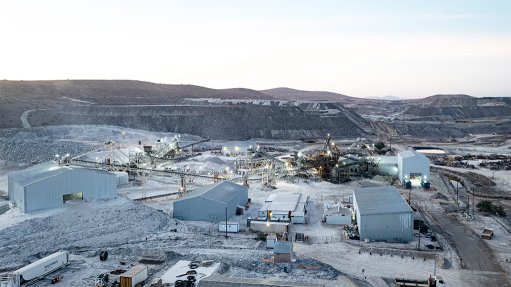
Showroom
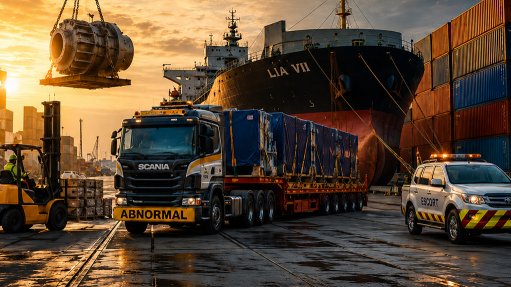
We partner growth of our select clients through our comprehensive and competitive integrated international logistics, trade finance and information...
VISIT SHOWROOM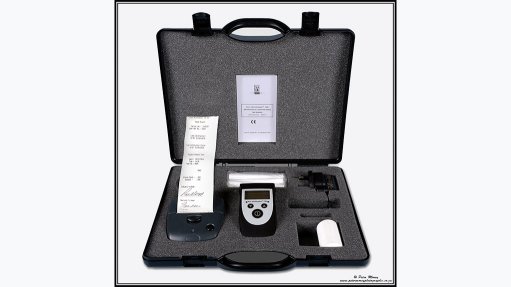
Developed to exceed the latest EN 15964 standards for police breathalysers proving that it will remain accurate and reliable for many years to come.
VISIT SHOWROOM

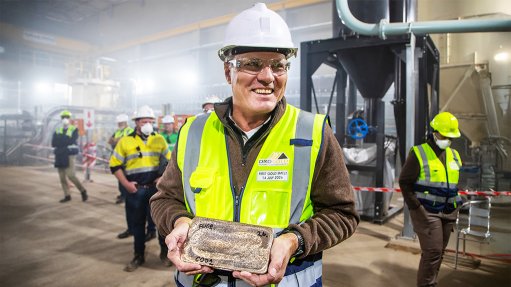
Announcements
What's On
Subscribe to improve your user experience...
Option 1 (equivalent of R125 a month):
Receive a weekly copy of Creamer Media's Engineering News & Mining Weekly magazine
(print copy for those in South Africa and e-magazine for those outside of South Africa)
Receive daily email newsletters
Access to full search results
Access archive of magazine back copies
Access to Projects in Progress
Access to ONE Research Report of your choice in PDF format
Option 2 (equivalent of R375 a month):
All benefits from Option 1
PLUS
Access to Creamer Media's Research Channel Africa for ALL Research Reports, in PDF format, on various industrial and mining sectors
including Electricity; Water; Energy Transition; Hydrogen; Roads, Rail and Ports; Coal; Gold; Platinum; Battery Metals; etc.
Already a subscriber?
Forgotten your password?
Receive weekly copy of Creamer Media's Engineering News & Mining Weekly magazine (print copy for those in South Africa and e-magazine for those outside of South Africa)
➕
Recieve daily email newsletters
➕
Access to full search results
➕
Access archive of magazine back copies
➕
Access to Projects in Progress
➕
Access to ONE Research Report of your choice in PDF format
RESEARCH CHANNEL AFRICA
R4500 (equivalent of R375 a month)
SUBSCRIBEAll benefits from Option 1
➕
Access to Creamer Media's Research Channel Africa for ALL Research Reports on various industrial and mining sectors, in PDF format, including on:
Electricity
➕
Water
➕
Energy Transition
➕
Hydrogen
➕
Roads, Rail and Ports
➕
Coal
➕
Gold
➕
Platinum
➕
Battery Metals
➕
etc.
Receive all benefits from Option 1 or Option 2 delivered to numerous people at your company
➕
Multiple User names and Passwords for simultaneous log-ins
➕
Intranet integration access to all in your organisation