BMI expects mining to become more decarbonised and competitive by 2050



Market research firm BMI expects decarbonisation to move to the top of the mining sector's agenda, that AI will become a foundational feature of the global metals and mining sector, that structural deficits in critical minerals will emerge and that competition for access to critical minerals will continue to increase.
These trends are outlined in BMI’s 'Metals And Mining Megatrends To 2050: Navigating A New Era Of Technology, Geopolitics And Green Transformation' report, which shows that the industry faces mounting scrutiny of its environmental footprint.
“With tightening carbon constraints imposed by regulators and growing pressure from offtake partners for cleaner, traceable supply chains, long-term competitiveness will increasingly hinge on the sector's ability to transform its operations fundamentally between now and 2050,” the report states.
In the near term, pressure from downstream customers for verifiable emissions data across supply chains will compel producers to invest in robust tracking and reporting mechanisms.
Transparency will be a prerequisite for market access. Companies that fail to demonstrate credible progress on decarbonisation risk losing contracts to lower-carbon competitors, BMI says.
Further, large-scale electrification will form the backbone of the sector's energy transition, and diesel-powered haulage trucks, drilling equipment and material handling systems will progressively give way to battery electric alternatives.
By the mid-to-late 2030s, electric fleet deployments are expected to shift from pilot programmes to standard procurement decisions, supported by declining battery costs and more mature charging infrastructure, BMI states.
Renewable-energy integration will accelerate in parallel.
Additionally, as renewable-energy costs fall and energy storage technology improves, many mines in favourable geographies will achieve near-complete decarbonisation of their power supply well before 2050.
Further, sustainable mining practices, such as reduced water consumption, responsible tailings storage, progressive land rehabilitation, local community benefit-sharing, biodiversity protection and circular economy approaches to waste, will become integral to the broader decarbonisation narrative.
Investors and regulators alike will treat these as interconnected pillars.
The miners that embed decarbonisation into their core business strategy earliest will secure preferential access to capital, offtake agreements and operating licences, which will establish durable competitive advantages as carbon constraints tighten towards mid-century, the report states.
BMI also expects AI to become a foundational feature of the global metals and mining sector and to reshape how resources are discovered, developed and produced in an increasingly constrained operating environment.
The significance of this trend lies not in the wider adoption of digital tools, but in the rapid improvement in AI capabilities themselves, which are enabling deeper and more systematic integration across mining value chains, the company notes.
Mining companies are starting to see tangible benefits in the form of higher efficiency, lower costs and faster execution across the value chain.
AI systems can now draw on information from multiple parts of a mining operation simultaneously and respond as conditions change, which supports more coordinated decision‑making across exploration, mine planning, processing, logistics and commercial operations.
Similarly, AI is already shortening exploration screening and feasibility cycles, often by months and in some cases by years, while improving capital efficiency and reducing late‑stage redesign, the report says.
Once mines are operational, these same capabilities support continuous optimisation, which will allow production plans, process settings and logistics to be adjusted in real time to improve throughput, recovery and cost performance over the life of the asset.
Adoption remains uneven across the sector, but AI‑driven integration is expected to become a key source of competitive differentiation in the coming years.
As operational complexity increases and cost pressures intensify, these capabilities are likely to diffuse more broadly, which will make AI‑enabled integration a standard requirement by 2050, the report says.
Meanwhile, respondents to the report's survey ranked geopolitical risks, trade policy shifts and supply chain disruptions among the leading risks, which highlight the sector’s acute exposure to geopolitical volatility and supply concentration.
“Looking to 2050, structural deficits in critical minerals will emerge, driven by the rapid expansion of electrification, renewable energy, defence and digital infrastructure.
“Even with sustained investment, supply growth is unlikely to keep pace with demand, given lengthy project timelines, permitting constraints and continued concentration in processing capacity.”
As a result, competition for access to critical minerals is expected to increase, which will reinforce the strategic importance of domestic production, allied supply agreements and resource diplomacy, BMI says.
Critical mineral reserves are also geographically concentrated in a few jurisdictions and often in regions with elevated political, regulatory or infrastructure risks.
For Western economies, addressing these deficits will be central to maintaining industrial competitiveness, energy security and geopolitical resilience over the coming decades, the report says.
FUTURE COMMODITIES
A structural shift in the global metal consumption mix towards minerals and metals that are essential to the green and tech revolution will accelerate over the coming decades, driven by decarbonisation and technological advancement.
The electrification of transport and the rising adoption of renewable-energy technologies are emerging as among the most powerful demand catalysts for battery metals, BMI adds.
For example, in addition to lithium, copper, aluminium and nickel are increasingly recognised as key beneficiaries of this transformation.
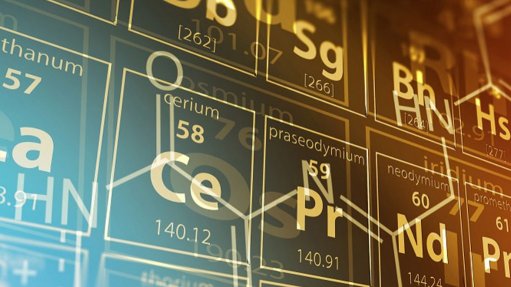
Further, so-called minor metals and rare earths are rapidly emerging as a frontier of critical importance. While produced in smaller volumes, minor metals, such as tellurium and tungsten, play specialised and essential roles across a wide range of high-tech applications.
With highly concentrated production risks and China's tightening grip on strategic minerals and rare earths, supply chain fragility is becoming increasingly visible.
As geopolitical tensions prompt governments to reassess strategic dependencies, these niche yet indispensable materials are set to command far greater attention from investors, policymakers and miners alike, BMI states.
Meanwhile, as traditional and known reserves start to deplete and ore grades fall, rising mineral prices will enable riskier projects to gain commercial viability, significantly rewarding pioneers with the technological know-how and capital.
“Mining in remote and previously inaccessible locations still faces major hurdles and carries tremendous risks.
“However, we expect the appeal of untapped resources to push miners to navigate extreme environments, such as the Arctic, the deep sea and space, in a bid to reap the greatest rewards in what is set to become a transformative era for the global mining industry.”
Article Enquiry
Email Article
Save Article
Feedback
To advertise email advertising@creamermedia.co.za or click here
Research Reports
Projects
Latest Multimedia
Latest News
Showroom

Rio Carb is an OEM (Original Equipment Manufacturer) of R-C700 Chromium Carbide (CrC) alloy clad wear plates and pipes used for heavy materials...
VISIT SHOWROOM
ALBIS FLANGES — founded in 1965 — is a petro-chemical approved manufacturer of flanges and fittings in most grades of steel, listed with Sasol,...
VISIT SHOWROOM

Announcements
What's On
Subscribe to improve your user experience...
Option 1 (equivalent of R125 a month):
Receive a weekly copy of Creamer Media's Engineering News & Mining Weekly magazine
(print copy for those in South Africa and e-magazine for those outside of South Africa)
Receive daily email newsletters
Access to full search results
Access archive of magazine back copies
Access to Projects in Progress
Access to ONE Research Report of your choice in PDF format
Option 2 (equivalent of R375 a month):
All benefits from Option 1
PLUS
Access to Creamer Media's Research Channel Africa for ALL Research Reports, in PDF format, on various industrial and mining sectors
including Electricity; Water; Energy Transition; Hydrogen; Roads, Rail and Ports; Coal; Gold; Platinum; Battery Metals; etc.
Already a subscriber?
Forgotten your password?
Receive weekly copy of Creamer Media's Engineering News & Mining Weekly magazine (print copy for those in South Africa and e-magazine for those outside of South Africa)
➕
Recieve daily email newsletters
➕
Access to full search results
➕
Access archive of magazine back copies
➕
Access to Projects in Progress
➕
Access to ONE Research Report of your choice in PDF format
RESEARCH CHANNEL AFRICA
R4500 (equivalent of R375 a month)
SUBSCRIBEAll benefits from Option 1
➕
Access to Creamer Media's Research Channel Africa for ALL Research Reports on various industrial and mining sectors, in PDF format, including on:
Electricity
➕
Water
➕
Energy Transition
➕
Hydrogen
➕
Roads, Rail and Ports
➕
Coal
➕
Gold
➕
Platinum
➕
Battery Metals
➕
etc.
Receive all benefits from Option 1 or Option 2 delivered to numerous people at your company
➕
Multiple User names and Passwords for simultaneous log-ins
➕
Intranet integration access to all in your organisation