Beneficiation, innovation take centre stage at MCCI conference

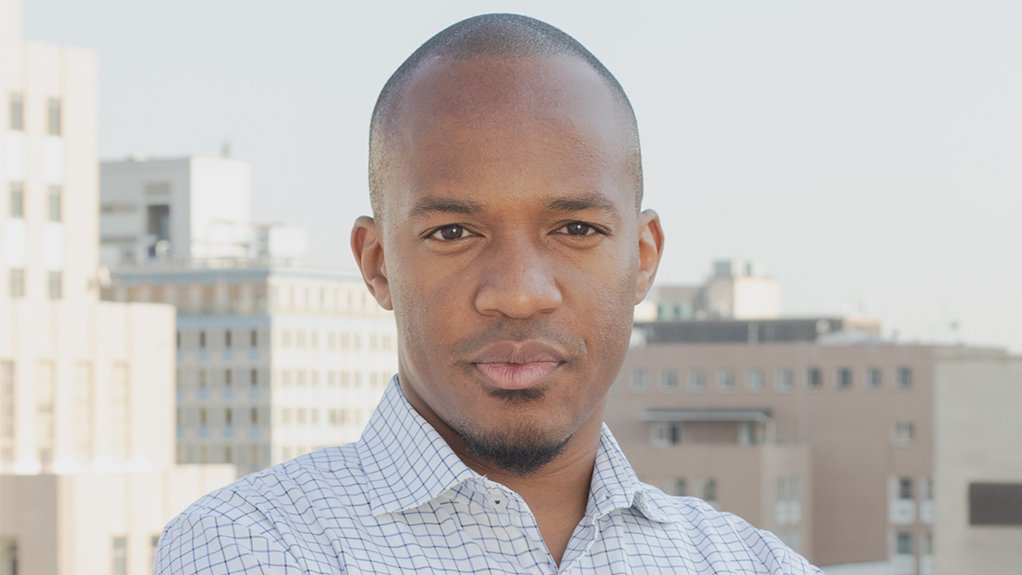



With Middelburg at the heart of the South Africa’s power generation sector, providing about 80% of the country’s energy, there is a need to bolster the use of the region’s resources through innovation and beneficiation, to ensure that it is not hampered by the transition to new energy sources.
This was highlighted by speakers on the first day of the Middelburg Chamber of Commerce and Industry’s (MCCI’s) yearly conference, being held this week in Middelburg under the theme “Innovation, Beneficiation and the Next Five Years”.
MCCI executive member Sterna van der Merwe stressed the need to embrace technology and innovation to enable entrepreneurship and build sustainable, inclusive industries.
Liberty Coal CEO Hlayiseka M Chauke, meanwhile, called for industry to challenge the perceptions facing Middelburg, including that it could not compete, that beneficiation was too expensive and that the town would fail because of the energy transition.
He stressed the need for collaboration to tackle these perceptions and build resilience.
Seriti Resources chief people officer Tshegofatso Mashapu touched on an oft-forgotten point of including people in the discussion.
He emphasised that when companies were pursuing digital technology and equipment, the question must be asked as to who this would ultimately benefit, with frontline workers being “digitally constrained”, and the need to provide them with access.
Mashapu emphasised that “people make technology work”. He said it should be embraced in the country as had been done internationally; however, this required including workers on the journey to prevent job losses and allay fears.
He explained that the issue was not the technology, but rather, the need to empower people.
Mashapu cited studies which showed that frontline workers faced challenges including a lack of training on new technology; therefore, they had the tools, but the outcome wais not guaranteed, and they often had to adapt on their own. He attributed this to a leadership challenge, rather than a technology one.
Mashapu pointed out that while coal would be around for the foreseeable future, it was a depleting commodity, and there must be recognition that the workforce in the region would reduce over time.
Therefore, there should not be an over-reliance on coal, and instead, it should be pursued in conjunction with other energy resources, as Seriti was doing, by investing in profitable coal mines while also undertaking renewable-energy projects.
Moreover, he stressed the need to start empowering people now for the industries of the future, to ensure they did not get lost in the transition.
Columbus Stainless COO Riaan van Coller outlined the underused production capacity in the country’s stainless steel market, with only 341 000 t of its 600 000 t capacity used last year. He pointed out that while global stainless steel production continued to expand, South Africa’s production had fallen by about 37.8% since 2020.
Van Coller said the entire domestic steel sector was under “immense strain”, squeezed by surging global imports and local infrastructure constraints.
He outlined the need to secure the country’s steel through local beneficiation and procurement.
Steel and Engineering Industries Federation of Southern Africa (Seifsa) CEO Tafadzwa Chibanguza zeroed in on beneficiation. He pointed out that the country’s industrial base was moving in the wrong direction, with production below its pre-crisis peak, underused plant and employment structurally declining.
Chibanguza attributed idle plant to a demand problem. He stressed that the beneficiation challenge could not be solved by adding plant in isolation, rather, the issues of demand, cost and competitiveness must also be tackled.
There is also the factor of global politics reshaping the global industrial environment, which impacts on production.
Chibanguza said the strategic questions for the country should not be whether to use industrial policy, but rather, whether its policy instruments reinforced one another, and whether they built competitive capability rather than permanent protection.
He outlined five policy instruments that were increasingly dictating where investment lands, namely, subsidies and tax incentives, strategic procurement, tariffs and trade remedies, standards and carbon rules, and export controls.
Chibanguza mentioned that beneficiation must be globally competitive at the border, and not only viable behind it.
He stressed the importance of energy and logistics reliance, with these not only supporting polices, but also standing as core production capabilities.
Chibanguza explained that mineral endowment, as the country had, was only one of eight necessary conditions. Without the surrounding system, compulsory value addition, as was popularly advanced, could produce high-cost capacity rather than competitive industry, he warned.
He said beneficiation would succeed when the eight conditions were designed as one investable system. Other than mineral endowments, these were:
- reliable and competitive energy,
- infrastructure and utilities,
- demand and market access,
- skills and technology,
- supplier and anchor-firm clusters,
- patient risk-sharing capital, and
- coherent policy and legitimacy.
“Mineral endowment creates an option. Industrial capability turns it into prosperity. The new five years are about building the system between the mine and the market,” he averred.
Article Enquiry
Email Article
Save Article
Feedback
To advertise email advertising@creamermedia.co.za or click here
Research Reports
Projects

Latest Multimedia
Latest News
Showroom
Established on 1 March, 2000, by Barries Barnard, Advanced Fire Suppression Technologies (AFST) and the Advanced Group stands as Sub-Saharan...
VISIT SHOWROOM
CMTS is a leading, well-established EC&I contractor with 37+ years of mining and industrial experience. We execute full-scope EC&I projects with...
VISIT SHOWROOM
Announcements
What's On
Subscribe to improve your user experience...
Option 1 (equivalent of R125 a month):
Receive a weekly copy of Creamer Media's Engineering News & Mining Weekly magazine
(print copy for those in South Africa and e-magazine for those outside of South Africa)
Receive daily email newsletters
Access to full search results
Access archive of magazine back copies
Access to Projects in Progress
Access to ONE Research Report of your choice in PDF format
Option 2 (equivalent of R375 a month):
All benefits from Option 1
PLUS
Access to Creamer Media's Research Channel Africa for ALL Research Reports, in PDF format, on various industrial and mining sectors
including Electricity; Water; Energy Transition; Hydrogen; Roads, Rail and Ports; Coal; Gold; Platinum; Battery Metals; etc.
Already a subscriber?
Forgotten your password?
Receive weekly copy of Creamer Media's Engineering News & Mining Weekly magazine (print copy for those in South Africa and e-magazine for those outside of South Africa)
➕
Recieve daily email newsletters
➕
Access to full search results
➕
Access archive of magazine back copies
➕
Access to Projects in Progress
➕
Access to ONE Research Report of your choice in PDF format
RESEARCH CHANNEL AFRICA
R4500 (equivalent of R375 a month)
SUBSCRIBEAll benefits from Option 1
➕
Access to Creamer Media's Research Channel Africa for ALL Research Reports on various industrial and mining sectors, in PDF format, including on:
Electricity
➕
Water
➕
Energy Transition
➕
Hydrogen
➕
Roads, Rail and Ports
➕
Coal
➕
Gold
➕
Platinum
➕
Battery Metals
➕
etc.
Receive all benefits from Option 1 or Option 2 delivered to numerous people at your company
➕
Multiple User names and Passwords for simultaneous log-ins
➕
Intranet integration access to all in your organisation