Australia softens gas reserve rule for LNG exporters



PERTH/SYDNEY - Australia relaxed a proposed rule on Thursday that would have forced natural gas exporters to reserve 20% of their output for the local market, instead requiring them to hold back up to a fifth of their production as determined by the energy regulator.
The proposal is designed to reserve an oversupply of 110% of estimated demand for the east coast gas market, which has faced shortfalls for almost a decade. Falling offshore volumes from the state of Victoria has reduced supply, and some east coast liquefied natural gas (LNG) producers have bought up domestic production to meet export quotas.
The proposed policy will ensure "gas is more affordable and the domestic market is always modestly oversupplied," Energy Minister Chris Bowen said in a statement.
How much an exporter must reserve for the domestic market would be determined by the Australian Energy Regulator (AER), Bowen said. The AER oversees Australia's electricity and gas markets.
The scheme's start date will also be pushed back by six months to January 1, 2028, with existing export contracts unaffected by the policy. The bill is expected to be submitted to parliament later this year.
Australian Energy Producers (AEP) welcomed the changes but warned that oversupply could flood local markets, drive down prices and discourage development of much needed new gas supply.
SOME SOFTENING, SOME HARDENING
The three LNG export projects on the east coast operated by Origin Energy, Shell and Santos would be most affected by the reservation scheme.
While some of the initial obligations have been softened, the government has maintained that the producers "must supply" a certain percentage of their output to the local market, and not just offer it to any prospective buyers.
Santos CEO Kevin Gallagher said in a speech to the National Press Club on Wednesday that the government should follow the Western Australia model of requiring exporters to offer gas to local buyers on "commercial terms".
"This would maintain the architecture of the domestic gas reservation the Government has announced — but importantly it would let the market, rather than arbitrary forecasts — balance supply and demand," he said.
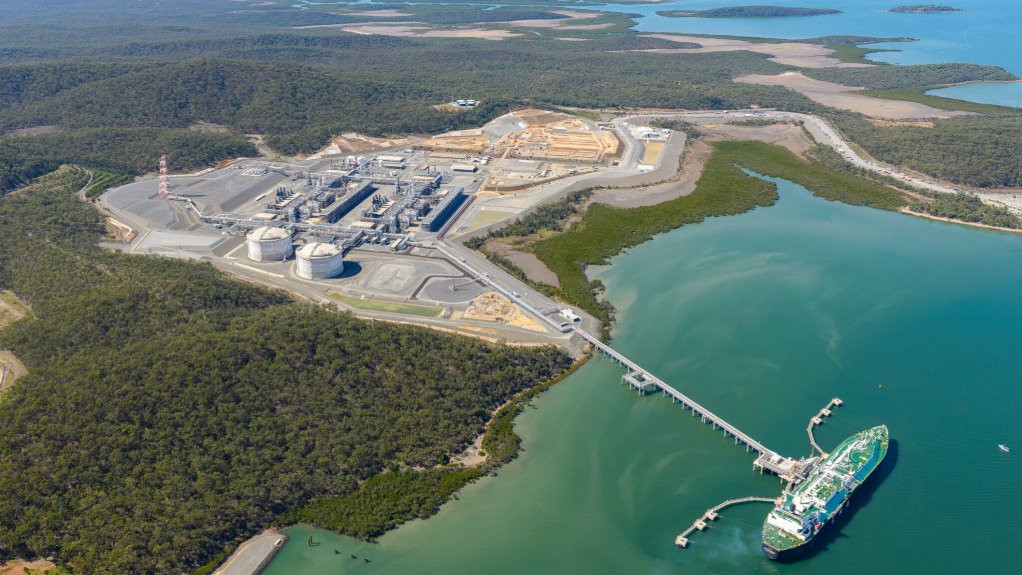
Santos is the operator of the Gladstone LNG plant in Queensland, and of the three main east coast producers, it is the only one that does not supply significant volumes to the domestic market. Origin's APLNG and Shell's QCLNG both have supply in excess to their long-term contracted volumes and send gas to the domestic market.
RESERVATION LEVELS TO DIFFER BY REGION
The new plan also recognises a domestic reservation requirement of 15% in Western Australia and largely exempts the Northern Territory, where holding back 20% of gas supply would vastly outweigh the region's modest demand. Western Australia gas supply is not connected to the east coast and the Northern Territory has one modest capacity pipeline to the east.
"Domestic supply obligations will align with physical domestic markets," Resources Minister Madeleine King said of the difference between western and eastern markets, noting that within an already well-supplied market, the domestic obligations would be reduced.
Grattan Institute energy analyst, Tony Wood, told Reuters that Thursday's update wasn’t a "really big change, but it’s much, much clearer".
He also noted that Western Australia’s scheme operated on a multi-year basis, where producer supplied 15% of their output over the lifetime of a project rather than annually.
Grattan also echoed the producer group's criticism that the government policy would oversupply local markets and discourage further exploration and development.
Amplitude Energy, a domestic gas producer that partners with private equity firm OG Energy, had earlier said the initial proposal would make its own projects uneconomic.
An Amplitude spokesperson, however, said the updated scheme was "more workable than feared" provided it allowed exporters to co-invest in exploration with domestic suppliers.
Article Enquiry
Email Article
Save Article
Feedback
To advertise email advertising@creamermedia.co.za or click here

Projects

Latest Multimedia

Latest News


Showroom
AirNox (Pty) Ltd is a level 1 BBBEE manufacturer of complete AdBlue® solutions for operators of SCR diesel engines and AUS40 across South Africa...
VISIT SHOWROOM
Goodwin Submersible Pumps Africa is sole distributors for Goodwin electrically driven, submersible, abrasion resistance slurry pumps.
VISIT SHOWROOM

Announcements
What's On
Subscribe to improve your user experience...
Option 1 (equivalent of R125 a month):
Receive a weekly copy of Creamer Media's Engineering News & Mining Weekly magazine
(print copy for those in South Africa and e-magazine for those outside of South Africa)
Receive daily email newsletters
Access to full search results
Access archive of magazine back copies
Access to Projects in Progress
Access to ONE Research Report of your choice in PDF format
Option 2 (equivalent of R375 a month):
All benefits from Option 1
PLUS
Access to Creamer Media's Research Channel Africa for ALL Research Reports, in PDF format, on various industrial and mining sectors
including Electricity; Water; Energy Transition; Hydrogen; Roads, Rail and Ports; Coal; Gold; Platinum; Battery Metals; etc.
Already a subscriber?
Forgotten your password?
Receive weekly copy of Creamer Media's Engineering News & Mining Weekly magazine (print copy for those in South Africa and e-magazine for those outside of South Africa)
➕
Recieve daily email newsletters
➕
Access to full search results
➕
Access archive of magazine back copies
➕
Access to Projects in Progress
➕
Access to ONE Research Report of your choice in PDF format
RESEARCH CHANNEL AFRICA
R4500 (equivalent of R375 a month)
SUBSCRIBEAll benefits from Option 1
➕
Access to Creamer Media's Research Channel Africa for ALL Research Reports on various industrial and mining sectors, in PDF format, including on:
Electricity
➕
Water
➕
Energy Transition
➕
Hydrogen
➕
Roads, Rail and Ports
➕
Coal
➕
Gold
➕
Platinum
➕
Battery Metals
➕
etc.
Receive all benefits from Option 1 or Option 2 delivered to numerous people at your company
➕
Multiple User names and Passwords for simultaneous log-ins
➕
Intranet integration access to all in your organisation