Africa on the edge of a digital future





This article has been supplied.
By Steven Santini, Vice President for Secure Power, SSA at Schneider Electric
The advantages of edge computing are well-documented, clear and tangible. Many industries today benefit from its reduced latency, improved reliability, enhanced security, and cost savings.
It is also these benefits that meets the African continent’s increasing need to process data where it’s generated. Indeed, as the continent accelerates its adoption of IoT and AI-driven applications, the ability to, for example, deploy machine learning (ML) models on edge devices will minimise risk and ensure real-time responsiveness, even in areas with limited connectivity.
But, despite the numerous advantages, edge computing’s widespread deployment remains complex, largely shaped by one critical constraint: power.
Fortuitus timing
In many ways, the adoption of edge computing in Africa is long overdue. Already, we are seeing governments investing in communications networks; recognising that digital infrastructure is as important as its physical counterparts.
This, in turn, has created fertile ground for edge technologies, particularly in sectors where real-time data processing is mission critical.
Here, both heavy industries and natural resources, where Africa holds a globally significant position, are accelerating adoption. These sectors are increasingly relying on edge computing to optimise operations in environments where connectivity to centralised data centres can often be limited or inconsistent.
At the same time, global interest in Africa as a hub for AI, data centres, and digital services is intensifying. As it stands, capacity is projected to rise from 0.4 GW to 1.5–2.2 GW by 2030. The market is expected to grow at a CAGR of over 14%, with major hubs in South Africa, Nigeria, Kenya, and Egypt leading the expansion.
Again, this growing demand is pushing edge computing higher up the decision-making agendas as key enabler for continent’s digital transformation.
The power problem at the core
However, the expansion of edge computing in Africa cannot be separated from the realities of its energy landscape.
A significant portion of the population, particularly in rural area, still lacks access to reliable electricity. And this challenge extends directly to IT infrastructure.
Which brings us to the proverbial double-edged sword, edge deployments are by its very nature often located in remote or underserved areas, precisely where power is least reliable. Without stable, clean energy, even the most advanced edge solutions struggle to operate effectively.
Power instability not only complicates initial deployment but also affects ongoing maintenance and scalability. Frequent outages, voltage fluctuations, and limited grid coverage can lead to equipment failures, increased operational costs, and reduced system lifespan.
Energy and IT’s intersection
The good news is the range and sophistication of current energy solutions are more advanced than ever. Addressing Africa’s edge computing challenge therefore means rethinking how power is generated, managed, and consumed at the edge.
Today, modern energy management systems are doing just that, enabling organisations to optimise power usage while also in optimising workloads.
Furthermore, technologies such as high-efficiency uninterruptible power supplies (UPS), energy storage systems, and intelligent cooling solutions are becoming essential components of edge infrastructure.
Significantly is the rise of microgrids, which operate as localised systems and can directly generate and distribute energy to the edge which offers a practical path forward for remote and industrial applications.
The above also reconfirms Africa’s renewable energy landscape and benefits to edge computing:
- Shift in strategy - renewables are moving from peripheral to central in energy planning.
- Bring‑your‑own‑power trend – organisations are investing in on‑site generation, storage, and microgrids to offset unreliable grids.
- Operational resilience - greater control over power availability reduces dependence on external infrastructure.
- Edge computing impact- renewable‑powered microgrids provide a scalable, sustainable foundation for remote and off‑grid deployments
Opportunities abound
To overcome Africa’s energy challenges, partnerships must be established that align projects with national priorities while leveraging private-sector innovation.
The success of edge deployments hinges on a strong partner ecosystem which requires expertise across multiple domains, from operational technology (OT) and IT to energy systems and on-the-ground service capabilities.
Ultimately, Africa’s power challenges offer the perfect opportunity to embrace decentralised energy systems, renewable technologies, and integrated digital solutions.
A continent that is building a new kind of edge ecosystem; one that is inherently resilient, efficient, and adaptable.
Article Enquiry
Email Article
Save Article
Feedback
To advertise email advertising@creamermedia.co.za or click here



Latest Multimedia


Latest News

Showroom
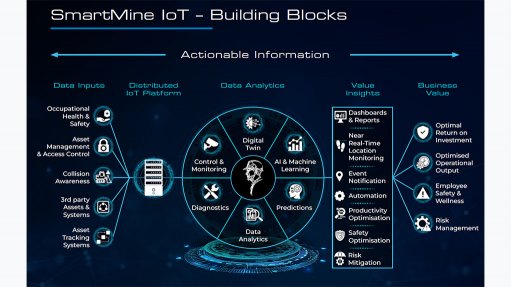
SmartMine IoT has been developed with the mining industry in mind, to provides our customers with powerful business intelligence and data modelling...
VISIT SHOWROOM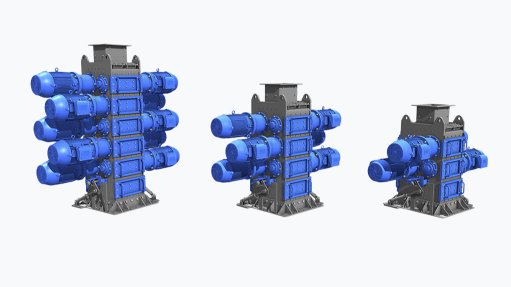
Energy and Densification Systems (EDS) has developed equipment for crushing, milling, blending and densifying products. Based on its globally...
VISIT SHOWROOM



Announcements
What's On
Subscribe to improve your user experience...
Option 1 (equivalent of R125 a month):
Receive a weekly copy of Creamer Media's Engineering News & Mining Weekly magazine
(print copy for those in South Africa and e-magazine for those outside of South Africa)
Receive daily email newsletters
Access to full search results
Access archive of magazine back copies
Access to Projects in Progress
Access to ONE Research Report of your choice in PDF format
Option 2 (equivalent of R375 a month):
All benefits from Option 1
PLUS
Access to Creamer Media's Research Channel Africa for ALL Research Reports, in PDF format, on various industrial and mining sectors
including Electricity; Water; Energy Transition; Hydrogen; Roads, Rail and Ports; Coal; Gold; Platinum; Battery Metals; etc.
Already a subscriber?
Forgotten your password?
Receive weekly copy of Creamer Media's Engineering News & Mining Weekly magazine (print copy for those in South Africa and e-magazine for those outside of South Africa)
➕
Recieve daily email newsletters
➕
Access to full search results
➕
Access archive of magazine back copies
➕
Access to Projects in Progress
➕
Access to ONE Research Report of your choice in PDF format
RESEARCH CHANNEL AFRICA
R4500 (equivalent of R375 a month)
SUBSCRIBEAll benefits from Option 1
➕
Access to Creamer Media's Research Channel Africa for ALL Research Reports on various industrial and mining sectors, in PDF format, including on:
Electricity
➕
Water
➕
Energy Transition
➕
Hydrogen
➕
Roads, Rail and Ports
➕
Coal
➕
Gold
➕
Platinum
➕
Battery Metals
➕
etc.
Receive all benefits from Option 1 or Option 2 delivered to numerous people at your company
➕
Multiple User names and Passwords for simultaneous log-ins
➕
Intranet integration access to all in your organisation