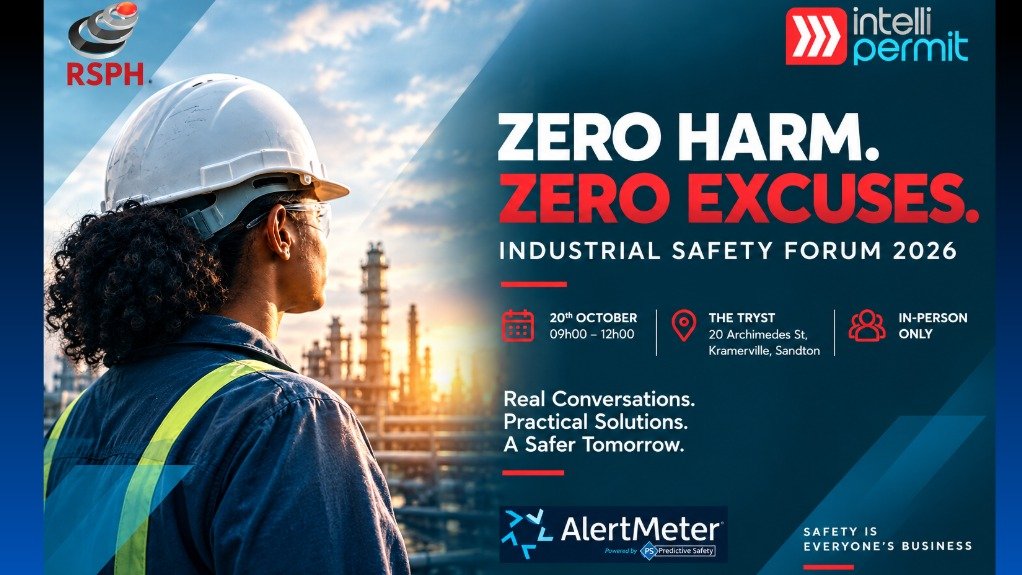
Zero Harm. Zero Excuses



By: Rifle-Shot Performance Holdings
Across the industrial sectors, the pursuit of Zero Harm remains one of the most important objectives on the agenda. And there is certainly progress to celebrate. Fatalities are declining, and that matters enormously.
But perhaps this is also the moment to ask a more uncomfortable question:
Are we measuring the right things, learning from the right things, and looking deeply enough at why people are still being injured?
Our experience of walking the journey towards Zero Harm with industrial organisations has highlighted something important: safety is rarely the result of a single system, process or decision. It is the outcome of multiple interconnected factors — technology, procedures, leadership, culture, human behaviour, cognitive state and the realities of day-to-day operations.
And when something goes wrong, the cause is rarely as simple as the incident report might suggest.
Moving beyond the checklist
Industrial environments are complex. Multiple systems, processes and people interact continuously, creating ripple effects across the operation.
We have enormous amounts of data available to us, yet the real challenge is turning that data into insight — and then turning insight into action.
This is where technology has an increasingly important role to play, but technology is not the answer on its own.
We are living in a world where AI is rapidly becoming part of almost every conversation about operational improvement. Yet many high-risk organisations are still relying on A3 triplicate, paper-based permits to manage critical activities.
That isn't a criticism. It is a reality check.
Before we ask what AI can do, perhaps we should ask where we are today, and what needs to evolve first.
Which technologies are genuinely making a measurable difference to safety and operational performance? Where can digitalisation eliminate risk rather than simply digitise an existing process? How do we connect the systems we already have so that information becomes useful at the point where decisions are being made?
These are not simply technology questions, they're human questions. Safety is personal.
Consider the person who arrives at work to operate dangerous equipment:
Did they get enough sleep last night? Are they mentally alert? Are they experiencing fatigue, stress or distraction? Is their cognitive state affecting the way they interpret information, assess risk or make decisions? And perhaps most importantly: do we know?
We often talk about human error as though it is a failure of the individual. But what if we looked more closely at the conditions in which that decision was made?
What role did cognitive bias play? What influence did culture have? Did the individual feel able to challenge a decision? Did the systems around them support the right decision, or make the wrong one easier?
This is where diversity, culture, technology and safety begin to converge.
From intention to evolution
Achieving Zero Harm requires more than compliance with a checklist. It requires a willingness to examine what we believe we already know, challenge “the way we have always done it”, and recognise that the starting point for improvement is an honest assessment of where we are today.
Evolution begins with awareness.
Awareness of our systems, awareness of our data, awareness of our culture, awareness of our technology and how it's used, and, perhaps most importantly, awareness of ourselves.
Because all business is personal.
Every permit, every production decision, every maintenance activity and every operational transaction ultimately affects people. The goal is therefore not simply to create more rules, more technology or more reports. The goal is to create better decisions, made by people who are supported by systems that help them make those decisions safely.
Zero Harm demands that we keep asking difficult questions. Not because we have failed. But because we can evolve.
Intention is not action.
If we are serious about Zero Harm, we need to be willing to step into the room, challenge our assumptions, share what is working (and what isn't) and learn from one another.
Because Zero Harm requires Zero Excuses.
RSPH
Article Enquiry
Email Article
Save Article
Feedback
To advertise email advertising@creamermedia.co.za or click here
Research Reports



Latest Multimedia
Latest News


Showroom
Complete range of security sealing solutions including security seals bags and labels.
VISIT SHOWROOM
ROSOND provides fast, efficient, safe, and cost-effective drilling and grouting services to mining and exploration industries throughout Africa.
VISIT SHOWROOM

Announcements
What's On
Subscribe to improve your user experience...
Option 1 (equivalent of R125 a month):
Receive a weekly copy of Creamer Media's Engineering News & Mining Weekly magazine
(print copy for those in South Africa and e-magazine for those outside of South Africa)
Receive daily email newsletters
Access to full search results
Access archive of magazine back copies
Access to Projects in Progress
Access to ONE Research Report of your choice in PDF format
Option 2 (equivalent of R375 a month):
All benefits from Option 1
PLUS
Access to Creamer Media's Research Channel Africa for ALL Research Reports, in PDF format, on various industrial and mining sectors
including Electricity; Water; Energy Transition; Hydrogen; Roads, Rail and Ports; Coal; Gold; Platinum; Battery Metals; etc.
Already a subscriber?
Forgotten your password?
Receive weekly copy of Creamer Media's Engineering News & Mining Weekly magazine (print copy for those in South Africa and e-magazine for those outside of South Africa)
➕
Recieve daily email newsletters
➕
Access to full search results
➕
Access archive of magazine back copies
➕
Access to Projects in Progress
➕
Access to ONE Research Report of your choice in PDF format
RESEARCH CHANNEL AFRICA
R4500 (equivalent of R375 a month)
SUBSCRIBEAll benefits from Option 1
➕
Access to Creamer Media's Research Channel Africa for ALL Research Reports on various industrial and mining sectors, in PDF format, including on:
Electricity
➕
Water
➕
Energy Transition
➕
Hydrogen
➕
Roads, Rail and Ports
➕
Coal
➕
Gold
➕
Platinum
➕
Battery Metals
➕
etc.
Receive all benefits from Option 1 or Option 2 delivered to numerous people at your company
➕
Multiple User names and Passwords for simultaneous log-ins
➕
Intranet integration access to all in your organisation