Why mine dewatering pumps fail and how to prevent it

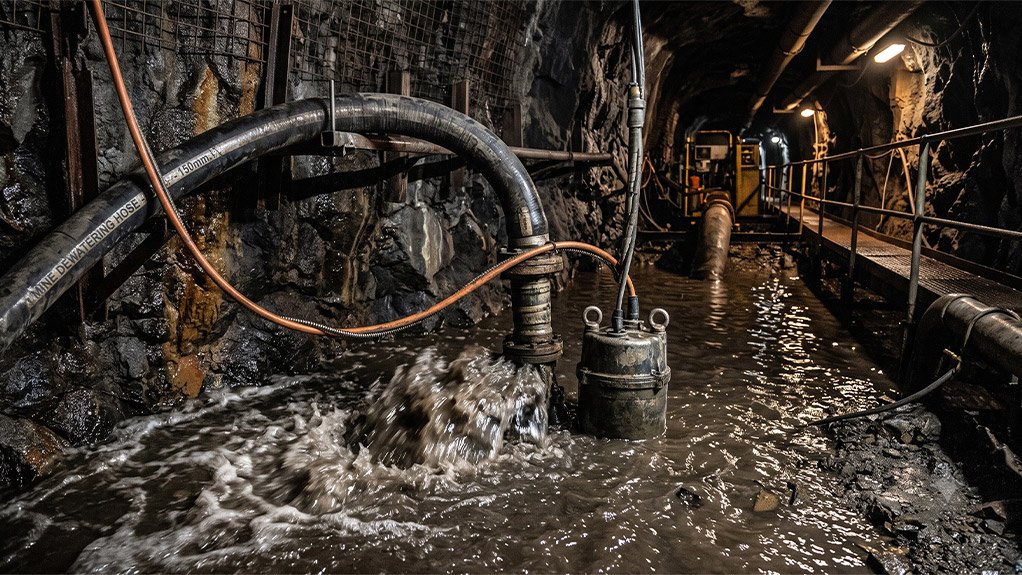

Heavy-duty submersible dewatering pump suspended by steel chains operating in a flooded underground mine shaft.
M Bond Pumps mining and industrial logo



In open-cast and underground mining operations, submersible dewatering pumps are critical assets for maintaining dry working faces. Engineered with high-chrome wear components and tandem mechanical seals, these units are designed to operate submerged in highly abrasive environments. However, when a compromised pump is removed from a sump for surface repair, the initial diagnosis frequently points toward mechanical wear or manufacturer defect.
Technical reports written by industrial mechanical and electrical equipment supplier M Bond Pumps’ specialist technicians reveal a different operational reality: a significant percentage of submersible pump failures stem from improper handling protocols and the absence of adequate electrical protection. Maximising the life cycle of this equipment requires a comprehensive understanding of four primary failure modes, alongside the integration of intelligent control architectures to prevent them.
1. Improper Handling and Capillary Wicking
Heavy-duty submersed pumps possess significant structural mass. During rapid sump relocation or urgent pit floor clearing, site personnel frequently hoist these units via their primary high-voltage power cables rather than using the designated lifting points and steel chains.
This handling deviation applies excessive tensile stress to the cable entry point. The entry gland, typically sealed with a rigid epoxy resin to withstand localised hydrostatic pressure, micro-fractures under the weight of the pump. Once this seal is compromised, the capillary action of the braided copper wire strands actively draws pressurised sump water down the cable jacket and directly into the motor stator housing. This continuous moisture ingress results in a phase-to-ground short circuit and immediate electrical failure upon the next start-up.
2. Thermal Degradation and Seal Fracturing from Loss of Submergence
A secondary point of failure is the absence of automated fluid level controls. All types of submersible motors rely on the surrounding fluid, as well as the medium passing through the volute, to dissipate heat.
When a pump is deployed into a sump or pit and rapidly evacuates the water, it risks running completely dry. Without the thermal transfer provided by the liquid, internal operating temperatures rise rapidly. The immediate lack of fluid film between the rotating and stationary mechanical seal faces generates excessive frictional heat. This rising temperature steadily degrades the internal lubricating oil and breaks down the dielectric varnish on the stator windings. However, the most immediate and catastrophic threat is thermal shock.
Consider a common operational scenario: a sump level drops, but the pump fails to switch off. The mechanical seal faces become hyper-heated from dry-running friction. If an inattentive operator belatedly notices the low level and suddenly lowers the hot unit into the remaining ambient-temperature water, the brittle mechanical seal faces are instantaneously quenched. This rapid temperature delta causes thermal shock, contracting and micro-fracturing the seal faces. Once the structural integrity of the seal is lost, pressurised fluid bypasses the oil chamber and shorts the motor.
Relying on standard mechanical float switches to prevent this dry-running scenario is often insufficient in mining applications, as the floats frequently foul on heavy mud or become pinned against rock faces.
3. Silt Ingestion and Mechanical Overload
As a sump is drawn down, just prior to running dry, the pump is subjected to the third threat of high-concentration solids intake. As the hydrostatic head decreases, the fluid dynamics at the suction inlet shift. Localised vortexing and high-velocity scouring at the sump floor cause the pump to ingest a dense, highly viscous slurry of settled silt, sand and drill cuttings.
If the unit is not specified with severe-duty silicon carbide seals, this abrasive ingress acts as a grinding compound that quickly degrades the sealing faces, leading to fluid intrusion into the oil chamber. Further, as dense silt packs unevenly within the volute and between the impeller vanes, it destroys the hydraulic balance of the rotating assembly. This induces severe vibration and dramatically increases the radial load and deflection on the shaft. Simultaneously, to push this heavy mass, the motor must draw excess current to maintain its rotational velocity. Without intervention, this combination of dynamic unbalance and a sharp spike in amperage results in a severe mechanical overload, breaking the lower bearings and permanently burning out the motor windings.
4. Macro-Debris Impaction and Volute Clogging
In scenarios where a sump, pit, or flooded shaft contains significant macro-debris—such as timber offcuts, sticks, blasted rock fragments, or general refuse—standard dewatering pumps become a liability. The intake strainers and tight internal clearances of conventional impellers quickly trap larger solids. This chokes the hydraulic flow, forcing the pump to run dead-headed, which escalates internal temperatures.
To mitigate this risk, operations must pivot away from standard equipment and specify dedicated trash pumps. Engineered with large spherical solids-handling capabilities and robust impeller designs, these heavy-duty units are built to pass large, fibrous, or rigid debris directly through the volute without compromising hydraulic efficiency or risking mechanical impaction.
Automating Protection with Intelligent Architecture
To safeguard equipment against both underload (dry-running) and overload (silt or debris impaction) scenarios, mining operations must implement intelligent algorithmic control via premium variable speed drives (VSDs). Removing reliance on manual observation or easily fouled float switches is achieved through the integration of dedicated electronic pump controllers.
By installing premium drives, engineers can monitor the precise phase angle (cos φ) and real-time amperage draw of the motor. If the VSD detects a sudden drop in load indicating a loss of fluid, or a sharp current spike indicating impeller jamming, the microprocessors register the anomaly in milliseconds. The system safely trips the circuit, protecting the unit from thermal and mechanical damage long before human intervention is required, and resets only when safe operating parameters are restored.
Heavy-Duty Self-Priming Pumps as a Surface Alternative
When submerged operational limits are constantly exceeded, or when limited sump access restricts safe lifting capacity, operations frequently pivot to surface-mounted configurations. In this arena, self-priming pumps set the industry standard for robust surface dewatering. Engineered with oversized volutes and vacuum-assisted dry-priming technology, these units master extreme solids-handling capabilities. They deliver uninterrupted, high-volume dewatering from the safety of the surface, eliminating the electrical and capillary wicking risks associated with submersible deployment.
Strategic Procurement and Rapid Equipment Supply
When harsh operating environments inevitably compromise mining equipment, relying on continuous, time-consuming repairs often results in unacceptable operational downtime. In critical dewatering applications, the most cost-effective and reliable strategy to maintain dry working faces is the rapid procurement and deployment of new replacement units.
The identical hydraulic sizing expertise, rigorous quality control, and massive supply chain capability that recently secured a 36-month critical water infrastructure tender with the City of Cape Town—encompassing the provision of nearly 700 distinct pump line items—are applied directly to M Bond Pumps’ online supply network. By shifting away from endless repair cycles and instead relying on immediate, off-the-shelf equipment replacement, processing plants and mines can drastically reduce costly downtime and guarantee factory-tested, original equipment manufacturer-level performance on every single installation.
Article Enquiry
Email Article
Save Article
Feedback
To advertise email advertising@creamermedia.co.za or click here
Research Reports


Projects
Latest Multimedia
Latest News
Showroom
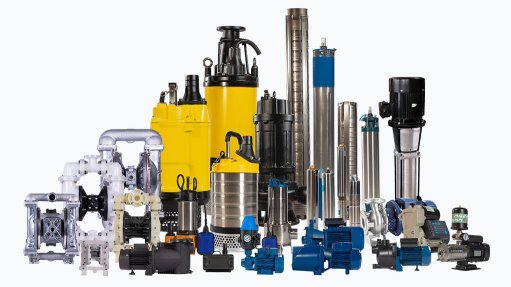
AxFlow AQS Liquid Transfer (Pty) Ltd is an Importer and Distributor of Pumps in Southern Africa
VISIT SHOWROOM
EIMS is an independent specialised environmental consulting firm offering the full spectrum of environmental management services across all sectors...
VISIT SHOWROOM


Announcements
What's On
Subscribe to improve your user experience...
Option 1 (equivalent of R125 a month):
Receive a weekly copy of Creamer Media's Engineering News & Mining Weekly magazine
(print copy for those in South Africa and e-magazine for those outside of South Africa)
Receive daily email newsletters
Access to full search results
Access archive of magazine back copies
Access to Projects in Progress
Access to ONE Research Report of your choice in PDF format
Option 2 (equivalent of R375 a month):
All benefits from Option 1
PLUS
Access to Creamer Media's Research Channel Africa for ALL Research Reports, in PDF format, on various industrial and mining sectors
including Electricity; Water; Energy Transition; Hydrogen; Roads, Rail and Ports; Coal; Gold; Platinum; Battery Metals; etc.
Already a subscriber?
Forgotten your password?
Receive weekly copy of Creamer Media's Engineering News & Mining Weekly magazine (print copy for those in South Africa and e-magazine for those outside of South Africa)
➕
Recieve daily email newsletters
➕
Access to full search results
➕
Access archive of magazine back copies
➕
Access to Projects in Progress
➕
Access to ONE Research Report of your choice in PDF format
RESEARCH CHANNEL AFRICA
R4500 (equivalent of R375 a month)
SUBSCRIBEAll benefits from Option 1
➕
Access to Creamer Media's Research Channel Africa for ALL Research Reports on various industrial and mining sectors, in PDF format, including on:
Electricity
➕
Water
➕
Energy Transition
➕
Hydrogen
➕
Roads, Rail and Ports
➕
Coal
➕
Gold
➕
Platinum
➕
Battery Metals
➕
etc.
Receive all benefits from Option 1 or Option 2 delivered to numerous people at your company
➕
Multiple User names and Passwords for simultaneous log-ins
➕
Intranet integration access to all in your organisation