Water security critical to the future of mining in South Africa


The future of mining in South Africa will not only depend on the discovery of new mineral deposits or the attraction of new capital, but also on whether a governance framework can be established in which water security, environmental protection and economic development reinforce one another, said
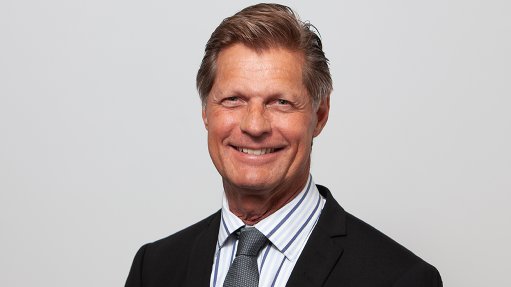
Rand Water and the Association of Water and Sanitation Institutions of South Africa (Awsisa) chairperson Ramateu Monyokolo.
In an opinion piece, he explains that mining remains central to South Africa’s economy, however the sector is among the most water-intensive and water-polluting sectors of the economy.
“Mining requires large volumes of water to function, yet its operations frequently undermine the very water systems on which communities, agriculture and future development depend.”
Mining activities can also threaten the very ecosystems that sustain water supplies, with acid mine drainage, groundwater contamination, destruction of wetlands and excessive water abstraction.
“Decades after the closure of many gold mines, toxic water continues to decant into rivers and groundwater systems, threatening human health and ecosystems. The costs of managing acid mine drainage are borne largely by the State and the public, while historical beneficiaries of mining have long exited the scene.”
Any mining policy that undermines water security is therefore both environmentally reckless and constitutionally defective.
Further, in a semi-arid country already experiencing the pressures of climate change, this contradiction can no longer be treated as a secondary issue.
“If we fail to act decisively, the next generation will inherit depleted rivers, contaminated groundwater and communities burdened by the consequences of today’s short-term gains. But if we act responsibly, mining can contribute not only to economic growth, but also to restoring ecosystems and strengthening water resilience,” Monyokolo outlined.
The only durable solution lies in cooperation where regulators enforce strong environmental standards, companies invest in responsible water management and institutions coordinate collective action.
The Department of Water and Sanitation (DWS) issues water-use licenses that support economic activities, promote equity, ensure historically marginalised communities are prioritised and position water as a developmental enabler rather than an input for profit.
“The DWS has identified practical measures to mitigate environmental and social risks while ensuring that the mining sector thrives without compromising South Africa’s water resources.”
Further, Operation Vulindlela has improved license processing within statutory timelines, enhancing certainty for mining investors.
However, a critical question is whether South Africa has enough water to meet new investment demand.
“The answer depends on collective action. If water users across all sectors commit to conservation and efficient use, it is possible to meet new demand even without extensive new infrastructure. In short, there is enough water for new investment, but only if responsibility is shared,” Monyokolo elaborated.
Water governance is not only about limits, but also about enabling sustainable growth, he continued, noting that investments in regional bulk infrastructure, water reuse programmes and the exploration of acid mine water as a resource extend industrial capacity while generating local employment and skills development opportunities.
Equally important, communities are central to water decision-making through catchment forums, water user associations and traditional authority participation.
These frameworks ensure that water is not only protected but leveraged as a tool for empowerment and inclusive development.
“If we sacrifice our water resources today, the developmental gains from mining operations will prove hollow, unsustainable and ultimately worthless tomorrow because without clean, reliable water true progress cannot endure.”
The measure of progress cannot be defined solely by the volume of mineral wealth extracted.
“It must also be assessed by whether we leave behind rivers that still flow, aquifers that still sustain life and communities that are healthier, more prosperous and more empowered because water policy serves all, not just a few,” he concluded.
Article Enquiry
Email Article
Save Article
Feedback
To advertise email advertising@creamermedia.co.za or click here
Projects
Latest Multimedia

Latest News
Showroom
As a reticulator, Egoli Gas provides natural gas to homes and businesses via underground pipes.
VISIT SHOWROOM

Announcements
What's On
Subscribe to improve your user experience...
Option 1 (equivalent of R125 a month):
Receive a weekly copy of Creamer Media's Engineering News & Mining Weekly magazine
(print copy for those in South Africa and e-magazine for those outside of South Africa)
Receive daily email newsletters
Access to full search results
Access archive of magazine back copies
Access to Projects in Progress
Access to ONE Research Report of your choice in PDF format
Option 2 (equivalent of R375 a month):
All benefits from Option 1
PLUS
Access to Creamer Media's Research Channel Africa for ALL Research Reports, in PDF format, on various industrial and mining sectors
including Electricity; Water; Energy Transition; Hydrogen; Roads, Rail and Ports; Coal; Gold; Platinum; Battery Metals; etc.
Already a subscriber?
Forgotten your password?
Receive weekly copy of Creamer Media's Engineering News & Mining Weekly magazine (print copy for those in South Africa and e-magazine for those outside of South Africa)
➕
Recieve daily email newsletters
➕
Access to full search results
➕
Access archive of magazine back copies
➕
Access to Projects in Progress
➕
Access to ONE Research Report of your choice in PDF format
RESEARCH CHANNEL AFRICA
R4500 (equivalent of R375 a month)
SUBSCRIBEAll benefits from Option 1
➕
Access to Creamer Media's Research Channel Africa for ALL Research Reports on various industrial and mining sectors, in PDF format, including on:
Electricity
➕
Water
➕
Energy Transition
➕
Hydrogen
➕
Roads, Rail and Ports
➕
Coal
➕
Gold
➕
Platinum
➕
Battery Metals
➕
etc.
Receive all benefits from Option 1 or Option 2 delivered to numerous people at your company
➕
Multiple User names and Passwords for simultaneous log-ins
➕
Intranet integration access to all in your organisation