US-Iran deal to have varied impact on metals complex – BMI

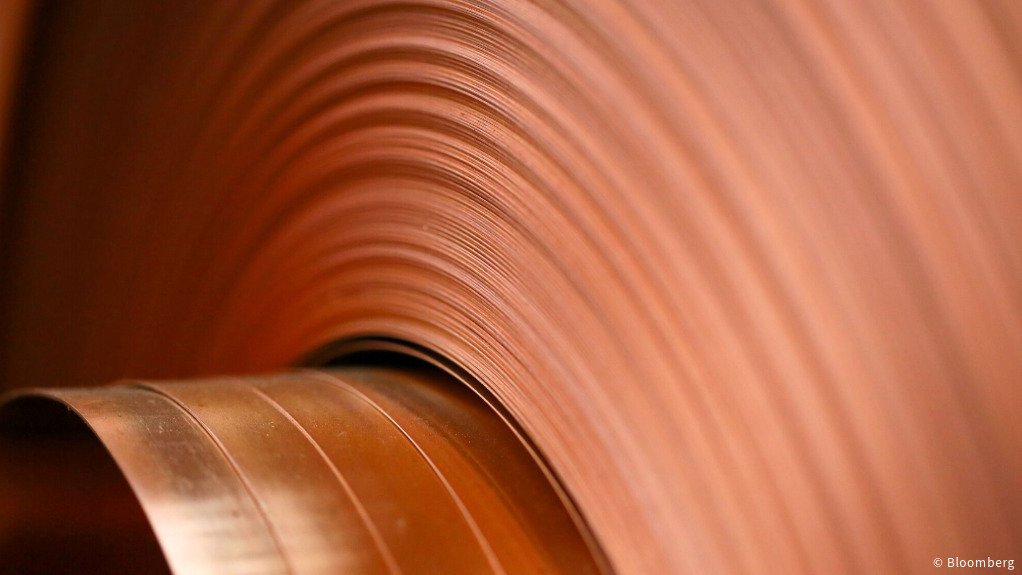
Copper prices were about $13 151/t as at June 24, down 5.1% in the month-to-date and 1.7% since the onset of the conflict, failing to stage a strong rebound against challenging macro backdrop, yet holding up 5.2% in the year-to-date
Photo by Bloomberg



The metals complex is poised for a mixed performance following the US-Iran deal announced in June, with easing demand-side concerns supporting industrial metals, while the alleviation of idiosyncratic supply risks pressures the complex to the downside.
This is according to Fitch Solutions unit BMI’s latest outlook for metals report, which points out that, while the precious metals basket, especially gold, initially stood to largely benefit from deal progress as long as optimism around the agreement tempered inflation fears, now, rising rate-hike bets and a stronger dollar threaten to offset the upside for the broader sub-asset class, keeping downside risks firmly in focus.
The report highlights that the Bloomberg Industrial Metals Index is down 10.4% month-to-date as of June 24, and also down 1.4% since February 27. It attributes this to progress over US-Iran talks boosting risk appetite being overshadowed by macro headwinds and a broader sharp correction across tech stocks.
Precious metals also came under pressure in June, with the Bloomberg Precious Metals Index down 13% in the month-to-date up to June 24 and falling 27.2% since the start of the conflict.
The report cautions that, despite relative forward-looking optimism regarding the US-Iran deal, the risks of stickier-than-expected inflation, alongside a clear scope for further tension could hamper industrial metals further.
For upward fundamental momentum to prove sustained, a more constructive geopolitical and macroeconomic backdrop still needs to materialise to rule out any downside risks at this point, it stresses.
BMI’s Country Risk team flagged that uncertainty remains high and risks to the outlook are still tilted to the downside.
It explains that while the timing and broad scope of the memorandum of understanding (MoU) digitally signed on June 17 by the US and Iran align with the baseline scenario, material ambiguities could complicate implementation and final-status negotiations.
Moreover, shipping flows through the Strait of Hormuz could take 6 to 12 weeks to normalise and return to pre-war levels.
A 40% probability is currently assigned by the Country Risk team to a ‘Messy Negotiations’ scenario, in which MoU violations occur while talks continue in some form.
However, a return to sustained fighting remains a relatively low probability risk at this stage, with only 15% assigned to a full breakdown in talks, the report posits.
METALS COMPLEX
The report highlights aluminium as a notable underperformer within the industrial metals complex in June, retreating 15.3% month-to-date as of June 24 and hovering around $3 161/t, largely ceding its war-induced gains and returning to pre-conflict levels.
The agreement between Washington and Tehran is set to ease the acute supply-side pressure that had weighed most heavily on aluminium supply amid disruptions to Gulf smelting capacity, with the US-Iran conflict previously estimated to remove 2.3-million tonnes from the market, equivalent to 3.2% of global output, the report outlines.
However, it warns that the lost capacity is unlikely to return quickly, and prior to the deal announcement, BMI flagged that the production across the offline facilities was not expected to normalise until the second half of 2027 at the earliest, as the restoration of curtailed capacity would likely be gradual and contingent on improvements in regional stability.
Moreover, the loss of Middle Eastern supply had tightened an already constrained market, and BMI expects a supply deficit to persist this year, limiting in turn the downside for prices.
In June, copper traded at about $13 400/t to $13 500/t, bolstered by supply-side concerns amid sulphuric acid supply headwinds, which had remained sharply in focus since the beginning of the US-Iran conflict, also exhibiting signs of tightness as tariff risks continued to run high.
Copper prices were about $13 151/t as at June 24, down 5.1% in the month-to-date and 1.7% since the onset of the conflict, failing to stage a strong rebound against the challenging macro backdrop, yet holding up 5.2% in the year-to-date, the report outlines.
While the macroeconomic narrative remains central for now for the complex, tariff risks are expected to shape the direction of the market through to month-end.
Against the trend, rare earths stand as the sole gainer within the complex in terms of the month-to-date performance, remaining largely insulated from the wider metals sell-off, particularly over the past week.
Praseodymium-neodymium oxide prices rose throughout the month and BMI expects these to remain well supported this year as tightening fundamentals and the weaponisation of rare earths as a geopolitical lever beyond their industrial applications continue to reinforce the upward momentum.
Meanwhile, gold bullion came under significant pressure towards the end of the month weighed down by Fed tightening bets and a firmer dollar.
BMI’s Country Risk team maintains that the US Federal Reserve will not move on interest rates this year and that, as long as conflict-related inflation pressures begin to fade, given the recent US-Iran agreement, the most likely outcome remains a prolonged hold.
Gold prices have seen a steady upward momentum since June 11, before reversing sharply from June 16 onwards, retreating towards $4 004/oz at June 24.
BMI continues to forecast an average of $4 600/oz for this year for now, with near-term price dynamics expected to be driven by Fed policy signals.
The rest of the precious metals basket followed suit in response to the unfavourable macroeconomic backdrop, with silver decreasing to a six-month low, hovering at about $58.90/oz as of June 24.
As of June 25, oil prices are heavily depressed, with the front-month contracts for Brent futures and Dated Brent trading at around $72.50/bl and $85.50/bl, respectively, the report indicates.
This is significantly below where BMI expected prices to be at this stage of the US-Iran peace process.
Owing to the price action experienced in June, the unit anticipates revising its Brent price forecasts this month, which currently stand at a yearly average of $81.50/bl for Brent futures and $88/bl for Dated Brent in 2026.
However, with its Country Risk analysts anticipating a challenging and prolonged period of negotiations, lingering risks remain around the speed and sustainability of the recovery in oil flows through the Strait of Hormuz, BMI warns.
With global inventories heavily depleted, a stronger-than-expected uplift in the third quarter would leave the market heavily exposed to any future disruptions on the supply side, it adds.
Article Enquiry
Email Article
Save Article
Feedback
To advertise email advertising@creamermedia.co.za or click here
Research Reports



Latest Multimedia

Latest News

Showroom

Willard Batteries is one of the leading brands in automotive battery power products. With a rich history spanning over 70 years, Willard batteries...
VISIT SHOWROOM
Rentech provides renewable energy products and services to the local and selected African markets. Supplying inverters, lithium and lead-acid...
VISIT SHOWROOM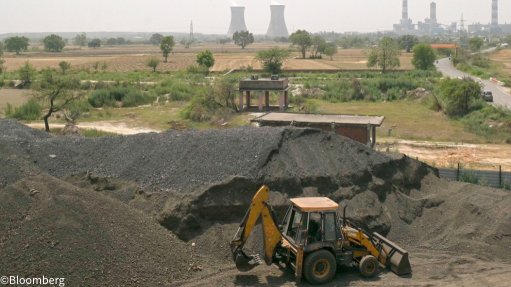

Announcements
What's On
Subscribe to improve your user experience...
Option 1 (equivalent of R125 a month):
Receive a weekly copy of Creamer Media's Engineering News & Mining Weekly magazine
(print copy for those in South Africa and e-magazine for those outside of South Africa)
Receive daily email newsletters
Access to full search results
Access archive of magazine back copies
Access to Projects in Progress
Access to ONE Research Report of your choice in PDF format
Option 2 (equivalent of R375 a month):
All benefits from Option 1
PLUS
Access to Creamer Media's Research Channel Africa for ALL Research Reports, in PDF format, on various industrial and mining sectors
including Electricity; Water; Energy Transition; Hydrogen; Roads, Rail and Ports; Coal; Gold; Platinum; Battery Metals; etc.
Already a subscriber?
Forgotten your password?
Receive weekly copy of Creamer Media's Engineering News & Mining Weekly magazine (print copy for those in South Africa and e-magazine for those outside of South Africa)
➕
Recieve daily email newsletters
➕
Access to full search results
➕
Access archive of magazine back copies
➕
Access to Projects in Progress
➕
Access to ONE Research Report of your choice in PDF format
RESEARCH CHANNEL AFRICA
R4500 (equivalent of R375 a month)
SUBSCRIBEAll benefits from Option 1
➕
Access to Creamer Media's Research Channel Africa for ALL Research Reports on various industrial and mining sectors, in PDF format, including on:
Electricity
➕
Water
➕
Energy Transition
➕
Hydrogen
➕
Roads, Rail and Ports
➕
Coal
➕
Gold
➕
Platinum
➕
Battery Metals
➕
etc.
Receive all benefits from Option 1 or Option 2 delivered to numerous people at your company
➕
Multiple User names and Passwords for simultaneous log-ins
➕
Intranet integration access to all in your organisation