The three gaps costing mines performance


This article has been supplied and will be available for a limited time only on this website.
By: Arjen de Bruin - Group CEO at OIM Consulting
A meeting scheduled for 15 minutes runs for 25. A crew waits longer than planned for a site to be signed off. The next shift is expected to catch up, but they’re still solving the problems left by the previous team. None of these delays looks particularly serious in isolation, but add them up and they amount to hours of lost production.
This is the kind of production challenge OIM has spent more than a decade examining across mining operations, using on-site data to understand why teams don’t always perform at their best.
That work shows that 86% of obstacles holding teams back come down to people, processes or systems – which means most sit within management’s control. Looking more closely at how these controllable obstacles play out on the ground, three recurring gaps emerge: employees are not fully invested in the work, frontline leaders do not always have the skills to lead effectively, and mines struggle to follow their own processes consistently. These are the gaps in willingness, capability, and discipline.
The problem is that mines rarely deal with these three gaps together. Culture may sit with HR, supervisor development with learning and development or operations, and the management operating system with operations. Each intervention may be sound in its own right, but when they are designed and implemented separately, they can become disconnected where it matters most: on the shift.
An engaged team will struggle to perform with an ineffective leader, while a trained supervisor can only do so much if the mine itself lacks the discipline to stick to its processes. The three have to work as one harmonious operating system for change to be sustainable.
The willingness gap: employees are not fully invested
We sometimes describe “willingness” as the difference between the head, the heart and the hands. Most employees know what their organisation stands for. They can often recite its values, its safety expectations and its priorities. That puts the message in the head. The challenge is getting it into the heart, so that people believe in it, and ultimately into the hands, where it changes how they actually work.
One way mines can build that investment is by connecting company values to the jobs people do every day. Integrity, for example, can mean recording the correct production figures, while excellence needs to be defined by what good work actually looks like on site.
When people understand what those values mean in their own roles, and why the organisation’s success matters to them, their families and their communities, values stop being words on a wall and start shaping behaviour on the shift.
The capability gap: frontline leaders lack the skills to lead effectively
An engaged workforce is a strong foundation, but the frontline leader is where culture, strategy and operational plans ultimately have to translate into a successful shift. Around 80% of the workforce is managed through supervisors, which makes this layer one of the most important levers available to a mine.
Yet many supervisors move into these roles because they are technically strong, rather than because they have been equipped to lead. Our research consistently identifies planning and organising, analysis and problem-solving, and leading and developing teams among the weakest frontline leadership competencies.
Our data shows that 91% of supervisors operate largely in firefighting mode, reacting to problems and changing plans on the fly rather than consistently addressing their root causes.
The discipline gap: operating standards are not followed consistently
Invested teams and capable supervisors also need a disciplined way of working. Most large mining companies already have sophisticated management operating systems that set out how work should be planned, executed and measured. The problem is often not the framework itself, but what happens within it on the day.
Discipline means creating a reliable operating rhythm: plan the work, execute it, understand the variance, solve the underlying problem and feed that learning into the next plan. When that rhythm slips, five minutes lost here and ten minutes there begin to compound. Meetings run over, teams start late, problems are passed to the next shift and plans are continually changed to compensate. Eventually, deviation becomes the normal way of operating.
Why all three gaps need to be addressed together
The consequences of this fragmentation become very real on the ground. In one case we encountered, an operations programme told supervisors to follow the plan without questioning it, while a culture programme encouraged them to stop and think before acting.
Both interventions had a useful purpose. The problem was that they had been designed and implemented separately, leaving the supervisor on the ground to reconcile two different ways of working.
A better approach is to bring these efforts together so that culture, leadership development and the operating system reinforce one another. This means developing frontline leaders in the environment in which they actually work: coaching them to plan, lead and solve problems effectively, helping them translate organisational values into everyday team behaviours, and building the discipline to work consistently within the mine’s management operating system.
The impact can be significant. At one conventional platinum operation, an intervention addressing frontline capability, operating discipline and culture helped the mine reach and then surpass its targets within eight weeks, while productivity improved by approximately 18%. The improvement did not come from finding another technical solution. It came from getting the people, leadership and operating discipline working together.
Ultimately, willingness, capability and discipline all have to meet in one place: the shift. That is where culture becomes behaviour, leadership becomes execution and an operating system becomes performance. Get those three working together, and mines can begin closing the controllable gaps that cost them production every day.
Article Enquiry
Email Article
Save Article
Feedback
To advertise email advertising@creamermedia.co.za or click here
Research Reports

Latest Multimedia
Latest News
Showroom
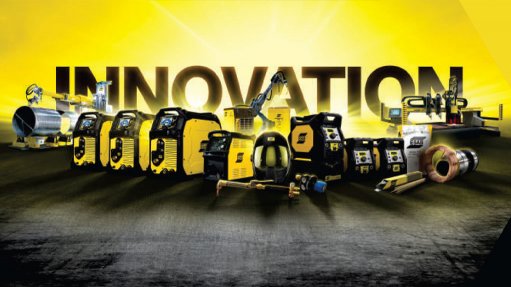
ESAB South Arica, the leading supplier of high-end welding and cutting products to the Southern African industrial market is based in...
VISIT SHOWROOM
ZF Aftermarket is the after-sales division of the world-renowned German ZF group, a global leader in mobility technology.
VISIT SHOWROOM

Press Office
Announcements
What's On
Subscribe to improve your user experience...
Option 1 (equivalent of R125 a month):
Receive a weekly copy of Creamer Media's Engineering News & Mining Weekly magazine
(print copy for those in South Africa and e-magazine for those outside of South Africa)
Receive daily email newsletters
Access to full search results
Access archive of magazine back copies
Access to Projects in Progress
Access to ONE Research Report of your choice in PDF format
Option 2 (equivalent of R375 a month):
All benefits from Option 1
PLUS
Access to Creamer Media's Research Channel Africa for ALL Research Reports, in PDF format, on various industrial and mining sectors
including Electricity; Water; Energy Transition; Hydrogen; Roads, Rail and Ports; Coal; Gold; Platinum; Battery Metals; etc.
Already a subscriber?
Forgotten your password?
Receive weekly copy of Creamer Media's Engineering News & Mining Weekly magazine (print copy for those in South Africa and e-magazine for those outside of South Africa)
➕
Recieve daily email newsletters
➕
Access to full search results
➕
Access archive of magazine back copies
➕
Access to Projects in Progress
➕
Access to ONE Research Report of your choice in PDF format
RESEARCH CHANNEL AFRICA
R4500 (equivalent of R375 a month)
SUBSCRIBEAll benefits from Option 1
➕
Access to Creamer Media's Research Channel Africa for ALL Research Reports on various industrial and mining sectors, in PDF format, including on:
Electricity
➕
Water
➕
Energy Transition
➕
Hydrogen
➕
Roads, Rail and Ports
➕
Coal
➕
Gold
➕
Platinum
➕
Battery Metals
➕
etc.
Receive all benefits from Option 1 or Option 2 delivered to numerous people at your company
➕
Multiple User names and Passwords for simultaneous log-ins
➕
Intranet integration access to all in your organisation