The logistics of remote mine dewatering

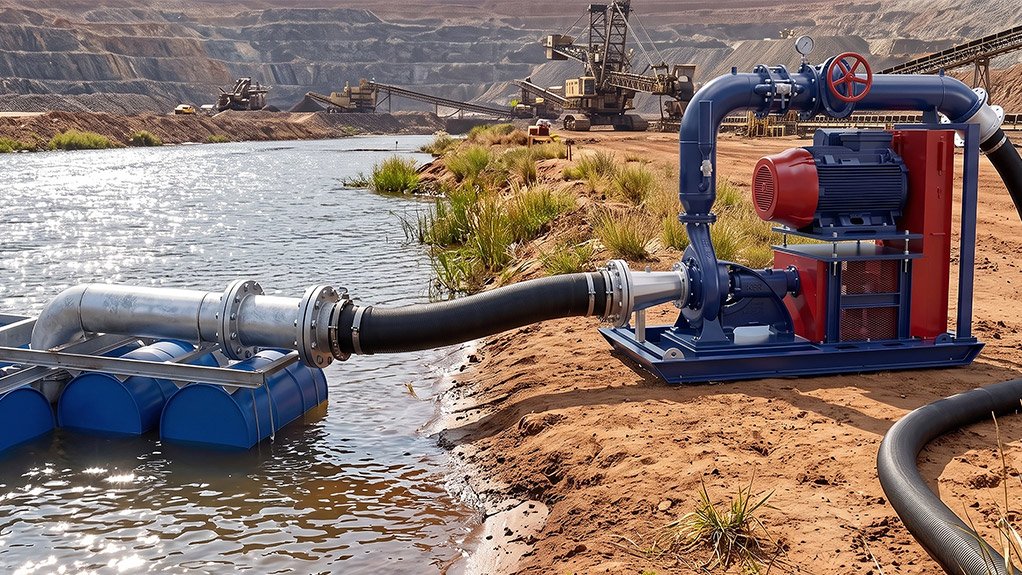
Severe-duty electric pump drag-skid paired with a modular 5-drum T-Float pontoon. Engineered by M Bond Pumps for remote open-pit mine dewatering.
M Bond Pumps mining and industrial logo


In the isolated, high-stakes environments of African open-cast mining—stretching from the sun-baked pits of the Northern Cape through the remote expanses of Zambia and into the Democratic Republic of the Congo—dewatering infrastructure must remain highly mobile to stay ahead of aggressive, dynamic blasting schedules and ever-changing site conditions. Historically, procurement departments have attempted to solve this geographical challenge by mounting high-kW diesel engines and standard centrifugal pumps onto generic, commercially available wheeled trailers.
However, deploying a standard wheeled trailer into a harsh extraction environment triggers an inevitable cascade of mechanical and logistical failures. From structural frame cracking under immense torsional loads to asset theft, these generic fabrications cost mining operations millions in unplanned downtime and lost capital. To achieve zero-interruption abstraction of return water dams, highly abrasive tailings ponding, and deep-pit groundwater seepage, process engineers are entirely rethinking the structural, mechanical and operational architecture of mobile mine-pumps.
By abandoning the fragility of generic commercial trailers, mines can finally resolve the five most destructive traps of remote water management.
1. Neutralising Equipment Theft and Asset Stripping
Mines operating in deep rural, poorly secured, or cross-border regions face an ongoing battle with equipment theft and organised asset stripping. Pumping systems mounted on standard axles are high-value, highly mobile targets. Opportunistic thieves can effortlessly hook a standard trailer up to a 4x4 and drive it off-site at night. Alternatively, they strip the tyres and axles, leaving the dewatering team with a stranded, completely unmovable asset when floodwaters rise.
Industrial consultancy M Bond Pumps has engineered this physical vulnerability out of existence with the Cape Cobra (diesel), as well as the Anaconda and Boa (electric) drag-skid series. By permanently discarding fragile wheels and axles, these proprietary units are structurally engineered from Pr. Eng.-certified S355 marine grade steel, featuring an indestructible 6 mm solid steel drag-floor. Mobilised exclusively by the use of heavy-duty tractor-tow, this monolithic footprint provides absolute overturning resistance. More importantly, it acts as a mathematical deterrent to theft—they are practically impossible to casually roll away.
The complete range of custom-engineered pump skids can be viewed in M Bond Pumps primary water pumps catalogue, to see how this heavy-duty architecture is applied across various kW ratings and engine sizes.
2. Defeating Vibrational Destruction on Rugged Ground
Eliminating wheels successfully prevents theft, but it creates a new, complex engineering challenge: dragging a massive M Bond 220 kW Anaconda portable diesel skid across unpaved, rocky pit paths subjects the drivetrain to immense torsional stress. In standard setups, this extreme structural chassis flex instantly destroys the microscopic shaft alignment between the engine and the pump. This leads to shattered bearings, rapidly degraded seals, and probable equipment failure soon after the unit is started up on site.
To counter this, the M Bond skid architecture uses an isolated kinetic transmission system. The drivetrain is equipped with an EN8 (70 mm to 90 mm) keyed jackshaft secured by heavy-duty dual plummer blocks, transferring power exclusively through a premium rubber tyre coupling. This highly specific drive architecture acts as a mechanical shock absorber. It effortlessly absorbs the diesel engine's immense torque spikes, isolates destructive rotational harmonics, and safely tolerates extreme chassis flex during rugged field transport—all without compromising the critical, precision <0.25 mm laser alignment.
3. Solving Priming Bottlenecks
Once the skid is positioned at the water's edge, the most critical bottleneck in open-pit dewatering is establishing and holding pump prime. When a primary abstraction pump loses its suction column overnight, operators frequently waste hours manually hauling heavy buckets of water across muddy banks to refill the volute. Worse, to bypass this intense manual labour, independent contractors often bring small, petrol-powered trash pumps onto the site simply to prime the main line. Introducing flammable petrol onto a strictly regulated, diesel-only mining site is a violation of Mine Health and Safety protocols, triggering immediate safety write-ups and possible operational halts.
M Bond’s engineering team resolves this completely through a proprietary, overlapping triple-failsafe priming architecture, ensuring zero manual buckets, zero wasted shifts, and 100% single-fuel compliance.
- Tier 1: Continuous delivery (Flomax foot valve): During standard operational cycling, this setup maintains a permanently charged suction column, ensuring full hydraulic delivery the moment the power unit fires—with zero hesitation and no manual intervention needed.
- Tier 2: Static head back-flush: This is engineered specifically for dirty-water realities where sludge or sediment might cause a slow overnight prime leak. The operator opens a dedicated discharge bypass valve. The static head pressure resting in the full discharge pipeline forcefully back-flushes the foot valve clean, easily refilling the suction line purely through gravity.
- Tier 3: "Dry day-one" setup: For completely dry, day-one initial setups, the skid incorporates a dedicated Turner Morris 4.8 HP diesel mini primer pump. Drafting directly from the source, it fills the main casing in minutes. Crucially, it uses the exact same belly-tank fuel source as the main diesel power unit, guaranteeing strict single-fuel site compliance.
4. Defending the Hydraulic Core
While these skids are paired with world-class KSB centrifugal pumps, pit drainage water is rarely perfectly clean. Whether drawing from process water reservoirs, returning seepage, or managing acidic tailings, the fluid frequently contains suspended grits and silts that will rapidly destroy standard commercial carbon-ceramic components.
To ensure the pump outlasts the mine plan, M Bond completely replaces standard seals, upgrading the internal mechanical seals to airtight, heavy-duty Silicon Carbide or Tungsten Carbide as a standard specification across the range.
To protect this vital mechanical upgrade from human error, the skid power units are integrated with pre-programmed, plug-and-play digital control panels. Even the hardest mechanical seal will shatter from thermal shock if allowed to run dry. If the pump loses prime, the control logic—wired directly to a discharge pressure switch—detects the underload and automatically shuts down the engine (Cape Cobra models only). This prevents the mechanical seals from cracking long before a busy operator even realises there is an issue.
5. Seamless Deployment and Eliminating Pontoon Fragility
The sheer simplicity of the M Bond setup is its greatest operational strength. Deployment requires basic technical commissioning: an operator tractor-tows the skid to the shore, connects one or two premium elastomeric rubber suction hoses to the modular floating suction architecture, and after the float is assembled fills the integrated 24-hour belly fuel tank (or connects the WEG IP55 motor to the site's power grid), and the system is ready to move bulk water.
When these skids are deployed for dynamic river abstraction or deep return-water dams, they require floating suction architecture. Historically, mines rely on proprietary plastic or custom fiberglass pontoons. If a floating module is punctured by submerged debris in a remote location, waiting months for an imported replacement part brings process water supply to a halt with unplanned delays.
The M Bond engineering equipment facilitates a more resilient logistics solution: the Boa and Anaconda T-Float pump pontoon & floats series. The heavy-duty, hot-dip galvanized structural frames are engineered to strap universally available 210-litre steel drums as their primary buoyancy devices. If a float is damaged, the mine does not need to wait for a proprietary replacement part; it can source a standard replacement 210-litre drum cost-effectively from any local village, fuel depot, or its own on-site stores, bolting it directly into the frame for true zero-downtime redundancy.
Article Enquiry
Email Article
Save Article
Feedback
To advertise email advertising@creamermedia.co.za or click here


Projects
Latest Multimedia
Latest News
Showroom

As a reticulator, Egoli Gas provides natural gas to homes and businesses via underground pipes.
VISIT SHOWROOM
Astore Keymak is one of South Africa’s leading suppliers of high-quality Thermoplastic Pipeline Systems, with branches in the major provinces.
VISIT SHOWROOM
Press Office
Announcements
What's On
Subscribe to improve your user experience...
Option 1 (equivalent of R125 a month):
Receive a weekly copy of Creamer Media's Engineering News & Mining Weekly magazine
(print copy for those in South Africa and e-magazine for those outside of South Africa)
Receive daily email newsletters
Access to full search results
Access archive of magazine back copies
Access to Projects in Progress
Access to ONE Research Report of your choice in PDF format
Option 2 (equivalent of R375 a month):
All benefits from Option 1
PLUS
Access to Creamer Media's Research Channel Africa for ALL Research Reports, in PDF format, on various industrial and mining sectors
including Electricity; Water; Energy Transition; Hydrogen; Roads, Rail and Ports; Coal; Gold; Platinum; Battery Metals; etc.
Already a subscriber?
Forgotten your password?
Receive weekly copy of Creamer Media's Engineering News & Mining Weekly magazine (print copy for those in South Africa and e-magazine for those outside of South Africa)
➕
Recieve daily email newsletters
➕
Access to full search results
➕
Access archive of magazine back copies
➕
Access to Projects in Progress
➕
Access to ONE Research Report of your choice in PDF format
RESEARCH CHANNEL AFRICA
R4500 (equivalent of R375 a month)
SUBSCRIBEAll benefits from Option 1
➕
Access to Creamer Media's Research Channel Africa for ALL Research Reports on various industrial and mining sectors, in PDF format, including on:
Electricity
➕
Water
➕
Energy Transition
➕
Hydrogen
➕
Roads, Rail and Ports
➕
Coal
➕
Gold
➕
Platinum
➕
Battery Metals
➕
etc.
Receive all benefits from Option 1 or Option 2 delivered to numerous people at your company
➕
Multiple User names and Passwords for simultaneous log-ins
➕
Intranet integration access to all in your organisation