Industrial symbiosis workshop uncovers more than 500 potential waste synergies


This article has been supplied.
A recent industrial symbiosis workshop produced significant results, with participants identifying 351 resource streams, resulting in 532 potential industrial symbiosis opportunities to transition waste resources into new products and revenue.
The Gauteng Industrial Symbiosis Programme (GISP) Business Opportunity Workshop, hosted by the National Cleaner Production Centre South Africa (NCPC-SA) in partnership with the Gauteng Department of Environment, demonstrated that waste is far more than something to dispose of; it is a valuable resource that can unlock new business opportunities.
Bringing together representatives from 66 companies across Gauteng, the workshop provided a practical platform for businesses to explore how industrial symbiosis can reduce costs, improve resource efficiency and strengthen the province's circular economy.
Unlike a conventional networking event, the ISP workshops were designed as a facilitated business exchange. Participants are guided through a structured process in which they identify surplus materials, by-products, and other waste resources available within other businesses, and share them with companies that need them.
By mapping these needs and opportunities collectively, businesses begin to identify potential matches in which one company's excess resources could become another company's valuable input.
Speaking during a live Radio 702 broadcast from the event, on Clement Manyathela’s show, NCPC National Programme Manager Victor Manavhela explained that industrial symbiosis is a practical approach to connecting businesses in ways that generate both economic and environmental value.
“Industrial symbiosis is about creating partnerships between companies. One business may have materials or other resources that are no longer useful to them but are valuable to another company. Through facilitated matchmaking, we help businesses identify these opportunities so that resources remain in circulation instead of ending up in landfill.”
The workshop showcased how this collaborative approach helps companies source materials they need at no cost, while enabling other businesses to avoid landfill disposal costs and reduce their environmental footprint.
This approach is at the heart of the circular economy, where products and materials are kept in use for as long as possible through reuse, recovery and resource exchange. Industrial symbiosis enables businesses to move beyond the traditional linear model of “take, make and dispose” by creating networks where resources continuously circulate between industries.
The benefits extend well beyond individual businesses. By diverting materials from landfill, industrial symbiosis contributes to reduced greenhouse gas emissions, improved resource efficiency and more sustainable industries. It stimulates innovation and creates new commercial opportunities for small businesses.
Manavhela also highlighted the critical role played by the Gauteng Department of Environment in enabling these outcomes.
“The investment made by the provincial partners not only helps reduce waste to landfill but also promotes the growth of an emerging waste economy within the province.”
The workshop marks only the beginning of the process. Following the event, the NCPC facilitation team analyses the identified resource streams, verifies technical compatibility between companies and facilitates introductions to help convert the 532 potential synergies into successful industrial partnerships.
As Gauteng continues to generate increasing volumes of industrial waste, initiatives such as GISP demonstrate that collaboration can transform environmental challenges into business opportunities while decarbonising the economy.
Article Enquiry
Email Article
Save Article
Feedback
To advertise email advertising@creamermedia.co.za or click here

Projects
Latest Multimedia

Latest News
Showroom
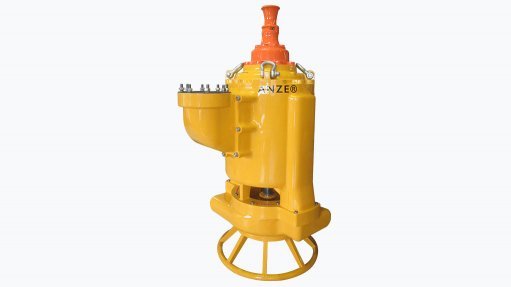
Goodwin Submersible Pumps Africa is sole distributors for Goodwin electrically driven, submersible, abrasion resistance slurry pumps.
VISIT SHOWROOM
Sika South Africa is a trusted partner for the nation’s infrastructure, commercial, residential, and industrial sectors.
VISIT SHOWROOM


Announcements
What's On
Subscribe to improve your user experience...
Option 1 (equivalent of R125 a month):
Receive a weekly copy of Creamer Media's Engineering News & Mining Weekly magazine
(print copy for those in South Africa and e-magazine for those outside of South Africa)
Receive daily email newsletters
Access to full search results
Access archive of magazine back copies
Access to Projects in Progress
Access to ONE Research Report of your choice in PDF format
Option 2 (equivalent of R375 a month):
All benefits from Option 1
PLUS
Access to Creamer Media's Research Channel Africa for ALL Research Reports, in PDF format, on various industrial and mining sectors
including Electricity; Water; Energy Transition; Hydrogen; Roads, Rail and Ports; Coal; Gold; Platinum; Battery Metals; etc.
Already a subscriber?
Forgotten your password?
Receive weekly copy of Creamer Media's Engineering News & Mining Weekly magazine (print copy for those in South Africa and e-magazine for those outside of South Africa)
➕
Recieve daily email newsletters
➕
Access to full search results
➕
Access archive of magazine back copies
➕
Access to Projects in Progress
➕
Access to ONE Research Report of your choice in PDF format
RESEARCH CHANNEL AFRICA
R4500 (equivalent of R375 a month)
SUBSCRIBEAll benefits from Option 1
➕
Access to Creamer Media's Research Channel Africa for ALL Research Reports on various industrial and mining sectors, in PDF format, including on:
Electricity
➕
Water
➕
Energy Transition
➕
Hydrogen
➕
Roads, Rail and Ports
➕
Coal
➕
Gold
➕
Platinum
➕
Battery Metals
➕
etc.
Receive all benefits from Option 1 or Option 2 delivered to numerous people at your company
➕
Multiple User names and Passwords for simultaneous log-ins
➕
Intranet integration access to all in your organisation