Tariff arbitrage emerges as bankable strategy


ANJA VISAGIE Reducing demand charges requires a deliberate peak-shaving strategy
RESTRUCTURING PRIORITIES Escalating time-of-use tariff prices are prompting South African commercial and industrial electricity users to reconsider how and when they consume energy



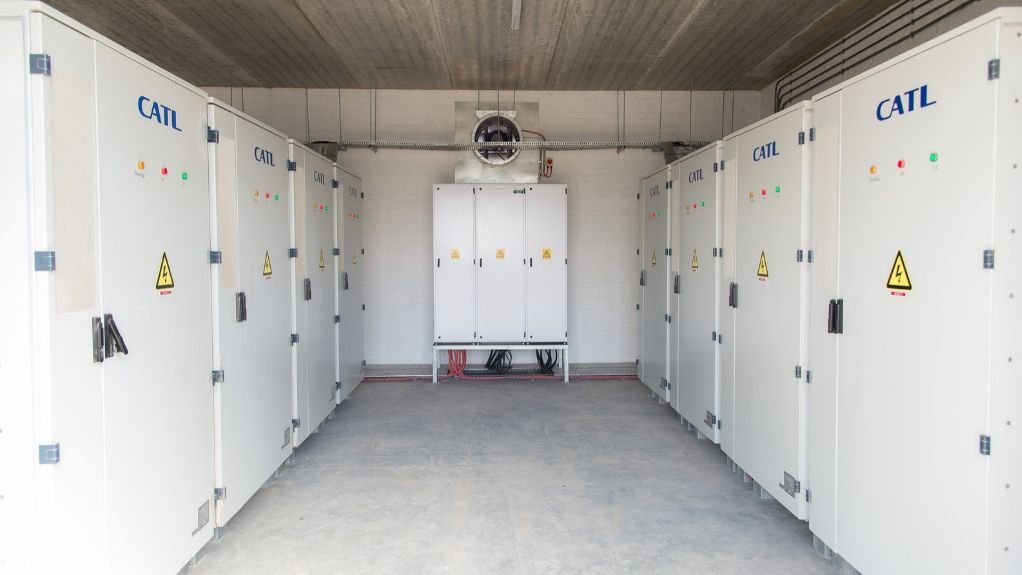
Escalating time-of-use (ToU) tariff prices are prompting South African commercial and industrial electricity users to reconsider how and when they consume energy, says solar energy provider Sustainable Power Solutions (SPS) senior business developer Charles Neethling.
Rather than curtailing operations in response, an increasing number of firms are turning to tariff arbitrage using battery energy storage to shift consumption from expensive peak windows to lower-cost periods.
“Energy is stored when tariffs are low and discharged when municipal and State-owned power utility Eskom’s ToU prices peak, typically in the early morning and late evening. Solar PV generation can cover a portion of the daytime peak, but recent changes to Eskom’s ToU structure, including the shift of a morning peak hour to the evening, mean solar alone is no longer sufficient to avoid the most expensive periods.”
He adds that tariffs during early morning and late evening periods can be four to five times higher than standard rates, or up to seven times higher than off-peak rates.
The commercial case for arbitrage hinges not on the absolute peak price, but on the differential between what it costs to charge the battery and what is avoided on the discharge, adjusted for usable energy, charge and discharge efficiencies, and roundtrip losses.
The company’s modelling indicates that a funded rental solution would require an average peak-to-off-peak differential of about R3/kWh, compared with a direct purchase differential of about R2/kWh. These figures are indicative screening thresholds, based on a simple average across seasons, rather than guarantees of project performance, Neethling adds.
“For a rental solution, the achievable savings need to exceed the rental payment. For an outright purchase, we typically target a simple payback period of less than four to five years,” says SPS chief growth and marketing officer Anja Visagie.
ToU Structures
SPS says the feasibility of ToU structures remains highly locational, citing municipalities, such as Ekurhuleni, where summer peaks reach between R9/kWh and R12/kWh in certain categories.
Neethling says the high-season period is from June to August, but stresses that the high-peak price over this period “does not make a viable project”, as the difference between peak and off-peak prices is driving arbitrage savings.
Further, across Gauteng, the Western Cape and other key provinces, viability depends on the combination of applicable seasonal rates, ToU windows and whether there is sufficient demand during expensive periods to usefully deploy stored energy alongside an opportunity to recharge during lower-cost periods.
Additionally, SPS distinguishes energy- arbitrage savings from demand-charge savings. Tariff arbitrage does not automatically reduce demand charges, Visagie says.
“Tariff arbitrage depends on the batteries’ charging and discharging basis to reduce peak energy charge but does not necessarily reduce the maximum demand charges. In fact, depending on when and how the battery is charged, it could increase.
“Reducing demand charges requires a deliberate peak-shaving strategy. This generally works best where demand peaks are short enough for the battery to cover them,” Visagie notes.
Existing solar can also influence the outcome by reducing daytime grid demand, but its contribution must be assessed against the timing of the facility’s actual demand peaks.
Structuring Funded Models
To address capital constraints, SPS offers a funded equipment rental model, typically over ten years, although 15- and 20-year arrangements can also be considered, with a fixed monthly payment subject to predetermined yearly escalation.
“SPS’s rental agreements typically guarantee equipment availability and minimum usable battery capacity, subject to agreed use and ageing conditions. “We do not typically guarantee a minimum level of savings,” Neethling explains.
The agreement specifies an availability percentage and operating requirements. SPS is responsible for maintaining and repairing the equipment, and failure to meet the agreed availability guarantee results in contractual penalties payable to the customer.
Maintenance, repairs and applicable warranty replacements are included in the rental. Battery warranties typically range from 10 to 12 years, depending on equipment and cycling conditions.
End-of-term options can include renewal, with continued operation of existing equipment; replacement or augmentation, where technically suitable; and the removal of equipment or transfer of ownership to the customer without an additional purchase payment.
If a fundamental regulatory or tariff change by the National Energy Regulator of South Africa or a municipality materially affects economics, such as a restructuring of ToU windows or peak tariffs, SPS commits to engage constructively with the customer to assess mitigations.
For companies with consistent daytime load profiles, typically operating from 06:00 until 19:00, the approach offers a way of stabilising costs.
“Tariff arbitrage works. With the right battery, controls and design, companies can stabilise costs without disrupting operations,” Neethling concludes.
Article Enquiry
Email Article
Save Article
Feedback
To advertise email advertising@creamermedia.co.za or click here

Projects
Latest Multimedia

Latest News
Showroom

ESAB South Arica, the leading supplier of high-end welding and cutting products to the Southern African industrial market is based in...
VISIT SHOWROOM
Complete range of security sealing solutions including security seals bags and labels.
VISIT SHOWROOM

Press Office
Announcements
What's On
Subscribe to improve your user experience...
Option 1 (equivalent of R125 a month):
Receive a weekly copy of Creamer Media's Engineering News & Mining Weekly magazine
(print copy for those in South Africa and e-magazine for those outside of South Africa)
Receive daily email newsletters
Access to full search results
Access archive of magazine back copies
Access to Projects in Progress
Access to ONE Research Report of your choice in PDF format
Option 2 (equivalent of R375 a month):
All benefits from Option 1
PLUS
Access to Creamer Media's Research Channel Africa for ALL Research Reports, in PDF format, on various industrial and mining sectors
including Electricity; Water; Energy Transition; Hydrogen; Roads, Rail and Ports; Coal; Gold; Platinum; Battery Metals; etc.
Already a subscriber?
Forgotten your password?
Receive weekly copy of Creamer Media's Engineering News & Mining Weekly magazine (print copy for those in South Africa and e-magazine for those outside of South Africa)
➕
Recieve daily email newsletters
➕
Access to full search results
➕
Access archive of magazine back copies
➕
Access to Projects in Progress
➕
Access to ONE Research Report of your choice in PDF format
RESEARCH CHANNEL AFRICA
R4500 (equivalent of R375 a month)
SUBSCRIBEAll benefits from Option 1
➕
Access to Creamer Media's Research Channel Africa for ALL Research Reports on various industrial and mining sectors, in PDF format, including on:
Electricity
➕
Water
➕
Energy Transition
➕
Hydrogen
➕
Roads, Rail and Ports
➕
Coal
➕
Gold
➕
Platinum
➕
Battery Metals
➕
etc.
Receive all benefits from Option 1 or Option 2 delivered to numerous people at your company
➕
Multiple User names and Passwords for simultaneous log-ins
➕
Intranet integration access to all in your organisation