Skills Transfer and Continuous Training: Key to the Future Competitiveness of South Africa’s Plastics Industry

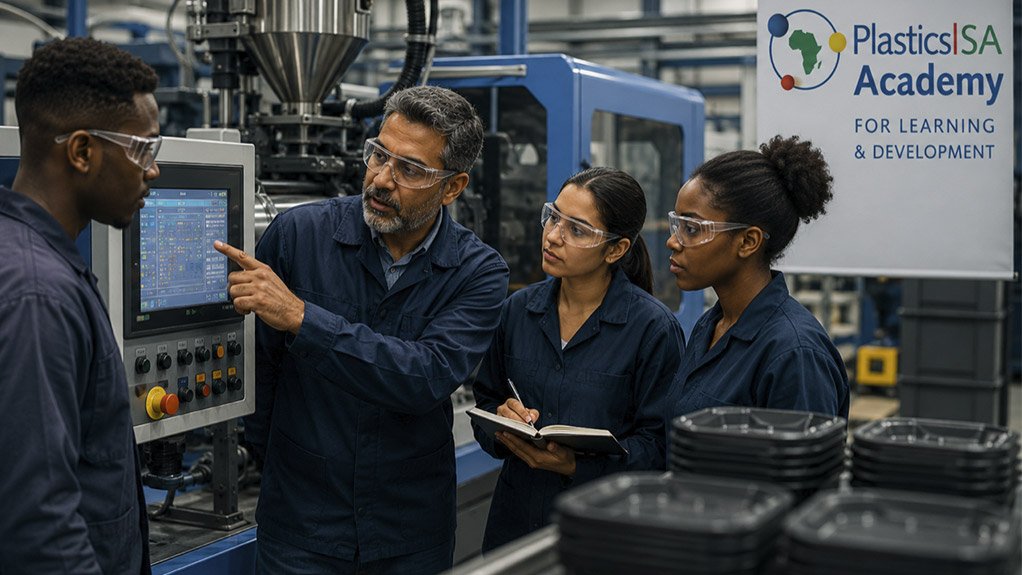




As South Africa’s plastics manufacturing sector navigates rapid technological change, sustainability demands and increasing global competition, industry leaders are warning that skills development and knowledge transfer have become critical strategic priorities for the industry's long-term success.
According to Plastics SA, the sector faces a growing challenge as experienced operators, technicians, artisans and supervisors approach retirement age, taking with them decades of practical knowledge and expertise built on the factory floor.
From Training Challenge to Strategic Business Risk
“The skills shortage facing the plastics industry is no longer simply a training issue. It has become a strategic competitiveness issue,” says Kirtida Bhana, Head of the Academy for Learning and Development at Plastics SA.
For many years, the industry has relied on highly skilled operators, setters, technicians and supervisors whose knowledge has been developed through years of practical experience. As many of these individuals approach retirement, manufacturers face the risk of losing critical institutional knowledge faster than it can be replaced. Sector skills planning data continues to point to hard-to-fill technical and production roles across manufacturing, confirming that the skills pipeline is a structural issue rather than a short-term recruitment challenge.
“The future success of the sector will depend on our ability to build a technically capable workforce that can support a modern, resilient and competitive manufacturing base,” Bhana stresses.
The Growing Demand for Technical and Hybrid Skills
Critical production and technical roles are becoming increasingly difficult to fill across the plastics sector. These include machine operators, machine setters, process technicians, maintenance artisans, thermoplastic welders, quality controllers and production supervisors. Such positions require a combination of technical knowledge, practical competence, troubleshooting skills and experience working with materials, machinery and real-world production environments.
At the same time, the industry is seeing growing demand for hybrid skills that combine expertise in plastics processing, materials, tooling and quality management with an understanding of automation, data systems, digital interfaces and sustainability requirements.
“The industry needs people who can operate effectively in today’s production environment while adapting to tomorrow’s manufacturing technologies,” says Bhana.
Building Skills for a Circular Economy
As sustainability and recycling become increasingly important, manufacturers will also need a workforce equipped to support the transition to a circular economy.
“The circular economy will require new technical competencies, including the ability to work with recycled materials, manage material variability, maintain quality standards and understand the link between processing, product performance and environmental responsibility,” says Bhana. These requirements further reinforce the need for continuous learning and ongoing workforce development throughout the plastics value chain.
Attracting and Developing the Next Generation
While young people are entering the plastics industry, the numbers remain insufficient to meet future replacement, growth and transformation needs. One of the biggest obstacles is perception. Explains Bhana: “Manufacturing is often viewed as traditional factory work rather than a sector connected to advanced technology, product innovation, healthcare, infrastructure development, agriculture, automotive manufacturing and the circular economy. Changing this narrative is critical.”
The sector offers diverse career opportunities that can take employees from entry-level production roles into machine setting, quality management, maintenance, technical supervision, product development, recycling operations and entrepreneurship. To attract more young talent, stronger career guidance, workplace exposure, learnerships, apprenticeships and mentorship programmes will be essential.
Creating Structured Career Pathways
To address these challenges, Plastics SA has adopted a comprehensive approach to workforce development through its Academy for Learning and Development. Plastics SA’s Academy is working to strengthen occupationally directed learning pathways for key roles such as plastics manufacturing materials handlers, packers, material mixers, machine operators, machine setters and thermoplastics welding operators, while supporting both new entrants and existing employees through structured technical training.
A key priority is the development and alignment of occupational qualifications that create recognised career pathways for the industry. This enables employees to enter the sector, progress through different levels of responsibility, specialise in technical disciplines and build sustainable long-term careers.
At the same time, succession planning is being recognised as a critical component of workforce sustainability. Identifying high-potential individuals already working within organisations and preparing them to become future setters, supervisors, trainers, technical specialists and production leaders is becoming increasingly important.
Investing in the Workforce of 2036
Looking ahead, Plastics SA advocates an integrated training model that combines occupational qualifications, workplace learning, practical training, digital learning platforms, simulation technologies and technical coaching.
“The most important shift industry must make is to stop treating training as an annual event and start treating workforce planning as a board-level competitiveness priority,” Bhana emphasises. Strong partnerships between employers, training providers, SETAs, schools, TVET colleges and industry bodies will be critical to building sustainable talent pipelines and ensuring that skills development translates into improved productivity, quality, safety and competitiveness.
People Remain the Industry’s Greatest Asset
As the plastics industry continues to play a central role in packaging, infrastructure, water systems, agriculture, healthcare, automotive manufacturing, recycling and the circular economy, one message is becoming increasingly clear: people remain at the heart of its future success.
Automation may change jobs, but it will not eliminate the need for skilled human judgement, technical problem-solving and production leadership.
Plastics SA is calling on manufacturers to act now by identifying critical roles, investing in structured training, opening workplaces for young talent and ensuring that experienced employees are used deliberately as mentors before their knowledge leaves the sector.
Concludes Bhana: “The workforce South Africa’s plastics industry will need in 2036 will not appear by accident. It must be built today through intentional planning, ongoing training, skills transfer and collaboration.”
Article Enquiry
Email Article
Save Article
Feedback
To advertise email advertising@creamermedia.co.za or click here




Latest Multimedia

Latest News


Showroom

Stewarts & Lloyds is a leading steel, tube, and engineering product supplier in South Africa.
VISIT SHOWROOM
Sulzer South Africa, established in 1922, partners with critical industries like power, oil & gas, water, mining, and chemicals to boost...
VISIT SHOWROOM


Announcements
What's On
Subscribe to improve your user experience...
Option 1 (equivalent of R125 a month):
Receive a weekly copy of Creamer Media's Engineering News & Mining Weekly magazine
(print copy for those in South Africa and e-magazine for those outside of South Africa)
Receive daily email newsletters
Access to full search results
Access archive of magazine back copies
Access to Projects in Progress
Access to ONE Research Report of your choice in PDF format
Option 2 (equivalent of R375 a month):
All benefits from Option 1
PLUS
Access to Creamer Media's Research Channel Africa for ALL Research Reports, in PDF format, on various industrial and mining sectors
including Electricity; Water; Energy Transition; Hydrogen; Roads, Rail and Ports; Coal; Gold; Platinum; Battery Metals; etc.
Already a subscriber?
Forgotten your password?
Receive weekly copy of Creamer Media's Engineering News & Mining Weekly magazine (print copy for those in South Africa and e-magazine for those outside of South Africa)
➕
Recieve daily email newsletters
➕
Access to full search results
➕
Access archive of magazine back copies
➕
Access to Projects in Progress
➕
Access to ONE Research Report of your choice in PDF format
RESEARCH CHANNEL AFRICA
R4500 (equivalent of R375 a month)
SUBSCRIBEAll benefits from Option 1
➕
Access to Creamer Media's Research Channel Africa for ALL Research Reports on various industrial and mining sectors, in PDF format, including on:
Electricity
➕
Water
➕
Energy Transition
➕
Hydrogen
➕
Roads, Rail and Ports
➕
Coal
➕
Gold
➕
Platinum
➕
Battery Metals
➕
etc.
Receive all benefits from Option 1 or Option 2 delivered to numerous people at your company
➕
Multiple User names and Passwords for simultaneous log-ins
➕
Intranet integration access to all in your organisation