Scoping study confirms Kasiya's potential as a significant source of critical rare earths

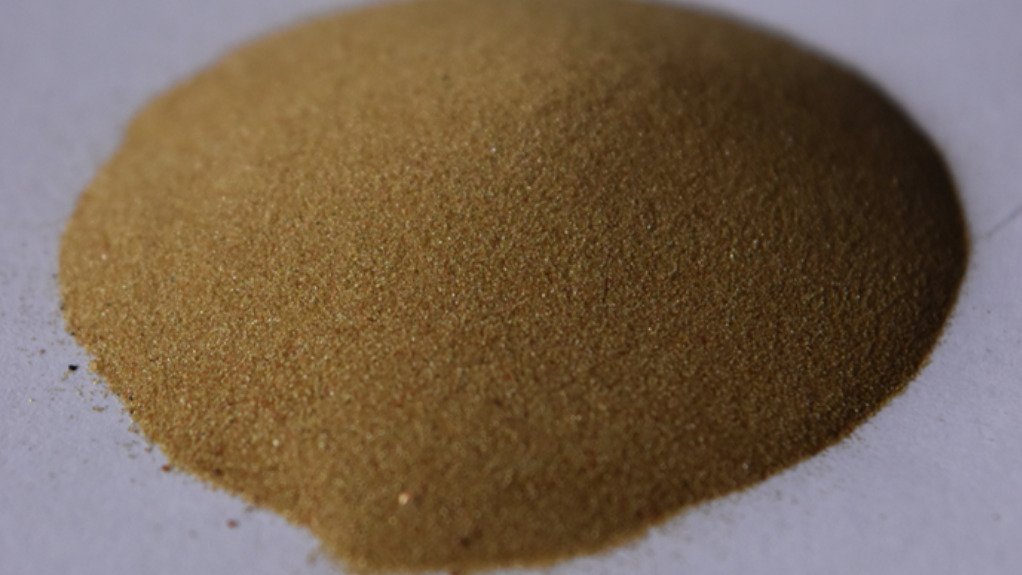


Critical minerals developer Sovereign Metals has renamed its Kasiya project, in Malawi, to the Kasiya Critical Minerals project to reflect that is no longer a rutile and graphite project only, but also holds potential for the recovery of a monazite concentrate with significantly elevated heavy rare earths content as a by-product.
The name change follows the publication of the positive results of a scoping study on the potential to add rare earths as a third product stream at Kasiya.
"The Kasiya definitive feasibility study (DFS) already defines one of the world's largest natural rutile and flake graphite developments. This [scoping] study shows the same resource can potentially deliver rare earths and deliver them cheaply. For about $29-million of initial capital, using infrastructure the DFS has already designed and costed, we can potentially add about $722-million of pre-tax value at an about 151% rate of return, with payback in around 18 months," says Sovereign MD and CEO Frank Eagar.
The April DFS estimated the steady-state production of about 222 000 t/y of natural rutile and 275 000 t/y of natural flake graphite. The scoping study shows that 2 626 t/y of monazite rare earth concentrate (REC) can be recovered from the rutile tailings stream – which would otherwise just be discarded.
The only incremental processing change that is needed to unlock the rare earths product stream is the addition of a monazite concentrate circuit, which will use spiral gravity separation and flotation to treat the non-conducted stream from the project's mineral separation plant.
Sovereign stresses that no additional mining, early-stage processing or change to the DFS mining method, wet concentration or graphite recovery strategy, are needed.
The REC includes neodymium, praseodymium, dysprosium, terbium, yttrium, samarium and gadolinium. The neodymium and praseodymium is present at levels similar to those in other Western rare earths mines. Elevated levels of the scarcer dysprosium, terbium, yttrium, samarium and gadolinium oxides have been found at Kasiya.
Sovereign points out that China accounts for most global mined production of these five elements and effectively all commercial separation capacity, while the US is fully net import-reliant on yttrium, with nearly all supply derived from concentrates processed in China.
Further, it says the US defence industry is estimated to hold a two-to-three-year inventory of samarium with potential replenishment of munitions expended in the Iran conflict adding to demand.
"The [Kasiya] REC is uncommitted, at a time when Western governments have established price floors, government-backed offtake vehicles and bilateral supply frameworks specifically to secure heavy rare earth feed from allied jurisdictions. Kasiya is positioned to supply that feed into Western separation capacity for the duration of its mine life," the company highlights.
Sovereign intends to soon start variability testwork to confirm monazite recoveries and concentrate quality across the DFS mine schedule. It will also immediately start with REC marking and offtake discussions with potential buyers.
The rare earths stream will also be included in the Kasiya prefeasibility study that is scheduled for completion in 2027.
Advisor and broker SP Angel comments in a note that Sovereign has reported the "most extraordinary" financial returns from the simple recovery and sale of the monazite rare earth stream at the Kasiya project.
"We have never seen anything close to an net present value of 25 times the capital outlay on a project. This is essentially, enabled by simple addition of a magnetic concentrator into the tailings stream to collect the monazite.
"Kasiya should provide five of the seven rare earths under Chinese export controls, for at least 23 years," it notes.
"While we see substantial value in the Kasiya project, particularly with strong demand for monazite, we also see some risk to the business relating to offtake pricing, transport issues and government negotiations," it adds.
Article Enquiry
Email Article
Save Article
Feedback
To advertise email advertising@creamermedia.co.za or click here
Research Reports
Projects
Latest Multimedia
Latest News
Showroom
Electrifying the world in a safe, smart, and sustainable way, ABB Electrification is a global technology leader in electrical distribution and...
VISIT SHOWROOM
ISO-certified Condra manufactures overhead cranes, portal cranes, cantilever cranes and crane components: hoists, drives, end-carriages, brakes and...
VISIT SHOWROOM
Press Office
Announcements
What's On
Subscribe to improve your user experience...
Option 1 (equivalent of R125 a month):
Receive a weekly copy of Creamer Media's Engineering News & Mining Weekly magazine
(print copy for those in South Africa and e-magazine for those outside of South Africa)
Receive daily email newsletters
Access to full search results
Access archive of magazine back copies
Access to Projects in Progress
Access to ONE Research Report of your choice in PDF format
Option 2 (equivalent of R375 a month):
All benefits from Option 1
PLUS
Access to Creamer Media's Research Channel Africa for ALL Research Reports, in PDF format, on various industrial and mining sectors
including Electricity; Water; Energy Transition; Hydrogen; Roads, Rail and Ports; Coal; Gold; Platinum; Battery Metals; etc.
Already a subscriber?
Forgotten your password?
Receive weekly copy of Creamer Media's Engineering News & Mining Weekly magazine (print copy for those in South Africa and e-magazine for those outside of South Africa)
➕
Recieve daily email newsletters
➕
Access to full search results
➕
Access archive of magazine back copies
➕
Access to Projects in Progress
➕
Access to ONE Research Report of your choice in PDF format
RESEARCH CHANNEL AFRICA
R4500 (equivalent of R375 a month)
SUBSCRIBEAll benefits from Option 1
➕
Access to Creamer Media's Research Channel Africa for ALL Research Reports on various industrial and mining sectors, in PDF format, including on:
Electricity
➕
Water
➕
Energy Transition
➕
Hydrogen
➕
Roads, Rail and Ports
➕
Coal
➕
Gold
➕
Platinum
➕
Battery Metals
➕
etc.
Receive all benefits from Option 1 or Option 2 delivered to numerous people at your company
➕
Multiple User names and Passwords for simultaneous log-ins
➕
Intranet integration access to all in your organisation