Rental pumps suit opencast environments

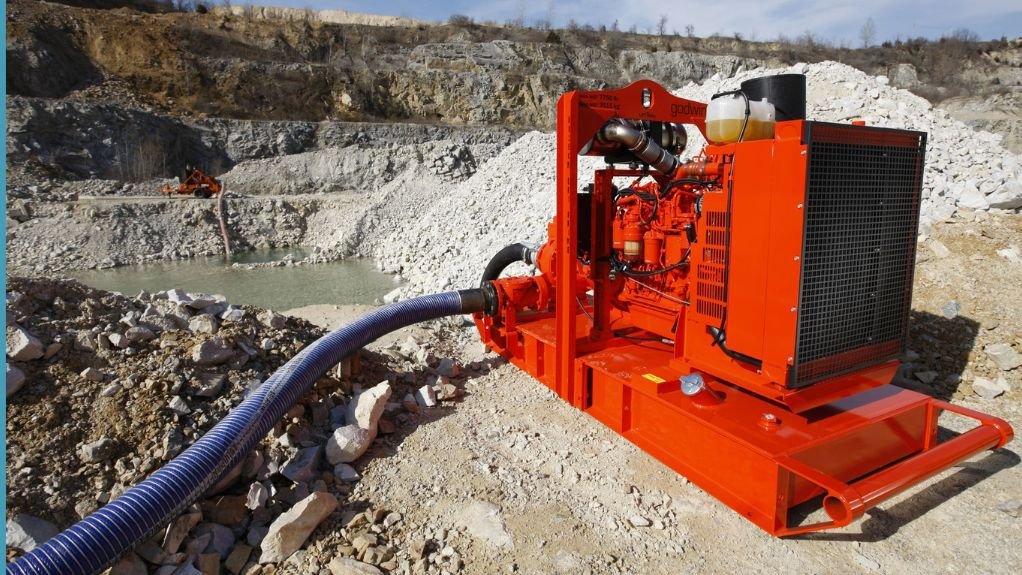
SURFACE WATER Opencast mines contend with large volumes of surface water, including stormwater runoff, pit flooding, changing groundwater conditions and water accumulation following heavy rainfall


Water management requirements at opencast mines can change rapidly with rainfall, groundwater conditions and operational disruptions, making flexible pumping and treatment capacity important, says water technology company Xylem Water Solutions and Services growth markets strategy and marketing director Chetan Mistry.
Opencast mines mostly contend with large volumes of surface water, including stormwater runoff, pit flooding, changing groundwater conditions and water accumulation following heavy rainfall.
“Excess water can affect haul roads, slope stability, equipment productivity, access to working areas and overall mine safety, while water quality can also become a concern where runoff comes into contact with exposed rock, stockpiles, tailings facilities or process areas,” he cautions.
These challenges differ from those usually encountered in underground mines, where groundwater ingress is often the main concern and dewatering systems may need to operate continuously to keep shafts, tunnels and working areas accessible.
Both mining methods, however, are always exposed to water-related risks associated with drought, flooding, water stress and variability in water supply, he adds.
“According to the International Council on Mining and Metals, 65.7% of mining and metals facilities globally are exposed to at least one significant physical water risk indicator, while 27% face high drought risk and 14% face high flood risk.”
Therefore, mines are moving beyond traditional dewatering towards integrated water management strategies that combine pumping, treatment, reuse, monitoring and water stewardship.
Rental equipment can help provide additional capacity when water conditions exceed the baseline capacity of a mine’s permanent water management infrastructure, Mistry adds.
Such applications include emergency pit dewatering following heavy rainfall or flooding, temporary pumping capacity during planned pump maintenance shutdowns, unexpected groundwater inflows, supplementary pumping during mine expansion and bypass pumping during infrastructure upgrades.
Rental treatment systems can also be used for excess process water, water intended for reuse and changing discharge quality requirements, as well as emergency treatment following contamination incidents or process disruptions. Buying and maintainingsufficient mine-owned pumping capacity for every plausible scenario is not realistic or fiscally responsible, he says.
As such, the suitability of any rental solution depends on understanding the operating conditions instead of simply supplying available equipment; this specification includes assessing site conditions and space limitations, power availability and variations in flow, solids content and head over time.
“Equipment selection should also account for the pump’s dynamic head and duty point against resistance curves,” Mistry elaborates.
Rental providers should also consider site access, lifting requirements, piping and integration requirements, maintenance parameters and the duration of the project.
Meeting Changing Conditions
Modern pumping and monitoring technologies are also helping mines improve efficiency and flexibility as conditions change, with variable-speed drives, advanced hydraulics and improved controls reducing energy consumption while enabling pumping systems to adapt to changing site conditions, says Mistry.
He adds that remote monitoring can provide real-time visibility of water levels, pump performance, flow rates, energy use and equipment condition, while connected systems can allow for the earlier identification of problems, reducing unplanned downtime and maintenance costs. Digital monitoring can reduce the need for personnel to inspect equipment in hazardous areas.
Monitoring also supports environmental compliance through the continuous tracking of water quality, discharge conditions, storage capacity and operational performance.
Mines are also integrating dewatering, treatment, reuse and digital monitoring into broader water management strategies. Increasingly, mining companies are looking beyond water removal and exploring how treated water can be reused within operations to reduce freshwater demand and improve long-term water security.
“The approach represents a shift from simply moving water to managing it throughout the mine life cycle,” he elaborates.
Pump rental providers can also offer site-level support, including equipment operators, field support technicians, maintenance staff, training handovers and 24/7 technical support.
“Relationships with original-equipment manufacturers can provide access to additional technical expertise and parts support,” he says, adding that rental solutions are particularly suited to short-term projects where capital expenditure is not justified.
Article Enquiry
Email Article
Save Article
Feedback
To advertise email advertising@creamermedia.co.za or click here
Projects
Latest Multimedia
Latest News
Showroom
Sika South Africa is a trusted partner for the nation’s infrastructure, commercial, residential, and industrial sectors.
VISIT SHOWROOM
Stewarts & Lloyds is a leading steel, tube, and engineering product supplier in South Africa.
VISIT SHOWROOM

Announcements
What's On
Subscribe to improve your user experience...
Option 1 (equivalent of R125 a month):
Receive a weekly copy of Creamer Media's Engineering News & Mining Weekly magazine
(print copy for those in South Africa and e-magazine for those outside of South Africa)
Receive daily email newsletters
Access to full search results
Access archive of magazine back copies
Access to Projects in Progress
Access to ONE Research Report of your choice in PDF format
Option 2 (equivalent of R375 a month):
All benefits from Option 1
PLUS
Access to Creamer Media's Research Channel Africa for ALL Research Reports, in PDF format, on various industrial and mining sectors
including Electricity; Water; Energy Transition; Hydrogen; Roads, Rail and Ports; Coal; Gold; Platinum; Battery Metals; etc.
Already a subscriber?
Forgotten your password?
Receive weekly copy of Creamer Media's Engineering News & Mining Weekly magazine (print copy for those in South Africa and e-magazine for those outside of South Africa)
➕
Recieve daily email newsletters
➕
Access to full search results
➕
Access archive of magazine back copies
➕
Access to Projects in Progress
➕
Access to ONE Research Report of your choice in PDF format
RESEARCH CHANNEL AFRICA
R4500 (equivalent of R375 a month)
SUBSCRIBEAll benefits from Option 1
➕
Access to Creamer Media's Research Channel Africa for ALL Research Reports on various industrial and mining sectors, in PDF format, including on:
Electricity
➕
Water
➕
Energy Transition
➕
Hydrogen
➕
Roads, Rail and Ports
➕
Coal
➕
Gold
➕
Platinum
➕
Battery Metals
➕
etc.
Receive all benefits from Option 1 or Option 2 delivered to numerous people at your company
➕
Multiple User names and Passwords for simultaneous log-ins
➕
Intranet integration access to all in your organisation