Reform aims to effect resource sovereignty

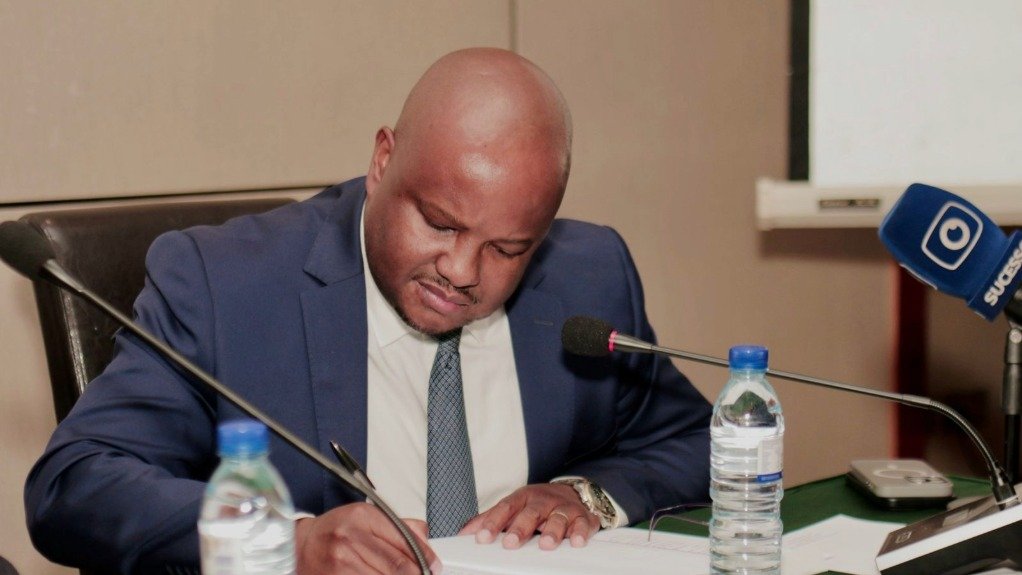
EDSON MATCHES The revision to Mozambique's Mining Law is arguably the most significant shift in the sector’s history since the 2014 Mining Law



Aligned with Mozambique’s aim of asserting resource sovereignty, its Parliament approved amendments to the Mining Law last month, including a minimum 15% State equity stake in all general mining projects through State mining company Empresa Nacional de Minas, also being launched last month.
Following the approval of revisions to the law, the Mozambique mining industry is working to implement the new legislation, says industry employers association Chamber of Mines of Mozambique (CMM) chairperson Edson Matches.
He says this revision is “arguably” the most significant shift in the sector’s history since the 2014 Mining Law, adding that the updated version aims to strengthen the sovereignty of the State over mineral resources and promote industrialisation.
However, Matches warns that this legislative shift must be underpinned by “absolute legal certainty” for it to be successful, with investment viability hinging on fiscal predictability.
Regulations governing dividend distribution and equity rights must be clearly codified from the outset to enable international investors to model internal rates of return without the risk of arbitrary upheaval, thus ensuring that the country remains competitive within global mining capital flows, he explains.
Aligned to this is the CMM’s mediating dialogue with the State regarding the 15% participation mandate. Matches emphasises that Empresa Nacional de Minas’ entry into projects needs to be handled with financial transparency, ensuring that carried interest or State participation models do not inadvertently discourage the foreign direct investment required to build Mozambique’s industrial base.
The fundamental objective of the reform is to institutionalise Mozambique’s G-Factor for Natural Resources index, which indicates the percentage of natural resources revenue paid to government and, consequently, ensures that the fiscal and social benefits of mining are direct and transparently managed.
Prior Factors
The Mining Law reform follows several structural interventions undertaken by Mozambique President Daniel Chapo’s administration since taking office in 2025.
The Chapo administration has moved decisively to restore market confidence, conveying a clear message of continuity, transparency and the protection of private capital, says Matches, adding that this is critical in encouraging long-term, multibillion-dollar capital expenditure decisions in the mining industry.
Recent regulatory adjustments have focused on lowering the barriers to entry and operation for major mining projects. These include streamlining immigration protocols to facilitate the entry of highly specialised technical expertise, and a critical review of customs frameworks that has eased the tax burden on specialised heavy-duty machinery imports.
Meanwhile, as part of Mozambique’s Economic Acceleration Package reform plan, government has simplified licensing procedures and is digitalising the mining cadastre.
“We are moving from being a ‘resource provider’ to a ‘strategic industrial partner’. It is a difficult transition, but it is the only way to turn our mineral wealth into a lasting legacy for Mozambique,” adds Matches.
Concurrent Challenges
While Mozambique’s mining industry boasts mining projects that position the country as a key player in the global energy transition, Matches says structural challenges persist, with significant capacity constraints continuing to undermine the sector’s considerable geological potential.
The industry is grappling with a high real interest rate of 11.5% and tight restrictions on foreign currency credit, which stifle new operators.
To address this, the CMM advocates making Mozambique’s land use rights bankable, allowing for the rights to serve as collateral so that financing for new operators can be unlocked.
Additionally, despite possessing strategic rail route corridors – such as Maputo, Beira and Nacala – Matches says logistical bottlenecks continue to limit the mining industry, owing to transport delays and congestion at cargo terminals.
Article Enquiry
Email Article
Save Article
Feedback
To advertise email advertising@creamermedia.co.za or click here

Projects
Latest Multimedia
Latest News
Showroom
For over 15 years, Lilak Aluminium, a trusted leader in architectural extrusion supply, has delivered excellence to businesses like yours.
VISIT SHOWROOM
The Aluminium Federation of South Africa (AFSA), is the voice of the South African aluminium industry.
VISIT SHOWROOM
Announcements
What's On
Subscribe to improve your user experience...
Option 1 (equivalent of R125 a month):
Receive a weekly copy of Creamer Media's Engineering News & Mining Weekly magazine
(print copy for those in South Africa and e-magazine for those outside of South Africa)
Receive daily email newsletters
Access to full search results
Access archive of magazine back copies
Access to Projects in Progress
Access to ONE Research Report of your choice in PDF format
Option 2 (equivalent of R375 a month):
All benefits from Option 1
PLUS
Access to Creamer Media's Research Channel Africa for ALL Research Reports, in PDF format, on various industrial and mining sectors
including Electricity; Water; Energy Transition; Hydrogen; Roads, Rail and Ports; Coal; Gold; Platinum; Battery Metals; etc.
Already a subscriber?
Forgotten your password?
Receive weekly copy of Creamer Media's Engineering News & Mining Weekly magazine (print copy for those in South Africa and e-magazine for those outside of South Africa)
➕
Recieve daily email newsletters
➕
Access to full search results
➕
Access archive of magazine back copies
➕
Access to Projects in Progress
➕
Access to ONE Research Report of your choice in PDF format
RESEARCH CHANNEL AFRICA
R4500 (equivalent of R375 a month)
SUBSCRIBEAll benefits from Option 1
➕
Access to Creamer Media's Research Channel Africa for ALL Research Reports on various industrial and mining sectors, in PDF format, including on:
Electricity
➕
Water
➕
Energy Transition
➕
Hydrogen
➕
Roads, Rail and Ports
➕
Coal
➕
Gold
➕
Platinum
➕
Battery Metals
➕
etc.
Receive all benefits from Option 1 or Option 2 delivered to numerous people at your company
➕
Multiple User names and Passwords for simultaneous log-ins
➕
Intranet integration access to all in your organisation