



Bill increases possibility of single authorisation for exploration, mining


The July 22, 2013, National Environ-mental Management Act (Nema) Amendment Bill has brought closer the possibility of a single environmental author-isation for prospecting and mining, where all mining or prospecting applications will only require environmental authorisation (EA) under Nema, law firm Bowman Gilfillan director Claire Tucker said last month at an environmental seminar held by the firm in Johannesburg.
She explained that this was edging towards the approach first initiated in 2008 with the 2008 Mineral and Petroleum Resources Development Act (MPRDA) Amendment and the 2008 Nema Amendment: “The transition between the MPRDA regime and the Nema regime is, however, inadequately dealt with presently in the amendment legislation. For example, ‘savings’ provisions for authorisations obtained or applications made under the MPRDA are not presently included in Nema.”
In future environmental authorisations for mining, prospecting and all related activities will be handled by the Department of Mineral Resources (DMR) under Nema, including the environmental management programme (EMP), reviews and audits of the EMP and the amount of financial provision to be made for rehabilitation.
However, with the surprise commencement of the 2008 MPRDA Amendment Act earlier this year, there is a possible gap in environ- mental enforcement as the 2008 Nema Amendment stipulates that provisions relating to mining will only come into effect 18 months after the 2008 MPRDA Amend- ment Act comes into force, as a result of which industry currently finds itself in a difficult period.
“We are currently in a situation where most of the MPRDA provisions relating to the environment have been repealed, after the Amendment Act suddenly came into force earlier this year, while the Nema provisions relating to mining will only come into force in December 2014,” Tucker explained.
This is the cause of much uncertainty, as it is not clear which environmental authorisations are currently needed for mining or prospecting, what the EMP reporting requirements are, or what the requirements for financial provision for rehabilitation are.
“The Chamber of Mines is advising its members to act as if the relevant provisions remain in force, based on a reading of the Interpretation Act,” Tucker said, adding that not enough thought was being given to the implications of this advice, particularly in light of the criminal consequences of non- compliance with the repealed provisions.
“The MPRDA Amendment Act’s provisions with regard to beneficiation are causing such a problem that the environmental issues are receiving insufficient attention. However, any company that wants to develop a new mine or which currently has an environmental management plan waiting for approval needs certainty and may delay making an investment decision in this climate of uncertainty,” she said.
One of the suggestions made to address this was that the DMR should use its regulation-making powers under the MPRDA to draw up new regulations that did not refer to any of the repealed provisions; however, as all the environmental empowering provisions of the MPRDA have been repealed, general empowering provisions would have to be relied on.
Alternatively, the Department of Environ-mental Affairs could pass new regulations under Nema, Tucker said, but added that this was not the preferred solution.
“Another option is for a Bill to be passed . . . that repeals the section of the 2008 Nema Amendment Act relating to the 18-month waiting period.
“The best-case scenario would be that all the Nema provisions that were meant to replace the repealed provisions in the MPRDA come into force immediately and not only in December next year,” Tucker said.
She added that, as the Constitution certainly applies, all persons had the right to an environment that was not harmful to their health or wellbeing and that a company or entity that will impact on the environment had to demonstrate that it had reasonably considered the environmental impact of its operations. Also, before taking a decision on a mining or prospecting right, the MPRDA requires the decision-maker to be satisfied that no unacceptable harm will result to the environment from the envisaged operations.
Article Enquiry
Email Article
Save Article
Feedback
To advertise email advertising@creamermedia.co.za or click here
Research Reports

Projects

Latest Multimedia
Latest News
Showroom
Established in 1983, the ASTPM is an industry association and representative body of the welded carbon steel tube and pipe manufacturers of South...
VISIT SHOWROOM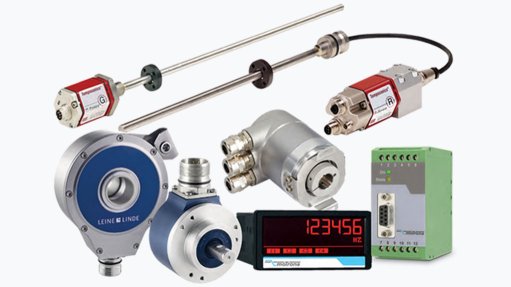
ATI systems comprises five divisions: electrical assemblies, drives and controls, feedback sensors, enclosures, and strip guiding.
VISIT SHOWROOM
Announcements
What's On
Subscribe to improve your user experience...
Option 1 (equivalent of R125 a month):
Receive a weekly copy of Creamer Media's Engineering News & Mining Weekly magazine
(print copy for those in South Africa and e-magazine for those outside of South Africa)
Receive daily email newsletters
Access to full search results
Access archive of magazine back copies
Access to Projects in Progress
Access to ONE Research Report of your choice in PDF format
Option 2 (equivalent of R375 a month):
All benefits from Option 1
PLUS
Access to Creamer Media's Research Channel Africa for ALL Research Reports, in PDF format, on various industrial and mining sectors
including Electricity; Water; Energy Transition; Hydrogen; Roads, Rail and Ports; Coal; Gold; Platinum; Battery Metals; etc.
Already a subscriber?
Forgotten your password?
Receive weekly copy of Creamer Media's Engineering News & Mining Weekly magazine (print copy for those in South Africa and e-magazine for those outside of South Africa)
➕
Recieve daily email newsletters
➕
Access to full search results
➕
Access archive of magazine back copies
➕
Access to Projects in Progress
➕
Access to ONE Research Report of your choice in PDF format
RESEARCH CHANNEL AFRICA
R4500 (equivalent of R375 a month)
SUBSCRIBEAll benefits from Option 1
➕
Access to Creamer Media's Research Channel Africa for ALL Research Reports on various industrial and mining sectors, in PDF format, including on:
Electricity
➕
Water
➕
Energy Transition
➕
Hydrogen
➕
Roads, Rail and Ports
➕
Coal
➕
Gold
➕
Platinum
➕
Battery Metals
➕
etc.
Receive all benefits from Option 1 or Option 2 delivered to numerous people at your company
➕
Multiple User names and Passwords for simultaneous log-ins
➕
Intranet integration access to all in your organisation

