Namibia targets industrial growth through investment reform

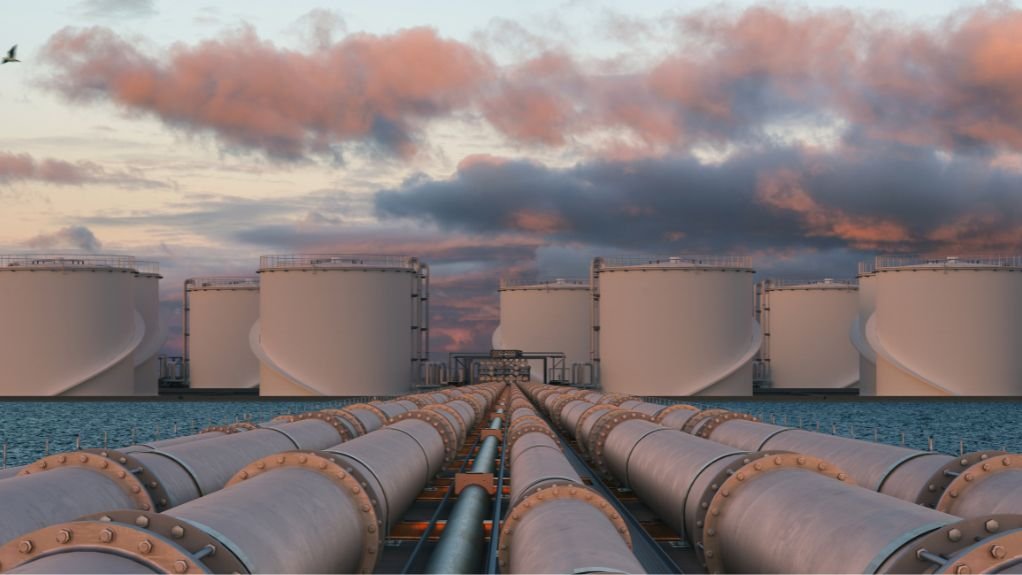
INDUSTRIAL GROWTH Namibia is using its oil, gas and mining sectors to drive industrial growth and attract foreign investment under its National Development Plan Six


Namibia is positioning its oil, gas and mining sectors as catalysts for industrialisation, beneficiation and infrastructure development under its National Development Plan Six (NDP6), with government also pursuing policy and regulatory reform to attract greater foreign direct investment (FDI), says law firm Cliffe Dekker Hofmeyr (CDH).
Speaking during a webinar last month, CDH dispute resolution managing partner and director Patrick Kauta said Namibia’s FDI inflows increased from N$50-billion from 2009 to 2020, to N$151-billion from 2021 to 2024, largely owing to exploration activity in the oil and gas sector.
However, converting exploration-led investment into broader economic benefits, such as job creation and industrial development, remained the challenge, he noted.
Namibia’s development plans positioned oil and gas as strategic sectors intended to support long-term economic transformation, rather than mere revenue generation, said CDH corporate and commercial director Ilda Lomba.
The focus is on value addition and beneficiation, rather than exporting raw resources, with government also aiming to support industrialisation through downstream and midstream industries while strengthening infrastructure such as energy, logistics and water systems.
She also noted that recent offshore discoveries, including the Venus, Jonker and Mopane finds, aligned with Namibia’s development objectives by creating opportunities for energy security, petrochemical industries and gas-to-power projects.
Although the associated gas discoveries for domestic electricity generation and industrial applications, such as fertiliser and manufacturing production, were important, "their alignment with national goals depends on developing the right infrastructure, such as ports, pipelines, processing facilities [and] storage facilities”, she added.
Mining
CDH banking, finance and projects director Magano Erkana said mining remained a priority sector under NDP6, contributing about 13% to Namibia’s GDP.
Government aims to increase processed mineral exports from about 46.6% to 57% by 2030 while attracting N$30-billion in new mining investments to support domestic minerals processing.
Several large-scale mining developments are expected to support this growth, including Osino Resources’ Twin Hills gold project, underground expansion projects by B2Gold and uranium developments such as Bannerman Energy’s Etango project.
She also noted that the approval of marine phosphate mining could support the establishment of an integrated phosphate sector capable of creating more than 50 000 jobs.
The NDP6 also aims to strengthen industrial links among the mining, manufacturing and energy sectors while expanding the country's transport and logistics infrastructure.
Projects under way include upgrades to logistics parks, transport corridors and railway systems, as well as the expansion of Lüderitz harbour.
Government is also targeting increased local power generation capacity to reduce dependence on imported electricity, with Namibia aiming to raise installed generation capacity from 734 MW to 1 153 MW.
“Currently, we have over 48% of our electricity generated locally, with 81% of that coming from renewable-energy sources,” Erkana said.
Policy
During the webinar, speakers also highlighted reforms intended to improve Namibia’s investment environment and strengthen local participation in strategic sectors.
Government is drafting a new Minerals Bill to replace the Minerals Prospecting and Mining Act of 1992, which will introduce provisions such as tighter oversight of ownership changes, mandatory local procurement and community development requirements.
Namibia is also developing a new Investment Promotion and Facilitation Bill to encourage foreign and local investment while supporting skills transfer and domestic value addition.
“The process for obtaining mineral rights is being streamlined with digital licensing systems and time-bound application reviews, which are meant to boost investor confidence,” Erkana said.
Local-content policies are intended to support job creation, supplier development and skills transfer while ensuring more economic value remains in the country.
“The ideal approach, therefore, is a phased and realistic local-content framework, strong focus on skills development and partnerships, [and] encouraging joint ventures between international and local companies,” she explained.
Meanwhile, CDH tax and exchange control director Mercy Kuzeeko said investors entering Namibia needed to carefully assess funding and ownership structures, as these would determine tax and exchange control implications.
Namibia uses a source-based tax model; therefore, mining investors are taxed only on income sourced within the country.
The proposed amendments to Namibia’s Income Tax Act included the introduction of preferential 20% tax rates for small and medium-sized enterprises and special economic zone enterprises.
Foreign investors typically entered Namibia through subsidiaries, external branches or joint ventures, depending on regulatory and local participation requirements.
“Before anything is set up, it’s actually important that the shareholders engage with their legal practitioners to best find out how to set up these structures,” Kuzeeko elaborated.
The webinar concluded that Namibia’s long-term success would depend on balancing investment promotion with predictable and transparent regulation while ensuring that resource development translated into broader industrial and economic growth.
Article Enquiry
Email Article
Save Article
Feedback
To advertise email advertising@creamermedia.co.za or click here
Projects
Latest Multimedia

Latest News

Showroom
The SAIMM started as a learned society in 1894 after the invention of the cyanide process that saved the South African gold mining industry of the...
VISIT SHOWROOM
Established in 1933, EKATO is the world leader in agitation technology, supplying agitators for processes and applications such as chemicals and...
VISIT SHOWROOM

Press Office
Announcements
What's On
Subscribe to improve your user experience...
Option 1 (equivalent of R125 a month):
Receive a weekly copy of Creamer Media's Engineering News & Mining Weekly magazine
(print copy for those in South Africa and e-magazine for those outside of South Africa)
Receive daily email newsletters
Access to full search results
Access archive of magazine back copies
Access to Projects in Progress
Access to ONE Research Report of your choice in PDF format
Option 2 (equivalent of R375 a month):
All benefits from Option 1
PLUS
Access to Creamer Media's Research Channel Africa for ALL Research Reports, in PDF format, on various industrial and mining sectors
including Electricity; Water; Energy Transition; Hydrogen; Roads, Rail and Ports; Coal; Gold; Platinum; Battery Metals; etc.
Already a subscriber?
Forgotten your password?
Receive weekly copy of Creamer Media's Engineering News & Mining Weekly magazine (print copy for those in South Africa and e-magazine for those outside of South Africa)
➕
Recieve daily email newsletters
➕
Access to full search results
➕
Access archive of magazine back copies
➕
Access to Projects in Progress
➕
Access to ONE Research Report of your choice in PDF format
RESEARCH CHANNEL AFRICA
R4500 (equivalent of R375 a month)
SUBSCRIBEAll benefits from Option 1
➕
Access to Creamer Media's Research Channel Africa for ALL Research Reports on various industrial and mining sectors, in PDF format, including on:
Electricity
➕
Water
➕
Energy Transition
➕
Hydrogen
➕
Roads, Rail and Ports
➕
Coal
➕
Gold
➕
Platinum
➕
Battery Metals
➕
etc.
Receive all benefits from Option 1 or Option 2 delivered to numerous people at your company
➕
Multiple User names and Passwords for simultaneous log-ins
➕
Intranet integration access to all in your organisation