



Local procurement punted as way to stimulate struggling economy


To enhance local procurement to the benefit of the economy, South African businesses need to start implementing the commitments set out in government’s local procurement accord.
Speaking at an economic policy dialogue to discuss the role that big business can play in enhancing local procurement and localisation, in Midrand, Congress of South African Trade Unions (Cosatu) regional secretary Tony Ehrenreich noted that one such area was the roll-out of infrastructure.
“This is an important opportunity to have a countercyclical impact on the economy, which will also build on the demand for local goods. “Steel is a good example here, where a lot of the steel that goes into infrastructure is being imported. The steel capacity in South Africa is declining. It is completely ridiculous for us to import things such as railway tracks, when we have capacity to make them here,” he stated.
Ehrenreich added that business also needed to renew its support for local manufacturing, but added that, because business would only see returns over a longer trajectory, it was often overlooked.
“Profits made inside the country are also repatriated, with the South African economy not getting the benefits,” he added.
Meanwhile, Ehrenreich said that, despite having built a R2-trillion gross domestic product and having been integrated into the global economy since 1994, which brought “huge opportunities” into existing business, white capital still remained the main beneficiary of the democratic dividend in the country.
“They continue to make huge profits and we can see that, in many respects in the ownership of the JSE, we have not been able to change the structure of the South African economy. No transformation will be driven by the goodwill of companies or individuals – there needs to be a clear programme. Government has the responsibility to put correct policies in place,” he said.
He added that “deliberate measures”, such as the local procurement accord, could change this economic landscape, but added that it must be driven by domestic action.
Ehrenreich also warned that, if a country did not have local productive capacity, it ended up being a “price taker”.
“That’s what happens with a lot of our trade agreements – countries that we trade with try to dump products cheaply in our market and destroy our domestic industrial capacity by pushing the prices down, but as soon as we do not have capacity the prices rise. This is a threat that we face all the time and one which we should be mindful of,” he stated.
Meanwhile, Ehrenreich declared that there was a clear divide between national interest and vested interest, adding: “We are dealing with many companies that have no regard for the national interest.
“In fact, many of the [private-sector companies] are crooks, which have been exposed through investigation into collusion in steel prices, chicken prices, bread prices and construction. “We call it [by] the fancy word ‘collusion’, but this is corruption,” Ehrenreich stated.
He added that, instead of taking steps that would change behaviour, these companies “get a slap on the wrist and a fine and the next day they raise the prices of bread so that the same poor people they ripped off will be paying their fines”.
Also speaking at the event, Trade Research Advisory MD Martin Cameron warned that localisation did not necessarily imply industrialisation.
He noted that, even with commitments to localisation, the idea was not defined and often not implemented, with no guarantee of the construction of factories.
Cameron added that, if correctly implemented, localisation could protect vertically integrated domestic industries and induce inward foreign direct investment in intermediate goods production.
He added that it could also act as a mechanism for raising employment levels.
Article Enquiry
Email Article
Save Article
Feedback
To advertise email advertising@creamermedia.co.za or click here
Research Reports

Projects

Latest Multimedia

Latest News
Showroom
Established in 1983, the ASTPM is an industry association and representative body of the welded carbon steel tube and pipe manufacturers of South...
VISIT SHOWROOM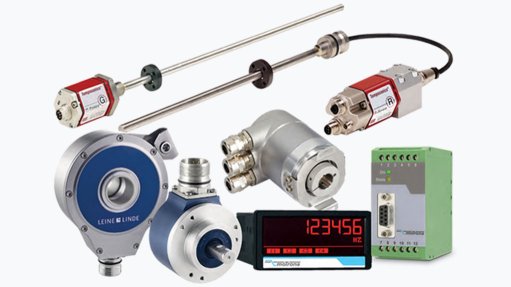
ATI systems comprises five divisions: electrical assemblies, drives and controls, feedback sensors, enclosures, and strip guiding.
VISIT SHOWROOM
Announcements
What's On
Subscribe to improve your user experience...
Option 1 (equivalent of R125 a month):
Receive a weekly copy of Creamer Media's Engineering News & Mining Weekly magazine
(print copy for those in South Africa and e-magazine for those outside of South Africa)
Receive daily email newsletters
Access to full search results
Access archive of magazine back copies
Access to Projects in Progress
Access to ONE Research Report of your choice in PDF format
Option 2 (equivalent of R375 a month):
All benefits from Option 1
PLUS
Access to Creamer Media's Research Channel Africa for ALL Research Reports, in PDF format, on various industrial and mining sectors
including Electricity; Water; Energy Transition; Hydrogen; Roads, Rail and Ports; Coal; Gold; Platinum; Battery Metals; etc.
Already a subscriber?
Forgotten your password?
Receive weekly copy of Creamer Media's Engineering News & Mining Weekly magazine (print copy for those in South Africa and e-magazine for those outside of South Africa)
➕
Recieve daily email newsletters
➕
Access to full search results
➕
Access archive of magazine back copies
➕
Access to Projects in Progress
➕
Access to ONE Research Report of your choice in PDF format
RESEARCH CHANNEL AFRICA
R4500 (equivalent of R375 a month)
SUBSCRIBEAll benefits from Option 1
➕
Access to Creamer Media's Research Channel Africa for ALL Research Reports on various industrial and mining sectors, in PDF format, including on:
Electricity
➕
Water
➕
Energy Transition
➕
Hydrogen
➕
Roads, Rail and Ports
➕
Coal
➕
Gold
➕
Platinum
➕
Battery Metals
➕
etc.
Receive all benefits from Option 1 or Option 2 delivered to numerous people at your company
➕
Multiple User names and Passwords for simultaneous log-ins
➕
Intranet integration access to all in your organisation

