



Lack of NCOP public consultation may sink Bill – Leon

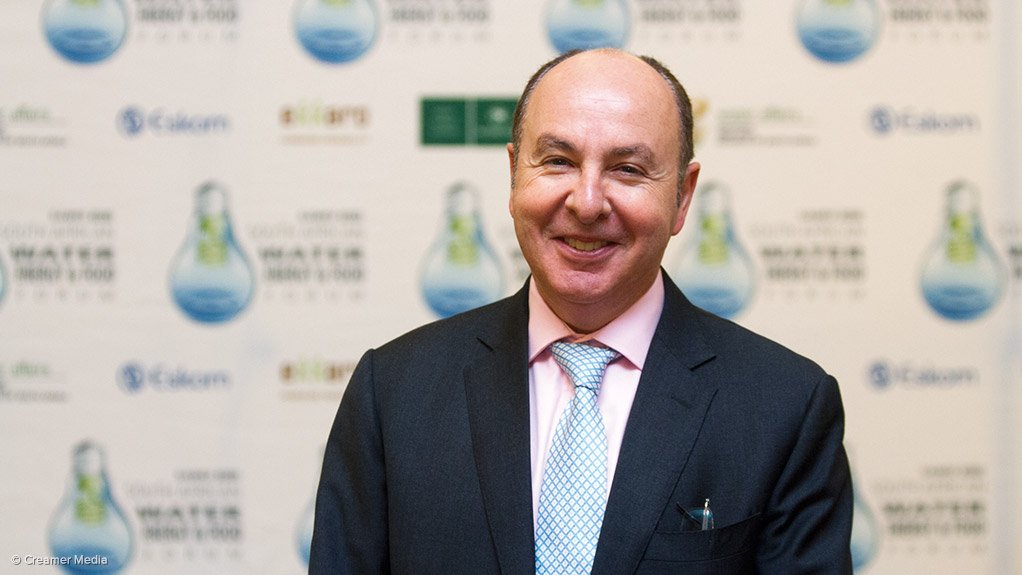



JOHANNESBURG (miningweekly.com) – A lack of public consultation by the National Council of Provinces (NCOP) during its consideration of the Mineral and Petroleum Resources Development Act (MPRDA) Amendment Bill could potentially render the Bill unconstitutional, law firm Webber Wentzel mining head Peter Leon told Mining Weekly Online on Thursday.
He said, while the National Assembly’s (NA’s) Portfolio Committee on Mineral Resources did include public consultation in its consideration process and amended the Bill from the original version published for public comment in December 2012, the NCOP still had a duty to facilitate public involvement in its legislative process.
“The NCOP has a duty to consult with the public on each legislative proposal affecting the provinces that comes before it. It is [also] important [to note] that public comment made in the NA, even if transmitted to the NCOP for consideration, is not sufficient to discharge the NCOP of its duty to facilitate public involvement,” he said.
Leon added that the MPRDA Amendment Bill, which was passed by the NCOP without change, was “clearly rushed through the NCOP,” stating that processes relating to a Section 76 Bill, such as the MPRDA, usually took six to eight weeks to complete.
However, the Bill was introduced to the NCOP on March 12 and passed just more than two weeks later on March 27, without any public hearings having been held.
Leon noted that, with the exception of last-minute oil and gas provisions, extensive consultation was conducted by the portfolio committee in the NA on key provisions of the Bill, with the final version of the Bill, particularly amendments to the problematic provisions on the processing of licensing applications and mineral beneficiation, being a result of extensive consultation with the Chamber of Mines (CoM).
“However, it does not appear that any further public consultation was conducted by the NCOP during the two weeks the Bill was before it,” he said.
Leon added that, despite the CoM having expressed its satisfaction with the final version of the Bill, indicating that the amendments made addressed many of its initial shortcomings, the Bill, as passed, still had some shortcomings.
He said a number of provisions were drafted in a vague and ambiguous manner, or gave the Minister of Mineral Resources broad, rather than guided, discretion, which could create regulatory uncertainty.
“Poorly conceived or implemented regulation has been cited as a key issue for investors in the South African mining industry, according to the 2013 Fraser Institute Annual Survey of Mining Companies,” Leon pointed out.
However, the problems that existed in provisions relating to beneficiation and processing of licence applications, in particular, had been improved significantly in the final version of the Bill, which was positive, he added.
“Less positive, however, is that any person wishing to export a mineral or mineral product must still first comply with the Bill's beneficiation provisions and must receive written approval from the Minister before they may export such mineral or mineral product. This may well contravene provisions of the World Trade Organisation's General Agreement on Tariffs and Trade, to which South Africa is a party,” Leon said.
Further, the Bill’s provisions relating to oil and gas remained concerning, in particular the introduction of State participation in exploration and production rights. Under the Bill, the State would acquire an automatic 20% free carried interest in all new exploration and production rights.
Following last-minute amendments made to the Bill by the portfolio committee, just before it was tabled before the NA for adoption, the State would now also be "entitled to a further participation interest in the form of … acquisition at an agreed price, or … production-sharing agreements”, Leon pointed out.
This participation, which was limited to 30% under previous versions of the Bill, was now apparently unlimited.
“It is also not clear what ‘an agreed price’ means or how a deadlock will be broken where the State is ‘entitled’ to an interest, but cannot agree with the exploration company on a price for such interest. These provisions create further regulatory uncertainty,” Leon added.
In addition, the amendments could create a conflict of interest, where the State becomes both a regulator and player in the industry. Investor sentiment was, thus, likely to be negatively affected, he said.
“Unlike many of the key provisions relating to mining, the last-minute amendment to Section 86A(2) of the MPRDA was not a result of consultation with the industry in question and, in fact, caught the latter by surprise,” Leon noted.
WAY FORWARD
Following the passing of the MPRDA Amendment Bill by the NCOP, President Jacob Zuma now had to sign the Bill into law; however, it was still unclear when this would happen.
Leon also pointed out that, should the Bill be signed into law by Zuma ahead of the national elections on May 7, it would only come into effect on a date fixed by the President by proclamation in the Government Gazette.
“Such a proclamation is unlikely to be made for a date earlier than the promulgation of regulations provided for under the Bill. Many of the key provisions amended by the Bill require regulations to be promulgated by the Minister to give content to them. The Bill is only likely to come into force after these regulations are promulgated,” he explained.
Leon added that, under Section 107(1A) of the MPRDA, as amended, some of these regulations required consultation with "affected stakeholders", in particular, those regulations which pertained to "terms and conditions applicable to beneficiation of mineral resources as contemplated in Section 26".
“Effective consultation in this regard is likely to take several months,” he pointed out.
DA PETITION
Democratic Alliance (DA) shadow Minister of Mineral Resources James Lorimer last week said the Bill, which was “passed without amendments” provided no certainty for investors, which, as a result, would pull their resources, leaving the South African economy “in a shambles”, adding that this would lead to people losing their jobs.
“As such, the DA has now begun a process to petition President Zuma, in terms of Section 79 of the Constitution, to send this Bill back to the NA for reconsideration,” he said.
Leon stated that, should the President have reservations about the constitutionality of any particular Bill, he could refer it back to the NA for reconsideration. The NCOP would participate in the reconsideration of a Bill if the issues of constitutionality related to procedural matters that involved it.
“It is, thus, possible that the President could refer the MPRDA Amendment Bill back to Parliament for reconsideration if he is made aware of the constitutional issues in relation to the Bill, in particular the issue of inadequate consultation during the NCOP process,” he stated.
Further, the President could also, under Section 79(4)(b) of the Constitution refer the Bill to the Constitutional Court for a decision on its constitutionality if the Bill, after reconsideration, was returned to the President without fully addressing his reservations.
“Should the President fail to refer the Bill back to Parliament, or to the Constitutional Court, any interested person could possibly succeed in an application to court to declare the Bill unconstitutional on the grounds of inadequate consultation,” Leon noted.
Article Enquiry
Email Article
Save Article
Feedback
To advertise email advertising@creamermedia.co.za or click here
Research Reports

Projects

Latest Multimedia
Latest News
Showroom

ZF Aftermarket is the after-sales division of the world-renowned German ZF group, a global leader in mobility technology.
VISIT SHOWROOM
Complete range of security sealing solutions including security seals bags and labels.
VISIT SHOWROOM
Announcements
What's On
Subscribe to improve your user experience...
Option 1 (equivalent of R125 a month):
Receive a weekly copy of Creamer Media's Engineering News & Mining Weekly magazine
(print copy for those in South Africa and e-magazine for those outside of South Africa)
Receive daily email newsletters
Access to full search results
Access archive of magazine back copies
Access to Projects in Progress
Access to ONE Research Report of your choice in PDF format
Option 2 (equivalent of R375 a month):
All benefits from Option 1
PLUS
Access to Creamer Media's Research Channel Africa for ALL Research Reports, in PDF format, on various industrial and mining sectors
including Electricity; Water; Energy Transition; Hydrogen; Roads, Rail and Ports; Coal; Gold; Platinum; Battery Metals; etc.
Already a subscriber?
Forgotten your password?
Receive weekly copy of Creamer Media's Engineering News & Mining Weekly magazine (print copy for those in South Africa and e-magazine for those outside of South Africa)
➕
Recieve daily email newsletters
➕
Access to full search results
➕
Access archive of magazine back copies
➕
Access to Projects in Progress
➕
Access to ONE Research Report of your choice in PDF format
RESEARCH CHANNEL AFRICA
R4500 (equivalent of R375 a month)
SUBSCRIBEAll benefits from Option 1
➕
Access to Creamer Media's Research Channel Africa for ALL Research Reports on various industrial and mining sectors, in PDF format, including on:
Electricity
➕
Water
➕
Energy Transition
➕
Hydrogen
➕
Roads, Rail and Ports
➕
Coal
➕
Gold
➕
Platinum
➕
Battery Metals
➕
etc.
Receive all benefits from Option 1 or Option 2 delivered to numerous people at your company
➕
Multiple User names and Passwords for simultaneous log-ins
➕
Intranet integration access to all in your organisation

