Jameson cells saving Valterra Platinum R203m, keeping 3 000 trucks off road




Reduction of 3 000-equivalent trucks on the road, a 70.5 MWh decrease in smelting electricity consumption, a 70 000 t cut in smelting CO2 emissions, and a R203-million annual cost saving, which excludes revenue benefits from improved metal recovery.
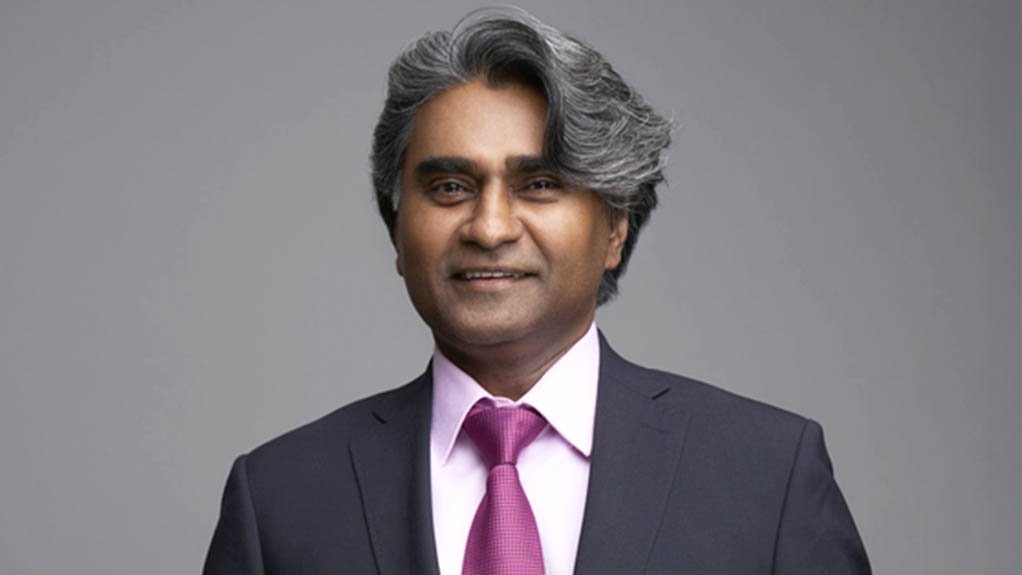
“Big, big benefits,” was the comment of Valterra Platinum executive head: processing operations Agit Singh when, during the company’s value-chain media briefing covered by Engineering News & Mining Weekly, he provided an update on the gains of Jameson cell deployment.
Singh was outlining the Johannesburg Stock Exchange-listed company’s integrated processing route from ore to refined platinum group metals (PGMs), and the downstream aspects of the PGMs business.
Valterra has in-depth insight into the mining and processing of Platreef in particular and pointed out the need for the PGMs industry to take account of the link of Platreef to base metal, which can be a big opportunity or a considerable challenge, as well as the potential of sulphur dioxide (SO2) pollution if abatement investment is not made.
On the Jameson cells front, Valterra has achieved major footprint reduction at the Mogalakwena PGM mine’s north concentrator by replacing something like 44 conventional flotation cells with four Jameson cells.
The north concentrator has been such a success that a study into also introducing Jameson cells at Mogalakwena’s south concentrator is well advanced.
“The south concentrator will go through what we did at the north concentrator, and we’ll definitely see the same reduction,” was Singh’s confident forecast.
‘Mass’ and ‘pull’ were two other words that popped up constantly in relation to the ability of Jameson cells to reduce the amounts of concentrate mass transported to the smelters without loss of grade or recovery; in fact, at times with a slight uptick in recovery.
Reduced mass pull points to less unwanted material being fed through the smelters amid Platreef ore’s clay complexity requiring innovative treatment. By nature of the mineralogy, the clay competes with the PGMs to float. To avoid this competition, sophisticated technology has been brought into play that involves liberation, grinding, air injection and bubble creation. Then reagents are added, with frothers causing foam, activators activating the PGMs, deactivators deactivating what is not wanted, and depressant stopping the unwanted material from floating.
You’ve got to get the PGM to attach to bubble and as the bubble begins to move from the bottom of the cell to the top, it starts to upgrade itself. But, at the same time, the PGMs are competing with all the other material.
The Jameson cells’ bubble particle contact is said to be very efficient. It attaches itself to the particle. It moves up very quickly, and it’s got a very short distance to travel before it becomes concentrate that is then called final concentrate.
At that point, a high volume of depressant can be applied to prevent unwanted material from floating and the PGM recovery remains.
The only way that this could be achieved was by using the Jameson cells, because a lot of depressant entering a conventional cell results in the PGMs being depressed.
Instead, the Jameson cells allow the PGM particle to hold onto the bubble, and much more depressant can be applied to diminish all the unwanted material.
Interestingly, recovery improvement is also peeping through as the Jameson cells do their work.
Seven Concentrators
Overall information provided during the media briefing began with rocks bearing a few grams of sought-after material per ton making their way through concentrators and then advancing into smelters, converters, base metal refining, magnetic concentration, and precious metal refining.
Required to do all this is a major suite of assets that process Platreef, upper group two (UG2) reef, Merensky reef and Great Dyke reef in very distinctive ways.
On the western limb of South Africa’s renowned Bushveld Igneous Complex, for example, is Valterra’s Waterval complex that has two 34 MW furnaces, a slag cleaning furnace, a precious metal refinery, a base metal refinery, and a magnetic concentrator plant.
To the north are the company’s Mogalakwena concentrators and its Polokwane 68 MW flagship PGM smelter. “There’s no other smelter, doesn’t matter what you hear and I’m prepared to debate this openly, and I’ve said this many times: you’ll never come across a 68 MW furnace like we have anywhere in the PGM industry with such stability, efficiency, and modernisation,” Singh emphasised strongly during the media brief.
On the Bushveld’s eastern limb, where chrome is prevalent, Valterra has a chrome plant at the Mototolo mine.
Of the company’s seven concentrators, there are two at Mogalakwena, two at Amandelbult, one at Mototolo, another at Unki in Zimbabwe and a joint venture concentrator at the Modikwa mine, which is also on the eastern limb.
Its three chrome operations are at Amandelbult, Mototolo, and Modikwa and considerable work around chrome is planned.
Adding to the Polokwane and Waterval smelters will be Mortimer, which is expected to be back online next year treating converter slag built up over the years.
The Platreef ore mined at Mogalakwena is low in grade and high in base metal loading, resulting in the mine’s concentrator being high volume when compared with Amandelbult and Mototolo, where chrome recovery circuits are continuing to be optimised.
Smelting is what Singh described as Valterra’s main differentiator. “We’ve got this massive smelting fleet. It’s massive because Polokwane treats high-volume Mogalakwena concentrate, and this is why we did the mass pull project at Mogalakwena because you can smelt large volumes with a lot of gangue in it” – gangue meaning unwanted material that causes considerable energy waste.
The mass pull project was implemented to minimise that gangue so that better-quality PGM concentrate can be smelted.
Eighty per cent to 90% of what Polokwane treats is from Mogalakwena, with Waterval’s predominant UG2 mix coming from third parties, Amandelbult and Mototolo.
The way the variety of ores are treated differs widely in that some ores are high in base metal content; others have no base metal content at all. Some are high in chrome and others have zero chrome, “and bringing all of that together is what’s unique in terms of getting optimal blends fed into our furnaces and our converter plants,” Singh pointed out.
Mogalakwena’s base metal content is described as having “a massive advantage for us” in that the base metal attracts PGMs and maximises PGM recovery during smelting.
Smelters have a mass stream, where PGMs are wanted, and a slag stream, which PGMs must bypass, and base metal content helps that to take place optimally.
Mogalakwena has the right amount of base metals to ensure that desired stabilisation and, to some extent, Unki has that as well.
“We have that base metal collector in our concentrate, and that’s why we split that everywhere. We split it to Waterval. We split it to Mortimer when that was running, and we’ll continue to do that when Mortimer returns, and it’s what we have at Polokwane.
“So, our efficiencies are really, really high – in excess of 98% on first pass and at 99% on overall efficiencies, and that’s because of the base metal advantage that we have.
“That’s the first thing around the smelting operations. The second is that we’re able to blend out chrome, which can be poisonous to smelting. If you have a high UG2 ore, you’re going to have chrome that you’re going to be blending in with your concentrate and it can be poisonous to the smelting operation,” Singh explained.
“Essentially, you dilute the chrome,” Valterra executive head: mining operations Willie Theron elucidated.
“We can blend that because we also have Mogalakwena and we have Unki, and bringing that together and distributing it appropriately to blend out the chrome in our UG2 ores is another advantage that we have,” Singh outlined.
Article Enquiry
Email Article
Save Article
Feedback
To advertise email advertising@creamermedia.co.za or click here

Latest Multimedia

Latest News
Showroom

Established on 1 March, 2000, by Barries Barnard, Advanced Fire Suppression Technologies (AFST) and the Advanced Group stands as Sub-Saharan...
VISIT SHOWROOM
FLANDERS Southern Africa provides integrated solutions for mining and industrial operations, covering field services, automation, electrification,...
VISIT SHOWROOM

Announcements
What's On
Subscribe to improve your user experience...
Option 1 (equivalent of R125 a month):
Receive a weekly copy of Creamer Media's Engineering News & Mining Weekly magazine
(print copy for those in South Africa and e-magazine for those outside of South Africa)
Receive daily email newsletters
Access to full search results
Access archive of magazine back copies
Access to Projects in Progress
Access to ONE Research Report of your choice in PDF format
Option 2 (equivalent of R375 a month):
All benefits from Option 1
PLUS
Access to Creamer Media's Research Channel Africa for ALL Research Reports, in PDF format, on various industrial and mining sectors
including Electricity; Water; Energy Transition; Hydrogen; Roads, Rail and Ports; Coal; Gold; Platinum; Battery Metals; etc.
Already a subscriber?
Forgotten your password?
Receive weekly copy of Creamer Media's Engineering News & Mining Weekly magazine (print copy for those in South Africa and e-magazine for those outside of South Africa)
➕
Recieve daily email newsletters
➕
Access to full search results
➕
Access archive of magazine back copies
➕
Access to Projects in Progress
➕
Access to ONE Research Report of your choice in PDF format
RESEARCH CHANNEL AFRICA
R4500 (equivalent of R375 a month)
SUBSCRIBEAll benefits from Option 1
➕
Access to Creamer Media's Research Channel Africa for ALL Research Reports on various industrial and mining sectors, in PDF format, including on:
Electricity
➕
Water
➕
Energy Transition
➕
Hydrogen
➕
Roads, Rail and Ports
➕
Coal
➕
Gold
➕
Platinum
➕
Battery Metals
➕
etc.
Receive all benefits from Option 1 or Option 2 delivered to numerous people at your company
➕
Multiple User names and Passwords for simultaneous log-ins
➕
Intranet integration access to all in your organisation