Is there appetite for Deterioration of Stock cover?





This article has been supplied.
Protecting temperature-sensitive stock against machinery breakdown
While food insecurity remains a global concern, South Africa continues to be a significant producer and exporter of various perishable commodities, including meat, citrus, fish, fruit, and vegetables. These products are supplied not only to the local market but also to international destinations such as the United Kingdom, Europe, and the Far East.
To maintain quality, freshness, and shelf life, many perishable products require carefully controlled storage conditions. Unlike non-perishable goods, refrigerated and frozen products depend on uninterrupted temperature control throughout the storage process. Failure of a refrigeration or cooling system can result in rapid deterioration and substantial financial loss.
Importance of refrigeration and cold storage
Cooling and freezing have become essential methods of preservation for food products and certain pharmaceutical items. Refrigeration is used across a wide range of industries, from large commercial cold-storage facilities and processing plants to smaller retail and domestic appliances.
South Africa has extensive cold-storage infrastructure, particularly in agricultural regions. The Western Cape, for example, is home to numerous temperature-controlled facilities that enable consumers to enjoy citrus fruit and table grapes outside their normal harvesting seasons. Similar storage operations exist in Limpopo and Mpumalanga, supporting the year-round supply of fresh produce.
What is Deterioration of Stock insurance?
Deterioration of Stock (DOS) insurance is designed to indemnify the Insured for physical loss of refrigerated or frozen stock resulting from an indemnifiable Machinery Breakdown (MB) or Electronic Equipment (EE) insurance event.
The cover becomes effective when a sudden and unforeseen breakdown of insured machinery causes stock to deteriorate, spoil, become contaminated, or otherwise become unfit for its intended purpose.
What does the policy cover?
Subject to the terms, conditions, and limits of the policy, indemnity may include:
- The value of the stock immediately prior to being placed into storage, including reasonable associated costs, such as packing and handling.
- The cost of damaged packaging materials, containers, or wrapping affected by the insured loss.
- The cost of obtaining a Certificate of Condemnation where required.
- Disposal costs associated with the deteriorated stock.
- The cost of cleaning and clearing the affected cold-storage facility or chamber.
Increased Cost of Working extension
The policy may also be extended to cover Increased Cost of Working (ICOW) expenses. This can include costs incurred to prevent or minimise further loss, such as securing alternative refrigerated storage facilities following a breakdown event.
A dependent cover – not a stand-alone policy
As pointed out above, a Deterioration of Stock (DOS) insurance loss can only be triggered or admitted following an indemnifiable incident under a Machinery Breakdown (MB) or Electronic Equipment (EE) insurance material damage policy. The policy may not be issued in isolation or as a stand-alone policy.
Understanding key exclusions
Refrigerated transit risks
Virtually all Deterioration of Stock (DOS) policies exclude losses occurring during transit, whether by road, rail, sea, or air.
Businesses requiring protection for goods while being transported under refrigeration should consider specialised Marine Cargo or Transit insurance arrangements.
Deterioration of undamaged stock
The policy is intended to cover physical deterioration resulting from an insured event. It does not provide cover for stock that remains physically undamaged but suffers a financial loss due to delays or interruptions in production.
For example, stock in the process of slaughtering, processing, or production that has not yet entered refrigeration storage would generally not be covered. However, the resulting loss of anticipated profit may be considered under a Consequential Loss or Business Interruption policy of the Insured.
Why these risks require careful underwriting
Deterioration of Stock (DOS) losses can be severe and often result in little or no salvage value.
Rapid and irreversible deterioration
Even a relatively small fluctuation in storage temperature can trigger the deterioration process. Once deterioration has commenced, it is generally irreversible. In many cases, affected goods must either be sold immediately at a significantly reduced value or be condemned and destroyed.
Limited loss mitigation opportunities
Although emergency measures such as transferring stock to alternative facilities may be attempted, these efforts are not always successful. As a result, many Deterioration of Stock (DOS) claims ultimately become total losses.
Significant exposure values
The values at risk can be substantial, particularly where large quantities of stock are stored in a single facility. Cover is typically sought for loss or damage resulting from:
- Sudden and unforeseen machinery breakdown.
- Accidental escape of refrigerant following sudden and unforeseen damage to insured refrigeration equipment.
- Resulting spoilage, contamination, putrefaction, or deterioration of insured products.
Consort’s appetite for Deterioration of Stock risks
Consort maintains a reasonable underwriting appetite for Deterioration of Stock (DOS) insurance. However, each risk requires careful assessment, taking into account factors such as the nature of the products stored, storage conditions, risk management controls, maintenance procedures, contingency planning, and overall exposure values.
To enable a proper evaluation, underwriters require the information contained in the relevant proposal forms. Once the necessary details have been received, a comprehensive risk assessment can be conducted and a quotation considered.
Consort Technical Underwriting Managers
Article Enquiry
Email Article
Save Article
Feedback
To advertise email advertising@creamermedia.co.za or click here
Research Reports



Latest Multimedia

Latest News
Showroom
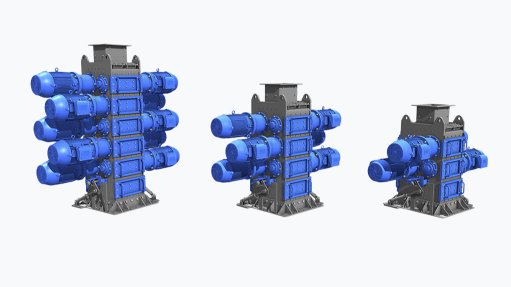
Energy and Densification Systems (EDS) has developed equipment for crushing, milling, blending and densifying products. Based on its globally...
VISIT SHOWROOM
Established in 1983, the ASTPM is an industry association and representative body of the welded carbon steel tube and pipe manufacturers of South...
VISIT SHOWROOM


Announcements
What's On
Subscribe to improve your user experience...
Option 1 (equivalent of R125 a month):
Receive a weekly copy of Creamer Media's Engineering News & Mining Weekly magazine
(print copy for those in South Africa and e-magazine for those outside of South Africa)
Receive daily email newsletters
Access to full search results
Access archive of magazine back copies
Access to Projects in Progress
Access to ONE Research Report of your choice in PDF format
Option 2 (equivalent of R375 a month):
All benefits from Option 1
PLUS
Access to Creamer Media's Research Channel Africa for ALL Research Reports, in PDF format, on various industrial and mining sectors
including Electricity; Water; Energy Transition; Hydrogen; Roads, Rail and Ports; Coal; Gold; Platinum; Battery Metals; etc.
Already a subscriber?
Forgotten your password?
Receive weekly copy of Creamer Media's Engineering News & Mining Weekly magazine (print copy for those in South Africa and e-magazine for those outside of South Africa)
➕
Recieve daily email newsletters
➕
Access to full search results
➕
Access archive of magazine back copies
➕
Access to Projects in Progress
➕
Access to ONE Research Report of your choice in PDF format
RESEARCH CHANNEL AFRICA
R4500 (equivalent of R375 a month)
SUBSCRIBEAll benefits from Option 1
➕
Access to Creamer Media's Research Channel Africa for ALL Research Reports on various industrial and mining sectors, in PDF format, including on:
Electricity
➕
Water
➕
Energy Transition
➕
Hydrogen
➕
Roads, Rail and Ports
➕
Coal
➕
Gold
➕
Platinum
➕
Battery Metals
➕
etc.
Receive all benefits from Option 1 or Option 2 delivered to numerous people at your company
➕
Multiple User names and Passwords for simultaneous log-ins
➕
Intranet integration access to all in your organisation