Human Capital in Transition


This article has been supplied and will be available for a limited time only on this website.
As organisations across the globe grapple with rapid technological advancement, shifting workforce expectations and mounting regulatory pressures, the role of people leaders has never been more complex. According to Aon’s 2025 Human Capital Trends Study, businesses are being challenged to rethink not only how work gets done, but also how talent is attracted, developed and retained.
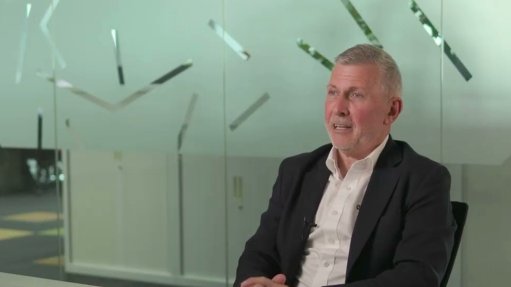
Zanele Dintwa, People Lead at Aon South Africa, says the pace of change is forcing organisations to re-evaluate traditional workforce strategies, leadership capability and the role of technology in the employee experience.
AI As a Strategic Lever
Artificial intelligence continues to dominate conversations across industries, but Dintwa believes the real opportunity lies in how organisations strategically integrate AI into the workplace.
“We are seeing AI becoming a strategic lever,” she explains. “As a firm, we want our people to partner with AI to automate monotonous tasks and free up valuable human time to focus on more strategic, value-adding work. But while adoption of tools such as Copilot is accelerating, it is imperative to approach implementation responsibly.”
There is still anxiety around AI. Governance, ethics and responsible use remain critical considerations. Dintwa cautions that technology should enhance human capability, not replace human judgement. “The implementation of AI must form part of a broader workforce strategy that is centred around operational efficiency, favourably impacting employee wellbeing and work-life balance.”
The Widening AI Skills Gap
One of the biggest concerns emerging from the report is the growing gap between the speed of AI deployment within businesses and the pace at which employees are adapting to it.
"The change is happening incredibly quickly," says Dintwa. "But the rate at which people are internalising and adopting these changes is much slower." This tension is forcing a fundamental rethink of how employers find and value talent. Rather than screening for traditional qualifications and credentials, businesses are increasingly hiring for what people can actually do - the transferable capabilities and adaptive thinking that matter in an AI-augmented workplace. A candidate's degree or job title is becoming less relevant than their demonstrable skills; an engineer, IT specialist or lawyer, for instance, may bring capabilities that translate directly and powerfully into the insurance industry, regardless of their formal background.
“This is the defining hiring shift of the AI era: away from proxies like qualifications and toward proof of real capability. For employers, it means building environments that reward continuous learning and internal reskilling, not just at recruitment, but as an ongoing practice. For employees, it means the willingness to evolve alongside technology is no longer a soft virtue, it is the core currency of one’s employability.”
There is a responsibility on organisations to support reskilling in line with the changing technology landscape, but there is a bigger responsibility on individuals and employees to embrace this learning and shift to leveraging AI for augmenting human skills and capabilities. “If you do not get onboard with how AI is changing the workplace and how to leverage it in your role and functions, you risk being left behind by people who know how to use these tools effectively and ultimately, use it as a competitive and performance advantage,” says Dintwa.
While AI can significantly improve productivity, Dintwa warns that on the flipside, overreliance on these tools may come at a cost. “The concern is whether critical thinking and analytical discernment are developing at the same pace. While AI can help generate polished outputs, it cannot replace human reasoning, curiosity or judgement and you can eventually tell when someone is not applying their mind. AI is not always correct, and people still need to think critically about the information they are using, as well as the context.”
Leadership Under Pressure
Beyond technology, two evolving trends that are reshaping the workforce and human capital strategy according to Aon’s 2025 Human Capital Trends Study are the Employee Value Proposition (EVP) and pay transparency.
· Employee Value Proposition (EVP) - Today’s employees expect far more from employers than previous generations did. Flexibility, wellbeing support, career growth, inclusion and purpose have become central components of an organisation’s EVP, having a direct impact on an organisation’s ability to attract and retain talent. Leaders are navigating increasingly complex workplace dynamics, from hybrid working arrangements to emotional wellbeing concerns and rising expectations around employer support.
· Pay Transparency - Internationally, new legislation - particularly in Europe - is driving organisations towards greater openness around remuneration structures and pay equity. Although South Africa has not yet introduced equivalent private-sector regulations, equal pay for work of equal value is a concept that we are very familiar with.
Many leaders need to develop their insight and capabilities to effectively navigate the realities of today’s workforce and the significant generational shifts that are occurring. “Businesses need leaders who can adapt, lead change and engage effectively with a rapidly changing workforce,” says Dintwa.
Keeping The Human Connection
Despite rapid advances in technology, Dintwa believes there are aspects of business that AI will never replace. “In industries such as insurance and risk advisory for example, relationships, empathy, context, discernment and trust remain fundamental - there is still a deeply human element to what we do,” she says.
Ultimately, the race to deploy AI has moved faster than our collective wisdom on how to absorb it - and that imbalance carries real risk. Technology adopted without guardrails, strategy or cultural intention doesn't transform organisations, it destabilises them. "We are only scratching the surface of what AI can do," says Dintwa, “but scratching the surface is precisely when direction matters most. It’s not about being the fastest to deploy AI but being deliberate about where human capability remains irreplaceable. Critical thinking. Contextual judgment. Empathy. The ability to read a room, hold a relationship and make a call that no algorithm can adequately make.”
For Dintwa, what lies ahead is a necessary recalibration where the rapid pace of AI adoption gives way to co-existence, where technology extends human capability rather than erode human purpose. “The workplaces that get this balance right will be more productive, more resilient, more human, more competitive and ultimately, make better decisions across all aspects of their risk capital and human capital.”
Article Enquiry
Email Article
Save Article
Feedback
To advertise email advertising@creamermedia.co.za or click here
Projects


Latest Multimedia


Latest News

Showroom
The Beneficiation Academy is a certified training institution that follows all compliance legislation and is accredited with various Sector...
VISIT SHOWROOM
CMTS is a leading, well-established EC&I contractor with 37+ years of mining and industrial experience. We execute full-scope EC&I projects with...
VISIT SHOWROOM
Press Office
Announcements
What's On
Subscribe to improve your user experience...
Option 1 (equivalent of R125 a month):
Receive a weekly copy of Creamer Media's Engineering News & Mining Weekly magazine
(print copy for those in South Africa and e-magazine for those outside of South Africa)
Receive daily email newsletters
Access to full search results
Access archive of magazine back copies
Access to Projects in Progress
Access to ONE Research Report of your choice in PDF format
Option 2 (equivalent of R375 a month):
All benefits from Option 1
PLUS
Access to Creamer Media's Research Channel Africa for ALL Research Reports, in PDF format, on various industrial and mining sectors
including Electricity; Water; Energy Transition; Hydrogen; Roads, Rail and Ports; Coal; Gold; Platinum; Battery Metals; etc.
Already a subscriber?
Forgotten your password?
Receive weekly copy of Creamer Media's Engineering News & Mining Weekly magazine (print copy for those in South Africa and e-magazine for those outside of South Africa)
➕
Recieve daily email newsletters
➕
Access to full search results
➕
Access archive of magazine back copies
➕
Access to Projects in Progress
➕
Access to ONE Research Report of your choice in PDF format
RESEARCH CHANNEL AFRICA
R4500 (equivalent of R375 a month)
SUBSCRIBEAll benefits from Option 1
➕
Access to Creamer Media's Research Channel Africa for ALL Research Reports on various industrial and mining sectors, in PDF format, including on:
Electricity
➕
Water
➕
Energy Transition
➕
Hydrogen
➕
Roads, Rail and Ports
➕
Coal
➕
Gold
➕
Platinum
➕
Battery Metals
➕
etc.
Receive all benefits from Option 1 or Option 2 delivered to numerous people at your company
➕
Multiple User names and Passwords for simultaneous log-ins
➕
Intranet integration access to all in your organisation