Grid build key to wind targets - organisation


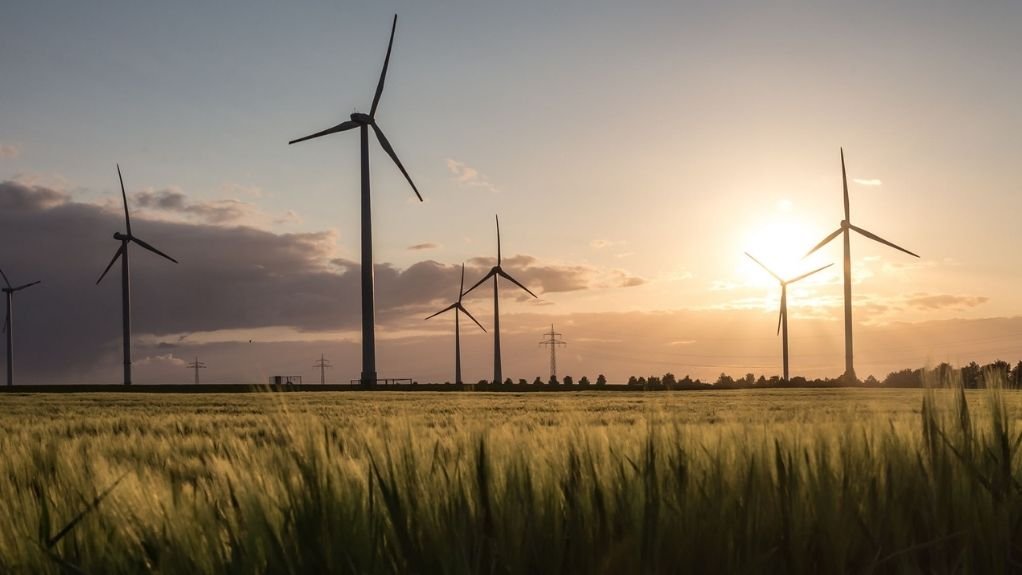
SANTOSH SOOKGRIM South Africa has a significant opportunity to build on its existing industrial capabilities to develop a more competitive domestic wind value chain. In the near term, expanding the production of cables, transformers and substations is most viable
DECARBONISATION EFFORTS The wind energy sector contributes to decarbonisation through the clean energy generated as well as limiting resource usage and land impact



The Integrated Resource Plan (IRP) 2025 target of 43 GW of wind capacity by 2042 will require a clear and credible pathway from policy ambition to implementation, “with the immediate priority being to meet the interim target of 12.6 GW by 2030”, says industry organisation South African Wind Energy Association (SAWEA) senior technical adviser Santosh Sookgrim.
The IRP outlines the allocation of the country’s primary energy resources and aims to ensure that electricity demand is met cost efficiently and sustainably.
Sookgrim argues that reaching 43 GW by 2042 will not be achieved by merely increasing generation capacity – it will depend on whether South Africa can build an enabling ecosystem where grid infrastructure, policy and regulation, procurement, investment and industrial capacity advance in parallel.
He cites four critical milestones that require coordinated action from government, the electricity sector and industry.
The first is accelerating grid expansion and connection capacity, particularly in high-quality wind resource areas: “Without proactive grid investment, even well-designed procurement rounds will struggle to deliver electrons.”
The second milestone is strengthening institutional and regulatory capacity across national, provincial and local government, while the third entails establishing a predictable and sustained procurement pipeline.
Procurement reform should provide greater certainty on the timing, scale and frequency of future renewable-energy procurement while ensuring that procurement outcomes translate into projects reaching financial close and commercial operation, in addition to contributing to social value.
Developing a competitive local manufacturing and industrial base constitutes the fourth milestone, with recent reforms having provided a stronger foundation for such an expansion, adds Sookgrim.
The promulgation of IRP 2025 provides overarching policy direction for the future electricity mix and an important long-term signal to developers and investors, with some government departments required to align their planning and investment programmes to the IRP.
It has been reinforced by several complementary reforms. For instance, the Electricity Regulation Amendment Act strengthens the framework for a more competitive electricity market and increased private-sector participation.
Meanwhile, establishing the State-owned National Transmission Company South Africa and developing the Transmission Development Plan support the structural expansion and modernisation of the transmission network, adds Sookgrim.
Moreover, progress towards the operationalisation of the South African Wholesale Electricity Market – a competitive trading platform expected to launch imminently – is also key to establishing a more competitive and transparent market that can accommodate higher levels of renewable generation.
On the industrial side, the South African Renewable Energy Masterplan provides a framework for developing local manufacturing, skills and value chains, while the Just Energy Transition Investment Plan links energy-sector transformation with investment, industrial development and inclusive participation.
However, Sookgrim says, “policy direction now needs to translate more decisively into implementation . . . the priority should be greater alignment between existing frameworks, particularly around timelines, procurement, grid development, localisation and investment”.
He believes that the next phase should focus less on creating additional policy instruments and more on coordinating and implementing reforms already under way, with streamlined regulatory processes, strengthened institutional capacity and clearly defined and monitored milestones across government.
Localisation, Skills and Growth
Sookgrim notes that South Africa has a significant opportunity to build on its existing industrial capabilities to develop a more competitive domestic wind value chain. In the near term, expanding the production of cables, transformers and substations is most viable.
“While these would require significant investment, technology partnerships, skills development and sufficient market demand to become commercially viable, they represent longer-term opportunities to deepen localisation.”
De-industrialisation and declining manufacturing competitiveness are challenges, but renewables offer a chance to rebuild. Attracting such investment requires incentives.
“The most important incentive government can provide is market certainty,” he adds, noting that a healthy market must comprise public and private procurement, consequently providing manufacturers with visibility of future demand.
Further, that industrial ambition must be underpinned by skills, states Sookgrim.
SAWEA is assisting in building the pipeline from entry-level to leadership, including the National Qualification Framework (NQF) Level 3 Wind Turbine Operator Skills Programme as an entry point, and supporting the review of the NQF Level 5 Wind Turbine Technician Qualification to reflect current technologies.
Balancing rapid deployment with local procurement, community engagement and environmental concerns starts well before construction, he says, noting that early engagement with communities and traditional and local leadership builds trust and allows for socioeconomic opportunities to be considered from the outset, rather than as an afterthought.
SAWEA, together with nonprofit industry association South African Photovoltaic Industry Association, has developed community engagement guidelines to guide this process, as well as project development guidelines that incorporate best practice and compliance requirements.
“Wind offers a critical advantage in a water-scarce country, as it has very low water use throughout the life cycle and most of the consumption occurs during the construction phase.”
Additionally, the wind industry contributes to decarbonisation through the clean energy generated, thus offsetting carbon emissions that would normally have come from fossil fuel sources, as well as limiting resource use and land impact, he concludes.
Article Enquiry
Email Article
Save Article
Feedback
To advertise email advertising@creamermedia.co.za or click here
Research Reports
Projects

Latest Multimedia
Latest News
Showroom

Roytec Global is an international company specializing in liquid / solid and mineral separation technologies for the Mining and Industrial sectors.
VISIT SHOWROOM
Rittal is a world leading provider of top-quality integrated systems for enclosures, power distribution, climate control, IT infrastructure and...
VISIT SHOWROOM

Announcements
What's On
Subscribe to improve your user experience...
Option 1 (equivalent of R125 a month):
Receive a weekly copy of Creamer Media's Engineering News & Mining Weekly magazine
(print copy for those in South Africa and e-magazine for those outside of South Africa)
Receive daily email newsletters
Access to full search results
Access archive of magazine back copies
Access to Projects in Progress
Access to ONE Research Report of your choice in PDF format
Option 2 (equivalent of R375 a month):
All benefits from Option 1
PLUS
Access to Creamer Media's Research Channel Africa for ALL Research Reports, in PDF format, on various industrial and mining sectors
including Electricity; Water; Energy Transition; Hydrogen; Roads, Rail and Ports; Coal; Gold; Platinum; Battery Metals; etc.
Already a subscriber?
Forgotten your password?
Receive weekly copy of Creamer Media's Engineering News & Mining Weekly magazine (print copy for those in South Africa and e-magazine for those outside of South Africa)
➕
Recieve daily email newsletters
➕
Access to full search results
➕
Access archive of magazine back copies
➕
Access to Projects in Progress
➕
Access to ONE Research Report of your choice in PDF format
RESEARCH CHANNEL AFRICA
R4500 (equivalent of R375 a month)
SUBSCRIBEAll benefits from Option 1
➕
Access to Creamer Media's Research Channel Africa for ALL Research Reports on various industrial and mining sectors, in PDF format, including on:
Electricity
➕
Water
➕
Energy Transition
➕
Hydrogen
➕
Roads, Rail and Ports
➕
Coal
➕
Gold
➕
Platinum
➕
Battery Metals
➕
etc.
Receive all benefits from Option 1 or Option 2 delivered to numerous people at your company
➕
Multiple User names and Passwords for simultaneous log-ins
➕
Intranet integration access to all in your organisation