Government and business pin hopes of 3% growth on mining, farming, tourism and infrastructure

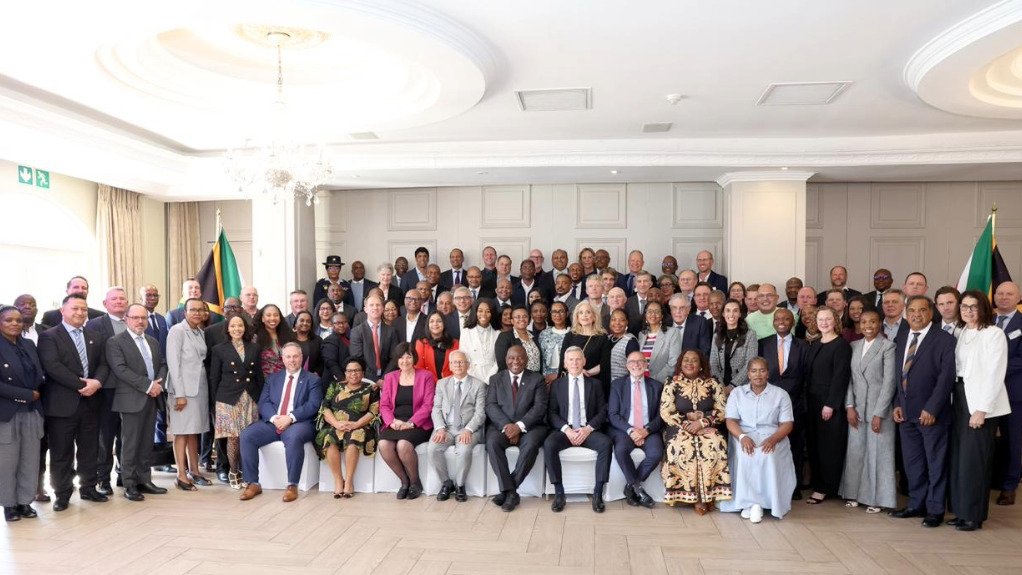
President Cyril Ramaphosa with Discovery CEO Adrian Gore to his right at the launch in Johannesburg of Phase 3 of the Government-Business Partnership
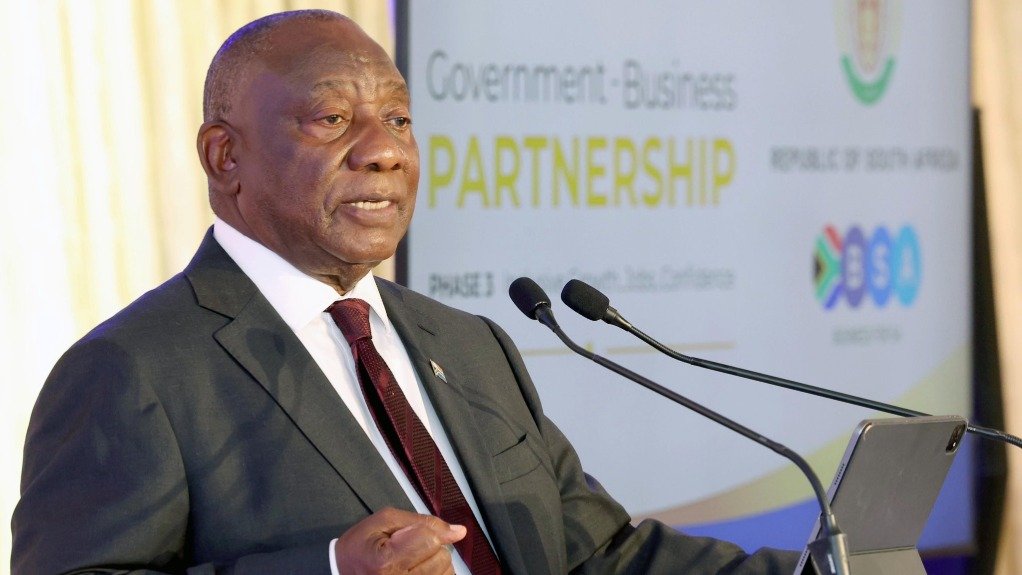
South African President Cyril Ramaphosa speaking at the launch of Phase 3 of the Government-Business Partnership
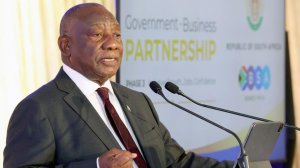


The four sectors of mining, agriculture, tourism and infrastructure have been selected under Phase 3 of the Government-Business Partnership as the platforms for raising South Africa’s growth to 3% and to create one-million new jobs by 2030.
These new focus areas were unveiled jointly in Johannesburg on August 20 by President Cyril Ramaphosa and Discovery CEO Adrian Gore, a key business convenor of the partnership since its launch in 2023.
The initiative initially focused on averting South Africa’s potential economic collapse amid extreme electricity loadshedding, deepening operational crises across the rail and port systems, and chronic crime and corruption. The themes of energy, logistics, and crime and corruption remained on the partnership’s agenda, together with a focus on youth unemployment, which was added during Phase 2.
Besides the four growth sectors, Phase 3 would also include a focus on the crisis-ridden City of Johannesburg, once business had been assured of a willing and credible counterparty in the municipality, while also giving attention to South Africa’s “narrative”, which continued to weigh on investor perceptions.
In all, therefore, the partnership would have ten focus areas bundled under the themes of ‘growth enablers’ (energy and logistics); ‘growth drivers’ (mining, agriculture, tourism and infrastructure); and ‘confidence multipliers’ (crime and corruption, City of Johannesburg, country narrative and youth employment).
Gore described the new phase as a “deliberate step change from removing the constraints holding the economy back, to actively driving growth in the sectors where South Africa can genuinely compete globally, grow and create jobs”.
He stressed, too, that 3% growth represented the minimum level at which South Africa would begin to stabilise unemployment, which rose to a devastating 33.6% in the last quarter, with 8.5-million people out of work.
At levels above 3%, but particularly above 5%, South Africa would begin to reduce unemployment and properly absorb the 300 000 people entering the jobs market yearly.
Ramaphosa underlined this point, arguing that 3% could not be “the summit of our ambition”.
“We need growth that reaches rural communities, townships and smaller towns.
“For this reason, Phase 3 should expand the partnership’s work into tourism, agriculture and agro-processing, and mining.
“These sectors have been selected because they have significant potential to attract investment, earn foreign revenue, strengthen localisation and create employment at scale,” the President added.
R50BN MINING INVESTMENT TARGETED
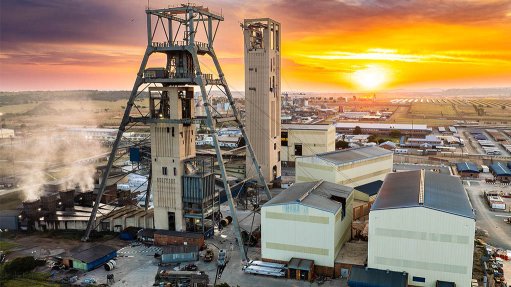
In mining, where Gore described South Africa as a “geological superpower”, the Phase 3 objective was to unlock more than R50-billion in capital expenditure by February 2028.
Immediate attention would be given to identifying sector competitiveness improvement opportunities by February 2027 and rolling out the cadastral system nationally by March 2027.
In addition, the partnership aimed to address administrative and approved-project implementation bottlenecks by February 2028.
In agriculture and agro-processing, improving port efficiencies, especially at the Port of Cape Town, and expanding market access were viewed as ways of boosting yearly export value by R5-billion and increasing the sector’s GDP contribution by as much as R18.2-billion, respectively.
Attention would also be given to land reform to facilitate production on some 100 000 ha of land and to identifying up to three high-potential import-substitution opportunities for further agro-processing locally, which could add 100 000 new jobs.
Gore saw tourism, meanwhile, as a key labour-intensive export industry, with one job created for every 13 tourists.
Under Phase 3, the intention is to increase international tourist arrivals by land and sea from 7.5-million to 8.1-million by December 2027 and from 3.05-million to 3.8-million by air.
Here, attention would be given to opening additional direct air routes with new and existing international carriers to grow arrivals by air by 750 000 by December.
In addition, efforts would be made to grow demand in core and new source markets by coordinating destination marketing, while fully rolling out the Electronic Travel Authorisation system by December 2027.
These initiatives could add more than 23 000 direct jobs and raise the sector’s GDP contribution by up to R10-billion.
The plans for leveraging infrastructure were still under development and would be unveiled at a later stage.
CEO sponsors had been appointed across all four sectors, including Richard Stewart and Mpumi Zikalala in mining; PG Strauss, Louw van Reenen, Sean Walsh and Francois Strydom in agriculture; Jerry Mabena, Blacky Komani and Lindiwe Sangweni-Siddo in tourism; and Fani Titi, Sim Tshabalala and Hendrik du Toit for infrastructure.
REFORM FOCUS REMAINS
Ramaphosa also stressed that Phase 3 should be used to embed the reforms, particularly in electricity and logistics, that were already under way so as to ensure that progress could not be reversed.
He acknowledged that work in these areas remained incomplete, which led to legitimate questions by potential investors about whether the reforms could be undone.
“We must not confuse the absence of loadshedding with the completion of energy reform.
“We still need to expand the transmission grid, bring new generation capacity online, address the crisis in municipal electricity distribution and ensure that electricity remains affordable for households and businesses.”
Ramaphosa added that the reforms were also “far from complete” in the area of logistics.
Both Gore and Ramaphosa also underlined the importance of making visible progress in the area of crime and corruption, where Gore said success would act as a “confidence multiplier”.
“We must increase the investigation and successful prosecution of serious commercial crimes, recover stolen assets and dismantle the criminal networks that are damaging our institutions and our economy,” Ramaphosa added.
Article Enquiry
Email Article
Save Article
Feedback
To advertise email advertising@creamermedia.co.za or click here
Research Reports
Projects
Latest Multimedia
Latest News
Showroom

Established in 1983, the ASTPM is an industry association and representative body of the welded carbon steel tube and pipe manufacturers of South...
VISIT SHOWROOM
Sika South Africa is a trusted partner for the nation’s infrastructure, commercial, residential, and industrial sectors.
VISIT SHOWROOM
Announcements
What's On
Subscribe to improve your user experience...
Option 1 (equivalent of R125 a month):
Receive a weekly copy of Creamer Media's Engineering News & Mining Weekly magazine
(print copy for those in South Africa and e-magazine for those outside of South Africa)
Receive daily email newsletters
Access to full search results
Access archive of magazine back copies
Access to Projects in Progress
Access to ONE Research Report of your choice in PDF format
Option 2 (equivalent of R375 a month):
All benefits from Option 1
PLUS
Access to Creamer Media's Research Channel Africa for ALL Research Reports, in PDF format, on various industrial and mining sectors
including Electricity; Water; Energy Transition; Hydrogen; Roads, Rail and Ports; Coal; Gold; Platinum; Battery Metals; etc.
Already a subscriber?
Forgotten your password?
Receive weekly copy of Creamer Media's Engineering News & Mining Weekly magazine (print copy for those in South Africa and e-magazine for those outside of South Africa)
➕
Recieve daily email newsletters
➕
Access to full search results
➕
Access archive of magazine back copies
➕
Access to Projects in Progress
➕
Access to ONE Research Report of your choice in PDF format
RESEARCH CHANNEL AFRICA
R4500 (equivalent of R375 a month)
SUBSCRIBEAll benefits from Option 1
➕
Access to Creamer Media's Research Channel Africa for ALL Research Reports on various industrial and mining sectors, in PDF format, including on:
Electricity
➕
Water
➕
Energy Transition
➕
Hydrogen
➕
Roads, Rail and Ports
➕
Coal
➕
Gold
➕
Platinum
➕
Battery Metals
➕
etc.
Receive all benefits from Option 1 or Option 2 delivered to numerous people at your company
➕
Multiple User names and Passwords for simultaneous log-ins
➕
Intranet integration access to all in your organisation