Ferroalloys sector balancing geopolitics, tariffs, and the structural path to re-industrialisation





South Africa’s critical minerals sector faces a pivotal moment as energy tariff reforms, port efficiency gains, and global policy shifts intersect to shape the future of local beneficiation.
The ferroalloy sector stands at a strategic juncture between powerful global trends: a global race to secure critical-minerals supply chains, electrification, the rise of AI and domestic efforts to rebuild industrial competitiveness.
South Africa has an exceptional mineral endowment; however, the more important question is increasingly whether it can convert its resource advantage into competitive processing and manufacturing capacity.
This was the abiding theme at Project Blue’s Critical Materials Conference: Ferroalloys 2026, held in Johannesburg on 8–9 September, where more than 150 delegates from across the ferroalloys value chain — producers, traders, Chinese off-takers, financiers, logistics providers and policy stakeholders — debated a market being defined by geopolitical realignments, shifting global steel demand, AI’s impact on industrial metals demand, and domestic policy interventions.
“The general sentiment at the 2026 Critical Minerals Conference was constructive rather than unequivocally bullish,” states Marnus Terblanche, Lead Natural Resources, Energy & Infrastructure Corporate Finance at Investec Corporate and Investment Bank.
“Industry role players see meaningful reform momentum, but the investment case remains exposed to policy uncertainty,” adds Helena van Zyl, Coverage Banker at Investec Corporate and Investment Bank.
From mining advantage to processing disadvantage
The global critical-minerals debate is moving beyond the question of who owns the resources. Increasingly, the determining question is who can competitively process them.
“That distinction is particularly important for South Africa, which remains central to global chrome and manganese ore supply,” asserts Terblanche.
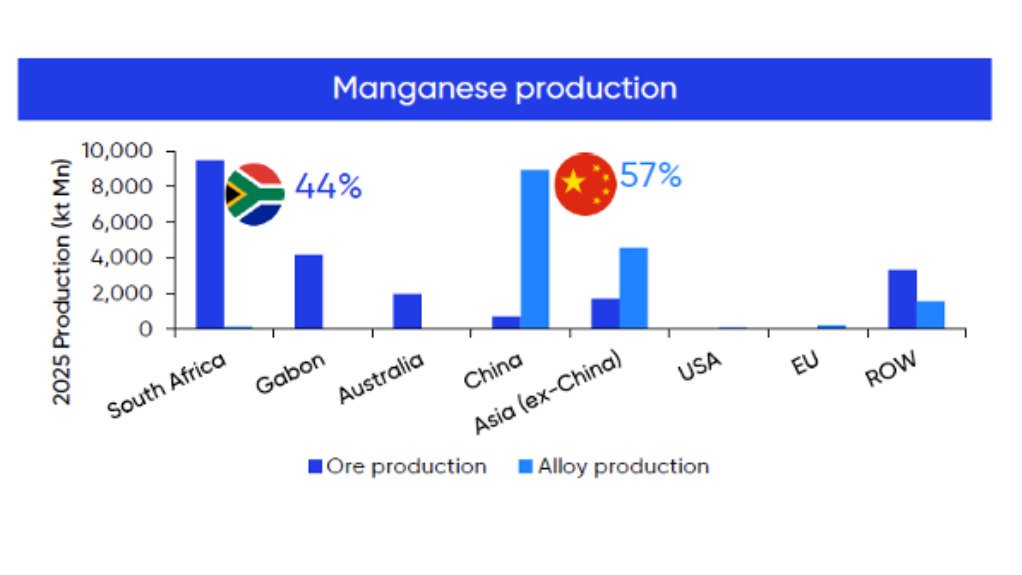
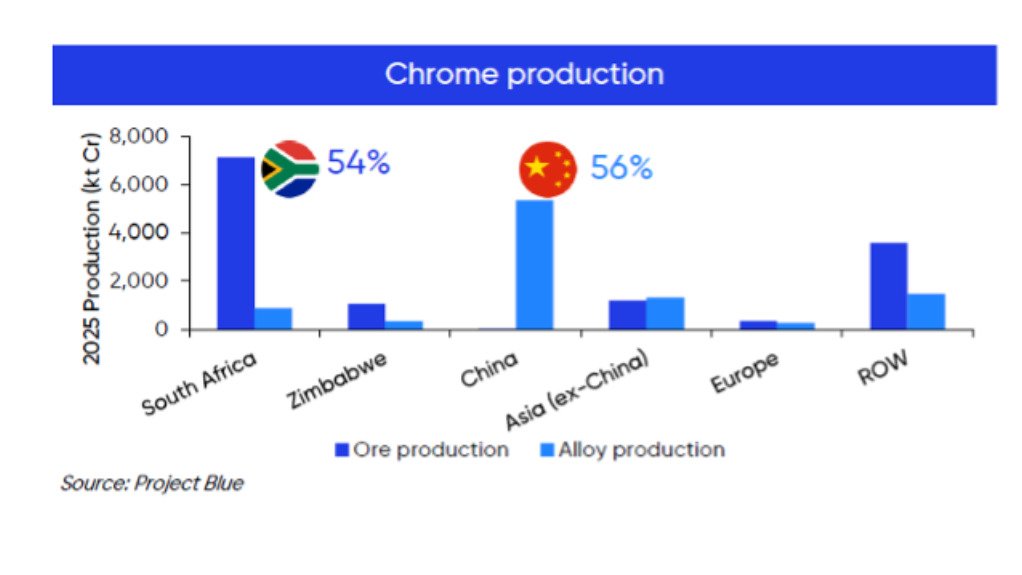
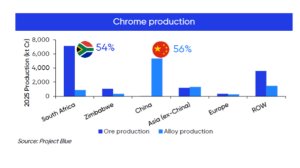
Africa accounts for around 60% of global chromium supply and more than 70% of manganese supply, with South Africa the largest individual producer in both markets.
“Yet, the location of mineral extraction and the location of value addition have increasingly diverged,” he adds.
Ferrochrome is perhaps the clearest example. South Africa remains a leading source of chrome ore, while China has become the leading ferrochrome producer.
As China's stainless-steel industry expanded, the conversion step increasingly migrated to the consuming market, supported by scale, established import routes and proximity to downstream demand.
Terblanche believes the lesson extends well beyond chrome, as mineral endowment alone does not guarantee industrial advantage.
“Processing capacity gravitates towards locations where energy, logistics, capital, policy and downstream demand combine to produce the most competitive delivered product.”
Geopolitical Drivers and Resource Nationalism
According to van Zyl, resource nationalism is reshaping global commodity supply chains.
“Governments across mineral-rich jurisdictions are accelerating initiatives to enforce in-country beneficiation, aiming to retain domestic economic value, generate employment, and safeguard critical mineral supply chains,” she explains.
Manganese provides a particularly important example. Gabon intends to prohibit exports of high-grade ore, which could potentially have a substantial influence on manganese supply if policy interventions are implemented from January 2029.
Zimbabwe’s restrictions on chrome ore shows that export restrictions supported domestic conversion while not necessarily eliminating ore exports. Indonesia’s intervention in the nickel industry demonstrates that although capital for processing investment was attracted, it also exposed constraints like ore availability and infrastructure and power constraints
Shifting demand: Steel production dynamics and the AI influence
“The Chinese government continues to exert a significant influence over the steel and ferroalloy sector by shifting production to cleaner regional hubs and redefining its raw material specifications,” continues van Zyl.
“This structural transition alters Chinese demand dynamics, creating both a target and a hurdle for South African producers who face intensified competition from Chinese smelters.”
AI is also emerging as an important new source of structural demand for critical metals, adds Terblanche.
“Despite its digital appearance, it ultimately depends on a substantial physical infrastructure base like power systems, industrial equipment and manufacturing.”
For ferroalloys, the exposure is more indirect but still meaningful: data centres, substations, transmission infrastructure, cooling systems and automated machinery all require significant volumes of steel and stainless steel, supporting demand for manganese and chrome alloys.
Manganese also has an additional link through its use in numerous battery chemistries relevant to energy-storage systems, while chrome benefits from the stainless-steel intensity of many of these infrastructure applications.
“In this way, AI adds another layer of demand to the traditional steel, infrastructure and electrification markets that underpin ferroalloy consumption,” continues Terblanche.
Energy Interventions: Eskom Tariff Relief
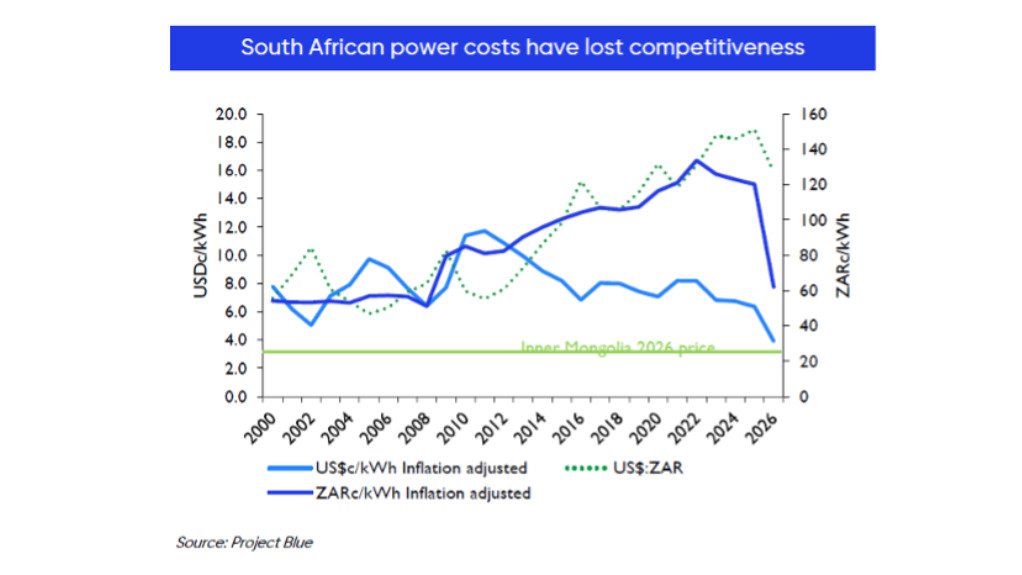
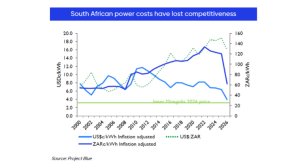
Energy remains one of the most important operational cost determinants of domestic smelter competitiveness. South Africa’s historical power cost advantage has eroded sharply relative to competing smelting locations, particularly Inner Mongolia, contributing to the progressive curtailment and idling of local ferroalloy capacity despite South Africa’s ore advantage.
“The negotiated Eskom tariff arrangement of around 62c/kWh for select ferrochrome smelters, subject to National Electricity Regulator of South Africa approval, marks a major policy shift and addresses long-standing industry calls for relief,” explains van Zyl.
While the discounted rate is a positive signal and creates necessary breathing room for idle smelters to evaluate the economic feasibility of recommissioning operations, van Zyl highlights how the local industry consensus notes that the tariff reduction may not deliver immediate operational relief and risks arriving late in the investment cycle.
“Lower tariffs are only one component of long-term competitiveness. Reliable and cost-effective logistics, carbon intensity, plant efficiency and access to capital will determine whether restarted capacity remains viable through the cycle.”
The concession could also create a shift in global trade dynamics, should foreign markets consider the move a subsidy on downstream ferroalloy production and implement import adjustments.
Divergent Pricing and Capital Access
Key highlights to emerge regarding commodity market performance over the past year highlight contrasting fundamentals across mineral suites:
- Chrome and manganese: Chrome prices have demonstrated resilience, whereas manganese markets have faced pricing pressure. Despite these market fluctuations, producer sentiment remains grounded rather than distress-driven, with the room reflecting balanced optimism rather than either exuberance or despair.
- Policy and trade protections: Local steel and ferroalloy producers require stronger policy alignment and domestic market protections. Aligning domestic operations with supportive policy frameworks will help ensure the sector remains globally competitive.
- Capital allocation: Offshore capital availability is expanding, paired with an increased risk appetite from South African commercial banks and development finance institutions. However, funding for emerging entrants and junior miners remains constrained.
Strategic Outlook for Investors and Business Leaders
“For much of the past two decades, the mining investment thesis was relatively straightforward: identify a high-quality resource, position it competitively on the cost curve and find the most efficient route to the international market. That framework is becoming more complicated,” states Terblanche.
Security of supply, carbon intensity, geopolitical alignment, domestic industrial policy and local economic value creation are now influencing where commodities are processed and where capital is deployed.
“Geopolitics is reshaping supply chains, industrial policy is influencing what gets built and where, and today's capital flows will increasingly determine tomorrow's trade flows.”
For South Africa, this represents both risk and opportunity, adds van Zyl. “The country has lost meaningful manufacturing and ferroalloy capacity over time, while investment remains below the level required for a sustained industrial recovery. Yet it is not starting from zero: it has existing plants, technical skills, world-class resources, renewable-energy potential and an increasingly strategic position in global supply chains.”
The opportunity is therefore not simply to "beneficiate more". It is to identify the parts of the value chain where South Africa can establish a durable competitive advantage - supported by predictable energy, functioning rail and ports, policy certainty, access to capital and credible downstream markets.
“Ferroalloys may prove to be one of the clearest tests of whether the country can convert its extraordinary geological endowment into the re-industrialisation opportunity now being created by the global critical-minerals cycle,” concludes Terblanche.
Disclaimer
For full disclosure and disclaimers, click here.
Article Enquiry
Email Article
Save Article
Feedback
To advertise email advertising@creamermedia.co.za or click here
Research Reports



Latest Multimedia

Latest News

Showroom

Sika South Africa is a trusted partner for the nation’s infrastructure, commercial, residential, and industrial sectors.
VISIT SHOWROOM


Announcements
What's On
Subscribe to improve your user experience...
Option 1 (equivalent of R125 a month):
Receive a weekly copy of Creamer Media's Engineering News & Mining Weekly magazine
(print copy for those in South Africa and e-magazine for those outside of South Africa)
Receive daily email newsletters
Access to full search results
Access archive of magazine back copies
Access to Projects in Progress
Access to ONE Research Report of your choice in PDF format
Option 2 (equivalent of R375 a month):
All benefits from Option 1
PLUS
Access to Creamer Media's Research Channel Africa for ALL Research Reports, in PDF format, on various industrial and mining sectors
including Electricity; Water; Energy Transition; Hydrogen; Roads, Rail and Ports; Coal; Gold; Platinum; Battery Metals; etc.
Already a subscriber?
Forgotten your password?
Receive weekly copy of Creamer Media's Engineering News & Mining Weekly magazine (print copy for those in South Africa and e-magazine for those outside of South Africa)
➕
Recieve daily email newsletters
➕
Access to full search results
➕
Access archive of magazine back copies
➕
Access to Projects in Progress
➕
Access to ONE Research Report of your choice in PDF format
RESEARCH CHANNEL AFRICA
R4500 (equivalent of R375 a month)
SUBSCRIBEAll benefits from Option 1
➕
Access to Creamer Media's Research Channel Africa for ALL Research Reports on various industrial and mining sectors, in PDF format, including on:
Electricity
➕
Water
➕
Energy Transition
➕
Hydrogen
➕
Roads, Rail and Ports
➕
Coal
➕
Gold
➕
Platinum
➕
Battery Metals
➕
etc.
Receive all benefits from Option 1 or Option 2 delivered to numerous people at your company
➕
Multiple User names and Passwords for simultaneous log-ins
➕
Intranet integration access to all in your organisation