



FDI in Africa set to reach $73.5bn this year – AfDB

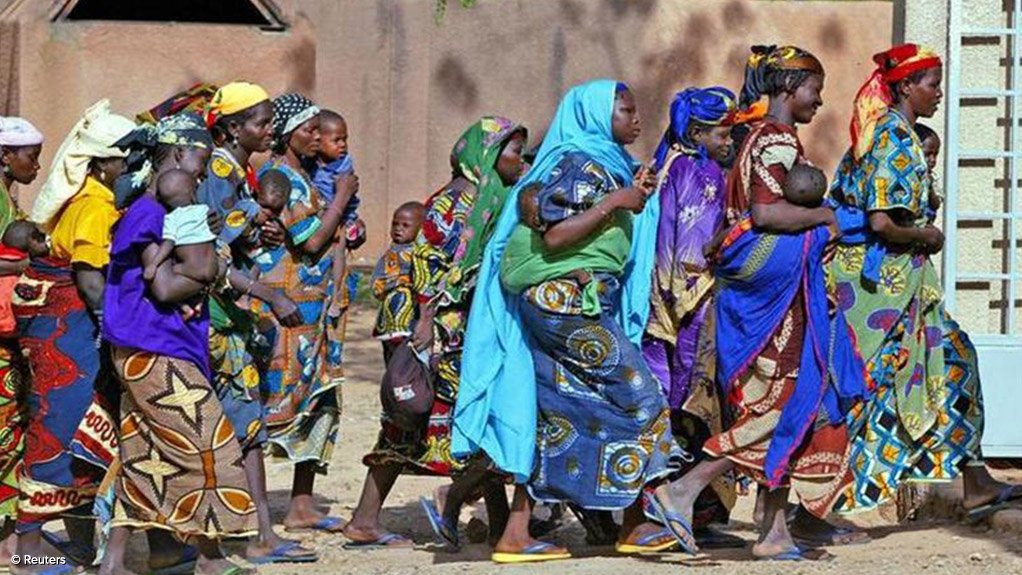


With Africa’s population set to triple by 2050, modernising local economies will be vital to making the continent more competitive and to increasing people’s living standards, the African Economic Outlook 2015 report highlights.
Compiled by the African Development Bank (AfDB), the Organisation for Economic Cooperation and Development’s (OECD’s) Development Centre and the United Nations Development Programme (UNDP), the report also states that African economies will grow by 4.5% this year, and possibly by 5% in 2016.
Surpassing most regions, despite the global financial crisis, the continent’s economic growth is in line with Asia’s current growth rates. However, lower oil and commodity prices, uncertain global conditions, the consequences of the Ebola outbreak in West Africa and domestic political uncertainties could delay an expected return to pre-2008 growth levels.
“African countries have shown considerable resilience in the face of global economic adversity. For future growth to be sustainable and transformative, benefits [need to be] shared more equitably among the population and governments [need to] continue to pursue policies that promote economic stability,” AfDB VP and chief economist Steve Kayizzi-Mugerwa says.
Foreign direct investment (FDI) is expected to reach $73.5-billion this year, underpinned by increasing greenfield investment from China – Africa’s second-largest trade partner. The report also highlights an increase in intra-African and outward FDI flows.
South African companies are the leading investors on the continent.
Further, human development levels in Africa have increased since 2000, with 17 of 52 countries reaching middle or high levels of development. However, the region’s poverty rates remain stubbornly high, while progress in health, education and income is uneven.
Inequalities Huge inequalities persist between and within countries, and between women and men. In many areas, low productivity and investment, the absence of infrastructure and rural-urban networks and too few jobs outside the agricultural sector are holding back economic and development progress.
The continent’s demographic boom is said to be exacerbating these challenges. By 2050, both cities and rural communities in Africa will see their population grow drastically, with the countryside gaining an estimated 400-million people.
For instance, the report states that, over the next 15 years, 370-million youth will enter sub-Saharan Africa’s labour markets, making it necessary to create many more jobs and opportunities for savings and investment.
In addition, that population growth, combined with climate change, will exert increasing pressure on natural resources, such as food, water and land.
The report argues that past efforts to promote regional development through territorial management, infrastructure development and decentralisation have been scattered and have been limited impact.
As a result, the potential of Africa’s regions, which include river basins, border areas and key rural-urban corridors, remains unfulfilled.
“African economies could benefit from mobilising the wide and extraordinary untapped potential of their diverse regions. “Putting people and places at the centre of policymaking may improve Africa’s competitiveness and the wellbeing of Africans,” OECD Development Centre director Mario Pezzini notes.
Transforming economies will require exploring more productive sectors, through the promotion of manufacturing, the develoment of services, the creation of strategies for green growth or the modernisation of the agriculture sector.
In addition, tackling spatial inequalities will require implementing policies that cut across sectors. These include diversifying rural economies and linking them with cities through the promotion of value chains and trade corridors, unlocking domestic financing, developing transport and communication infrastructure and investing in basic social services.
“Inclusive and sustainable growth is a fundamental aspect of Africa’s post-2015 devel- opment agenda for economic and social transformation.
”Article Enquiry
Email Article
Save Article
Feedback
To advertise email advertising@creamermedia.co.za or click here
Research Reports

Projects


Latest Multimedia

Latest News
Showroom

Developed to exceed the latest EN 15964 standards for police breathalysers proving that it will remain accurate and reliable for many years to come.
VISIT SHOWROOM
Rentech provides renewable energy products and services to the local and selected African markets. Supplying inverters, lithium and lead-acid...
VISIT SHOWROOM

Announcements
What's On
Subscribe to improve your user experience...
Option 1 (equivalent of R125 a month):
Receive a weekly copy of Creamer Media's Engineering News & Mining Weekly magazine
(print copy for those in South Africa and e-magazine for those outside of South Africa)
Receive daily email newsletters
Access to full search results
Access archive of magazine back copies
Access to Projects in Progress
Access to ONE Research Report of your choice in PDF format
Option 2 (equivalent of R375 a month):
All benefits from Option 1
PLUS
Access to Creamer Media's Research Channel Africa for ALL Research Reports, in PDF format, on various industrial and mining sectors
including Electricity; Water; Energy Transition; Hydrogen; Roads, Rail and Ports; Coal; Gold; Platinum; Battery Metals; etc.
Already a subscriber?
Forgotten your password?
Receive weekly copy of Creamer Media's Engineering News & Mining Weekly magazine (print copy for those in South Africa and e-magazine for those outside of South Africa)
➕
Recieve daily email newsletters
➕
Access to full search results
➕
Access archive of magazine back copies
➕
Access to Projects in Progress
➕
Access to ONE Research Report of your choice in PDF format
RESEARCH CHANNEL AFRICA
R4500 (equivalent of R375 a month)
SUBSCRIBEAll benefits from Option 1
➕
Access to Creamer Media's Research Channel Africa for ALL Research Reports on various industrial and mining sectors, in PDF format, including on:
Electricity
➕
Water
➕
Energy Transition
➕
Hydrogen
➕
Roads, Rail and Ports
➕
Coal
➕
Gold
➕
Platinum
➕
Battery Metals
➕
etc.
Receive all benefits from Option 1 or Option 2 delivered to numerous people at your company
➕
Multiple User names and Passwords for simultaneous log-ins
➕
Intranet integration access to all in your organisation

