EVs to constitute 25% of global fleet by 2040; can rise to 50% – WoodMac

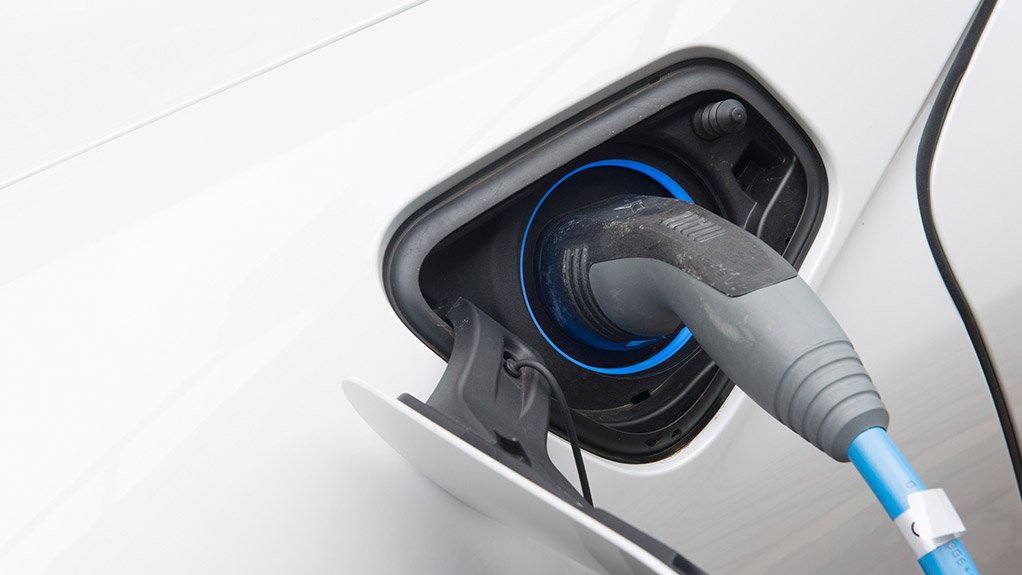


Global energy research and consulting firm Wood Mackenzie's (WoodMac’s) base case scenario projects electric vehicles (EVs) jumping from 4% of the global fleet today to 25% by 2040.
However, if governments boost EV supply chain investment to strengthen resilience to oil market shocks, high fuel prices prompt more consumers to switch to EVs, and EV technologies advance faster than expected, this could fast-track global EV adoption to 50%.
The company's Horizons 'Electric Shock: How electric vehicles could hit the accelerator' report shows that this electric shock scenario could see global oil demand fall to 99-million barrels per day by 2040, which would be five-million barrels a day below the base case and near its current level, which would potentially lead to the early closure of about 40 oil refineries worldwide.
If these forces converge all at once, the effect on EV adoption could be dramatic. The electric shock scenario models what happens when policy, consumer behaviour and technology all move in the same direction, and quantifies the implications for commodities and power markets, says WoodMac Energy Transition research director David Brown.
While neither metals nor electricity supply would be an insurmountable obstacle to faster EV growth, WoodMack estimates that an additional $45-billion in greenfield metals supply over the next decade would be sufficient to support the accelerated EV growth projected under the scenario.
Copper is the most critical bottleneck. Annual mine capacity additions would need to rise from about 850 000 t/y, the long-term average, to about 960 000 t/y through 2040, requiring an estimated $25-billion of that additional investment.
Much of this capital would need to flow into higher-risk jurisdictions including Argentina, the Democratic Republic of Congo and Pakistan.
If established mining regions, such as Chile, Peru and the US, fail to streamline permitting and maintain competitive fiscal terms, a larger share of future growth will shift toward State-backed Chinese entities, which would deepen Western supply chain exposure, the report states.
“Geopolitics, consumer behaviour and technological innovation could converge to lift EV sales faster than in our base case,” says Brown.
“For [developed nations bloc the Organisation for Economic Cooperation and Development (OECD)] countries, securing critical mineral supplies and technological know-how over time will deliver lasting strategic advantage.
“Battery supply chains could be particularly important in light of the surge in demand for energy storage resulting from the global AI boom,” he says.
China is the global leader in EVs, with 42% of Chinese car sales in the second quarter of this year being EVs, up from 33% a year prior.
Additional Chinese policy measures, including new restrictions on gasoline consumption, full purchase tax exemptions and larger purchase credits, could cut the total cost of ownership for EVs by about 30%, thereby pushing yearly sales to 29.9-million EVs by 2040, up from 8.9-million in 2025.
Chinese EV manufacturing capacity could grow by 50% by 2035, with cost advantages enabling aggressive expansion across the Global South.
The electric shock scenario would accelerate this momentum further, WoodMac says.
Without advanced battery technologies and competitive supply chains, the US automotive sector risks ceding its home market to international competitors and falling behind internationally, it adds.
US passenger EV sales in the first five months of this year were down 33% from the same period in 2025 following the withdrawal of tax incentives, and EVs currently make up only 3% of the US vehicle fleet.
However, under the report's electric shock scenario and facing a growing wave of EVs globally, US policy responds decisively with targeted policy support that could attract foreign direct investment into EV supply chains and new greenfield plants deploying modular technologies.
These measures could bring EV total cost of ownership parity with gasoline vehicles forward to 2031, which would be two years ahead of the base case and, thereby, leading to the US EV fleet being 51% larger than the base case by 2040.
Meanwhile, Europe enters this scenario with strong decarbonisation ambitions, but significant headwinds, as about 60 000 automotive sector layoffs were announced this year alone.
The electric shock scenario assumes a “grand bargain” for Europe in the form of trading tariff relief for Chinese investment in local manufacturing to protect jobs while accelerating the EV transition.
The result could be a European EV fleet 53% larger than the base case by 2040, the report shows.
Further, charging infrastructure presents a challenge, but can be managed. To accommodate higher power demand from EVs, countries will need to expand managed charging through programmes that shift charging to times when the grid has ample supply and costs are lowest.
If electricity suppliers and regulators can shift EV charging to periods of ample power supply, grids can be kept stable and charging costs competitive even as power demand from EVs rises, the WoodMac report notes.
“In western Europe, 50% of EV charging is already managed in this way. Under the electric shock scenario, that proportion rises to 85% across Europe by 2040.
“The US, where managed charging currently accounts for just 5% of sessions, would need to follow suit to keep pace with accelerating EV adoption.”
The world's seven-million public charging ports currently sit at about 15% utilisation, but the electric shock scenario would consume that slack quickly.
China would require an additional four-million ports by 2040, which represents about $200-billion in incremental investment. Europe would need an extra $108-billion to build 2.7-million additional charging ports above the base case, WoodMac says.
Article Enquiry
Email Article
Save Article
Feedback
To advertise email advertising@creamermedia.co.za or click here


Projects

Latest Multimedia


Latest News

Showroom
Astore Keymak is one of South Africa’s leading suppliers of high-quality Thermoplastic Pipeline Systems, with branches in the major provinces.
VISIT SHOWROOM
The Steel Tube Export Association of South Africa was established to develop sustainable, internationally competitive carbon steel tube and pipe...
VISIT SHOWROOM


Press Office
Announcements
What's On
Subscribe to improve your user experience...
Option 1 (equivalent of R125 a month):
Receive a weekly copy of Creamer Media's Engineering News & Mining Weekly magazine
(print copy for those in South Africa and e-magazine for those outside of South Africa)
Receive daily email newsletters
Access to full search results
Access archive of magazine back copies
Access to Projects in Progress
Access to ONE Research Report of your choice in PDF format
Option 2 (equivalent of R375 a month):
All benefits from Option 1
PLUS
Access to Creamer Media's Research Channel Africa for ALL Research Reports, in PDF format, on various industrial and mining sectors
including Electricity; Water; Energy Transition; Hydrogen; Roads, Rail and Ports; Coal; Gold; Platinum; Battery Metals; etc.
Already a subscriber?
Forgotten your password?
Receive weekly copy of Creamer Media's Engineering News & Mining Weekly magazine (print copy for those in South Africa and e-magazine for those outside of South Africa)
➕
Recieve daily email newsletters
➕
Access to full search results
➕
Access archive of magazine back copies
➕
Access to Projects in Progress
➕
Access to ONE Research Report of your choice in PDF format
RESEARCH CHANNEL AFRICA
R4500 (equivalent of R375 a month)
SUBSCRIBEAll benefits from Option 1
➕
Access to Creamer Media's Research Channel Africa for ALL Research Reports on various industrial and mining sectors, in PDF format, including on:
Electricity
➕
Water
➕
Energy Transition
➕
Hydrogen
➕
Roads, Rail and Ports
➕
Coal
➕
Gold
➕
Platinum
➕
Battery Metals
➕
etc.
Receive all benefits from Option 1 or Option 2 delivered to numerous people at your company
➕
Multiple User names and Passwords for simultaneous log-ins
➕
Intranet integration access to all in your organisation