EnerVenue opens world’s first high volume production line for nickel-hydrogen battery

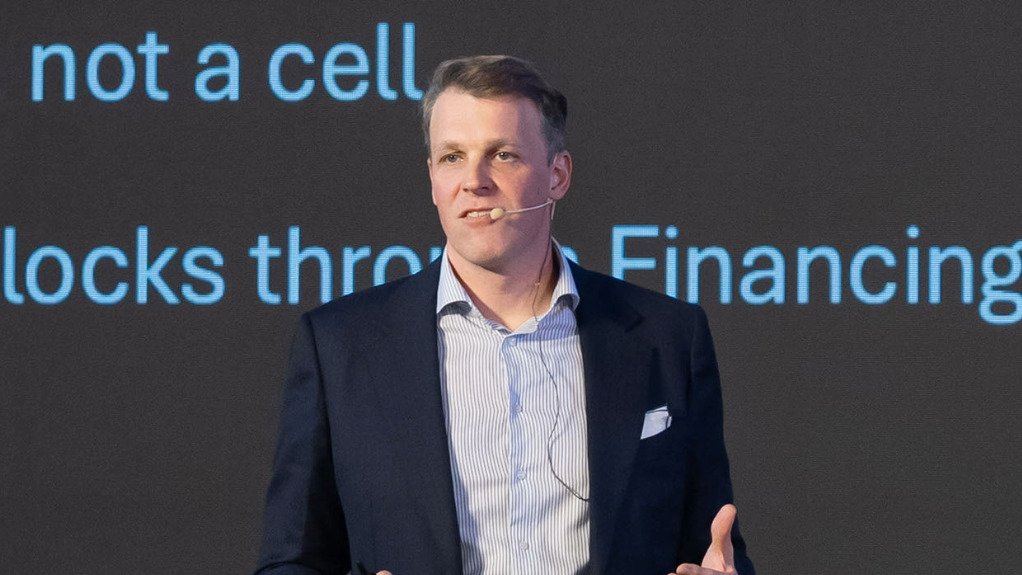



US energy storage company EnerVenue has started production at the world’s first high volume manufacturing line for the Aqueous Metal Cell (AMC).
Ground was broken at the Wujin, China site in April.
The first conforming cell came off the line at the end of September.
Phase 1 is rated at 250 MWh/y of capacity, rising to 1 GWh in 2027 and multi-gigawatt-hour scale by 2028. The line is poised to ramp up through November, and, at full automation, it is designed to produce about 300 fourth-generation AMC cells a day.
“The EnerVenue AMC is now being manufactured at scale, that’s what changes today. This is the only facility in the world making this high performing water-based nickel-based battery; it's the first battery of its kind that acts like infrastructure rather than a degrading asset.
“It's built for 30 000 cycles, can operate in the world's harshest environments and has no risk of fire from thermal runaway. What we prove here, we can build anywhere,” says EnerVenue CEO Henning Rath.
EnerVenue explains that every machine on the line was designed for the first time, noting that no other company on the market builds an AMC, so EnerVenue had to design and build the equipment specifically for the line.
The line runs as a single flow from raw material to finished cell. Automated guided vehicles move cells between stations, so a cell crosses the floor without being handled.
A stacking machine assembles the electrode stack under a vision system that learns from what it sees and the AMC is wound in fiberglass with the tension controlled from the inside out, so the shell holds for the working life of the cell. Every machine reports into a single manufacturing execution system.
The company explains that every cell passes 41 quality checks across 11 test and measure stations before it leaves the building, to verify weld integrity, leak tightness and performance.
Fully commissioned 150 kWh battery racks are all tested on site before heading to customers.
EnerVenue says every machine on the high-volume line was engineered and validated on the company’s research and development line, 6 km away, before it was committed to production here.
The plant occupies about 20 000 m2, with provision drawn into the same building for a second phase of the same size. The stations are standardised, so capacity is added by replicating them and EnerVenue says this line is the blueprint for future local expansion.
“A cell only leaves this building after 41 checks across 11 stations. Anyone can make one good vessel. The job is making the ten-thousandth one exactly the same,” says EnerVenue production head TJ Hua.
The line produces the cells behind EnerVenue’s product range.
One chemistry provides the cells for four products: Energy Core at 30 kWh for uninterruptible power supply (UPS) at telecoms other distributed sites, Energy Cube at 108 kWh for in-building and data centre UPS solutions, Energy Rack at 150 kWh for commercial, industrial and grid-connected duty, and the Energy Prism for containerised solutions between 600 kWh and 1 MWh.
On September 23, EnerVenue announced its first signed multi-megawatt hour commercial order. Twenty-six Energy Prism containers, 11 MWh in total, will be sited at an oilfield company in Northern China, pairing generation on site with storage.
EnerVenue notes that an oil and gas site is one of the places where a battery fire is least tolerable, and that is the ground this chemistry is built for. The first containers ship in December.
At the opening ceremony, EnerVenue signed a memorandum of understanding with eight companies for future business opportunities.
These include the Hong Kong and China Gas Company (Towngas), Towngas Smart Energy, Shanghai Electric, Guangzhou Development Group, Jiangsu Huahong New Energy Development, PCG Power, Suzhou Yuanzhang New Energy Technology, Desert Technologies and KIOZ.
The first commissioned deployment of the fourth-generation AMC has been operating since November 2025 at Jintan in Changzhou with Towngas, integrating onsite renewable generation with electric-bus charging and cells have shipped to customers in the US, Belgium and Saudi Arabia.
EnerVenue has active projects and customer engagements across China, Australia, the US, the EU, Saudi Arabia and Canada.
THE PRODUCT
The AMC is a water-based metal battery built on nickel-hydrogen chemistry, the same chemistry that powered the Hubble Space Telescope and the International Space Station for decades.
EnerVenue says it has re-engineered it with low-cost materials for use on Earth. The cell is designed for 30 000 charge cycles, up to three cycles a day for 30 years, and it needs no scheduled augmentation across that life.
EnerVenue sells the cell against pumped hydro, flow batteries and compressed air rather than against lithium-ion on the price of a kilowatt hour.
“The argument is the energy an asset moves across 30 years and what it costs to own over that life. Lithium-ion is typically replaced or augmented every seven to ten years, at 8 000 to 10 000 cycles, and an AMC installation is designed to run the full life of the project around it,” the company says.
EnerVenue says the cell carries zero risk of fire from thermal runaway, which is what puts it inside buildings, in data centre halls and on sites such as oil and gas projects.
“While thermal runaway is generally defined as a self-accelerating sequence of exothermic reactions, the AMC chemistry does not produce the same progression of events that leads to ignition, fire, explosion, or propagation to adjacent cells,” says EnerVenue chief technology officer Dr Majid Keshavarz.
The electrolyte is water-based and non-flammable. The cell uses no lithium and no rare earths and the nickel can be recovered and reused at the end of life.
EnerVenue explains that within a 50 km to 100 km radius of the plant sits one of the most complete battery supply chains in the world and about 160 battery-industry companies are active in the city.
Because the cell is built from abundant materials, EnerVenue says its longer-term model is local for local, with Changzhou as the proving ground.
The Changzhou line is funded by the $300-million Series B extension announced in March and led by Full Vision Capital. EnerVenue says it has raised over $700-million in total.
Article Enquiry
Email Article
Save Article
Feedback
To advertise email advertising@creamermedia.co.za or click here

Projects
Latest Multimedia

Latest News
Showroom
ISO-certified Condra manufactures overhead cranes, portal cranes, cantilever cranes and crane components: hoists, drives, end-carriages, brakes and...
VISIT SHOWROOM
Sweet-Orr, established in 1871, is a global leader in superior protective workwear, known for quality, innovation, and performance.
VISIT SHOWROOM

Announcements
What's On
Subscribe to improve your user experience...
Option 1 (equivalent of R125 a month):
Receive a weekly copy of Creamer Media's Engineering News & Mining Weekly magazine
(print copy for those in South Africa and e-magazine for those outside of South Africa)
Receive daily email newsletters
Access to full search results
Access archive of magazine back copies
Access to Projects in Progress
Access to ONE Research Report of your choice in PDF format
Option 2 (equivalent of R375 a month):
All benefits from Option 1
PLUS
Access to Creamer Media's Research Channel Africa for ALL Research Reports, in PDF format, on various industrial and mining sectors
including Electricity; Water; Energy Transition; Hydrogen; Roads, Rail and Ports; Coal; Gold; Platinum; Battery Metals; etc.
Already a subscriber?
Forgotten your password?
Receive weekly copy of Creamer Media's Engineering News & Mining Weekly magazine (print copy for those in South Africa and e-magazine for those outside of South Africa)
➕
Recieve daily email newsletters
➕
Access to full search results
➕
Access archive of magazine back copies
➕
Access to Projects in Progress
➕
Access to ONE Research Report of your choice in PDF format
RESEARCH CHANNEL AFRICA
R4500 (equivalent of R375 a month)
SUBSCRIBEAll benefits from Option 1
➕
Access to Creamer Media's Research Channel Africa for ALL Research Reports on various industrial and mining sectors, in PDF format, including on:
Electricity
➕
Water
➕
Energy Transition
➕
Hydrogen
➕
Roads, Rail and Ports
➕
Coal
➕
Gold
➕
Platinum
➕
Battery Metals
➕
etc.
Receive all benefits from Option 1 or Option 2 delivered to numerous people at your company
➕
Multiple User names and Passwords for simultaneous log-ins
➕
Intranet integration access to all in your organisation