Stainless steel demand remains project-driven


BRADLEY KLASSEN Customers are prioritising availability, dependable lead times and full material traceability
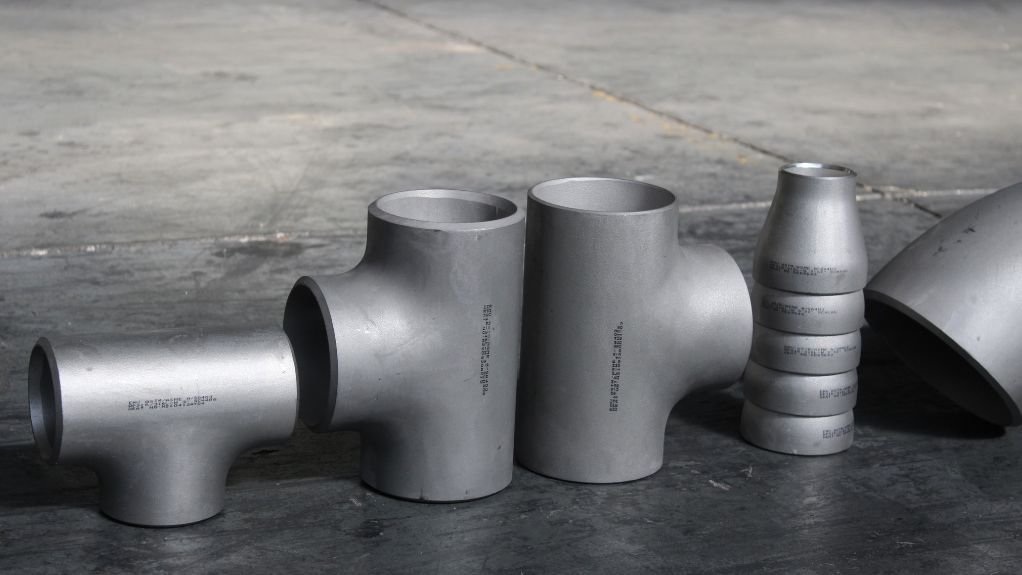
FIT-FOR-PURPOSE MATERIALS Growth is coming from fit-for-purpose material selection rather than standard grades alone



South Africa’s stainless steel demand remains resilient, but tends to fluctuate, with customers focusing on maintenance, plant reliability and projects where corrosion resistance and life-cycle costs can be justified, says industrial materials and engineering products supplier EMVAfrica business development manager Bradley Klassen.
Demand remains strong in the sectors of mining and mineral processing, water and wastewater, food and beverage, petrochemicals, power generation, pulp and paper, as well as general processes.
“Customers are prioritising availability, dependable lead times and full material traceability,” he adds.
Across Africa, project pipelines for new mines and processing plants, as well as energy and water infrastructure, are driving demand.
Klassen says growth is driven by fit-for- purpose material selection rather than standard grades, including 304L and 316L for established process applications, as well as duplex, super duplex, heat-resistant stainless steels and nickel alloys for more demanding conditions.
Duplex 2205 and super duplex 2507 are considered for chloride-bearing water, desalination, mining and mineral-processing equipment, while Alloy 310 is used in high-temperature applications. Nickel alloys are selected for severe chemical, pressure and temperature conditions.
The shift towards higher-performance materials is being driven by demand for longer service life, tighter safety and environmental expectations, reduced tolerance for unplanned shutdowns and greater awareness of life-cycle costs, he says.
Local manufacturers and fabricators are, however, facing unpredictable demand, high operating costs and limited room for error.
Stainless steel input prices are influenced by global nickel, chromium and molybdenum markets, as well as exchange rates, freight and financing costs.
“Local fabricators must quote competitively while carrying the risk that these variables change before an order is placed or completed,” he says.
Many projects also require short lead times, complete certification and strict compliance, even when the required grade, alloy or size is not available locally. This makes stockholding, forecasting and international sourcing important.
The local industry therefore depends on responsibly sourced imported materials, including grades and dimensions not produced locally or unavailable within a required timeframe.
“The goal for the industry should be fair competition and effective action against dumping and circumvention,” rather than a blanket ban on imports, says Klassen.
From a distribution perspective, technology is supporting more accurate stock control, the faster retrieval of material certificates, and stronger batch and heat-number traceability.
“Automation improves consistency, but correct grade selection, weld procedure control and an understanding of the service environment remain essential to long-term performance.”
Localisation should also remain commercially and technically sustainable and should not require fabricators to use unsuitable or unavailable inputs, adds Klassen.
A practical approach would combine globally sourced, certified raw materials and specialised products with local stockholding, fabrication, assembly, testing, project management and technical support.
“Sustainability is also influencing material decisions, with EMVAfrica prioritising accurate material selection, avoiding unnecessary over-specification, consolidating project packages and providing documentation from reputable manufacturers,” he says.
Environmental product declarations and auditable emissions data are likely to become more important, particularly for export-linked products affected by carbon-associated trade measures.
“The industry will need consistent, comparable data so that lower-carbon claims can be assessed credibly,” notes Klassen.
South African companies should approach Africa as a long-term market by building local partnerships, providing technical support and packaging complete solutions.
“Customers need capable partners that reduce complexity and help projects succeed,” he concludes.
Article Enquiry
Email Article
Save Article
Feedback
To advertise email advertising@creamermedia.co.za or click here
Research Reports

Projects

Latest Multimedia
Latest News
Showroom
Established on 1 March, 2000, by Barries Barnard, Advanced Fire Suppression Technologies (AFST) and the Advanced Group stands as Sub-Saharan...
VISIT SHOWROOM
CMTS is a leading, well-established EC&I contractor with 37+ years of mining and industrial experience. We execute full-scope EC&I projects with...
VISIT SHOWROOM
Announcements
What's On
Subscribe to improve your user experience...
Option 1 (equivalent of R125 a month):
Receive a weekly copy of Creamer Media's Engineering News & Mining Weekly magazine
(print copy for those in South Africa and e-magazine for those outside of South Africa)
Receive daily email newsletters
Access to full search results
Access archive of magazine back copies
Access to Projects in Progress
Access to ONE Research Report of your choice in PDF format
Option 2 (equivalent of R375 a month):
All benefits from Option 1
PLUS
Access to Creamer Media's Research Channel Africa for ALL Research Reports, in PDF format, on various industrial and mining sectors
including Electricity; Water; Energy Transition; Hydrogen; Roads, Rail and Ports; Coal; Gold; Platinum; Battery Metals; etc.
Already a subscriber?
Forgotten your password?
Receive weekly copy of Creamer Media's Engineering News & Mining Weekly magazine (print copy for those in South Africa and e-magazine for those outside of South Africa)
➕
Recieve daily email newsletters
➕
Access to full search results
➕
Access archive of magazine back copies
➕
Access to Projects in Progress
➕
Access to ONE Research Report of your choice in PDF format
RESEARCH CHANNEL AFRICA
R4500 (equivalent of R375 a month)
SUBSCRIBEAll benefits from Option 1
➕
Access to Creamer Media's Research Channel Africa for ALL Research Reports on various industrial and mining sectors, in PDF format, including on:
Electricity
➕
Water
➕
Energy Transition
➕
Hydrogen
➕
Roads, Rail and Ports
➕
Coal
➕
Gold
➕
Platinum
➕
Battery Metals
➕
etc.
Receive all benefits from Option 1 or Option 2 delivered to numerous people at your company
➕
Multiple User names and Passwords for simultaneous log-ins
➕
Intranet integration access to all in your organisation