



Commission seeks further input into LPG inquiry

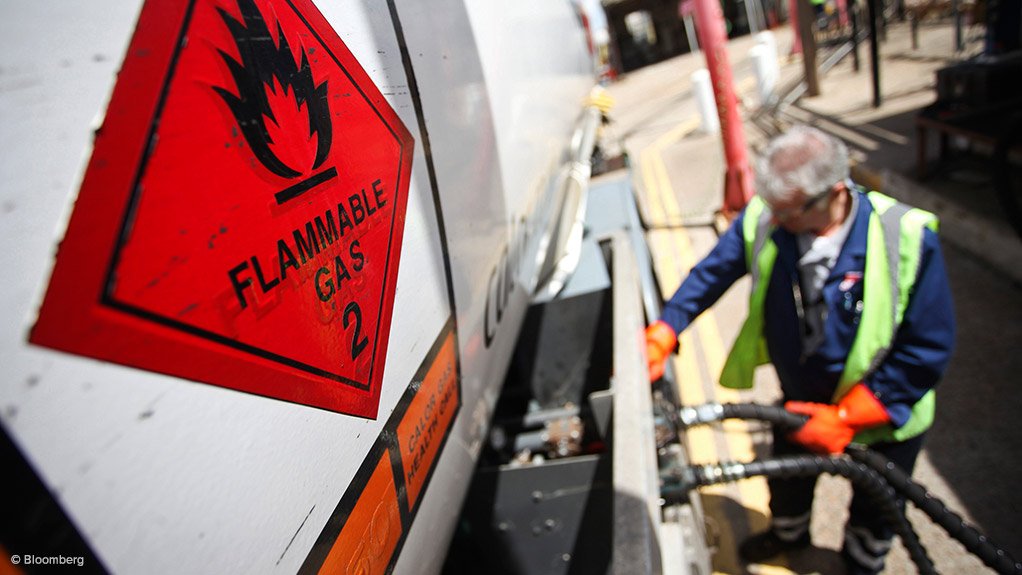


The Competition Commission has asked for further submissions and information in respect of concerns raised as part of the commission’s inquiry into the liquefied petroleum gas (LPG) sector.
The commission launched the inquiry in September 2014 with the aim of examining whether the supply bottlenecks in the LPG sector would create circumstances or incentives that distort, prevent or lessen competition, as well as to analyse the current price regulatory framework and its impact on competition in the sector.
To date, the commission had received more than 68 submissions from stakeholders across the LPG value chain.
Market participants indicated specific factors that could negatively impact on competition in the sector, prompting the commission to call for further submissions.
The concerns raised included the “long-standing historical relationships” between LPG producers and certain large wholesalers, which, some argued, had the potential to lead to distortions in the market related to the supply allocation of LPG.
In particular, new entrants raised concerns about rationed supply allocated by LPG producers, saying they favoured preferential allocation through long-term supply agreements. Some raised concerns that LPG producers favour their formerly owned downstream entities.
However, LPG producers indicated some general factors that were taken into consideration in their decision to allocate supply. This included the history of volume offtake, credit terms, the customer’s business profile and product availability, to name a few.
The commission said the extent to which these long-term supply agreements created a constraint on the ability of small wholesalers to compete effectively in the market was worrying and that it would seek further submissions on whether this conduct distorted competition and acted as a barrier to entry for new entrants or the expansion of existing players.
Further, it noted that submissions and comments needed to highlight the minimum uptake required by “smaller players” to compete effectively and the extent to which this uptake may be feasibly reserved for the “smaller players” by LPG producers.
Smaller wholesalers have also stated that the current regulatory environment and contractual arrangements served as a potential barrier to their expansion, as the incumbent LPG suppliers were often unwilling to negotiate for the sale of existing equipment. This was a barrier for the end-user when making a decision to switch LPG suppliers.
Concerns with the cylinder exchange programme had also been noted, particularly by smaller players who felt excluded from participating in this programme, owing to the alleged unfair conduct of larger wholesalers. Some large wholesalers allegedly refused to enter into cylinder exchange agreements with smaller players and, thereby, allegedly impeded their growth.
Several market participants had also highlighted the existence of rogue fillers/traders that illegally used legitimate market participants’ assets in a prohibited practice commonly referred to as cross-filling. These rogue traders and illegal players did not incur investment costs, as they relied on the use of the legitimate wholesalers’ infrastructure or cylinders.
Given the hazardous nature of LPG, it is prohibited for market participants to fill one another’s cylinders, as the risk of any hazard arising from a defective filled cylinder lay with the owner of that cylinder. Market participants stated that this practice led to the underuse of assets and a disincentive to invest in assets that can grow the market.
The maximum refinery gate price (MRGP) and maximum retail price (MRP) were also highlighted as concerns, with market participants stating that additional items, such as surcharges for gantry fees, transport levies and other miscellaneous cost items, were added to the MRGP and that the retail margin provided for in the determination of the MRP acted as a disincentive to further investment in the market.
Interested parties would have until September 25 to make additional submissions to the commission.
The Western Cape provincial government’s Red Tape Reduction Unit had, meanwhile, liaised with Transnet National Ports Authority to develop an interim solution to bridge the shortage of LPG and miti- gate the economic impact of the shortages on the province.
Through the unit’s intervention, South Africa’s biggest LPG importer, KayaGas, was allowed an additional four hours in the Cape Town port, over and above its usual 12-hour limit, to receive gas from vessels in the port.
Article Enquiry
Email Article
Save Article
Feedback
To advertise email advertising@creamermedia.co.za or click here
Research Reports

Projects

Latest Multimedia

Latest News
Showroom
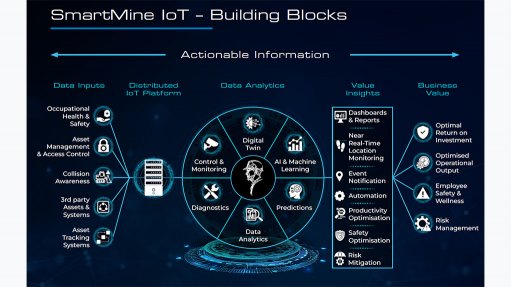
SmartMine IoT has been developed with the mining industry in mind, to provides our customers with powerful business intelligence and data modelling...
VISIT SHOWROOM
Developed to exceed the latest EN 15964 standards for police breathalysers proving that it will remain accurate and reliable for many years to come.
VISIT SHOWROOM
Press Office
Announcements
What's On
Subscribe to improve your user experience...
Option 1 (equivalent of R125 a month):
Receive a weekly copy of Creamer Media's Engineering News & Mining Weekly magazine
(print copy for those in South Africa and e-magazine for those outside of South Africa)
Receive daily email newsletters
Access to full search results
Access archive of magazine back copies
Access to Projects in Progress
Access to ONE Research Report of your choice in PDF format
Option 2 (equivalent of R375 a month):
All benefits from Option 1
PLUS
Access to Creamer Media's Research Channel Africa for ALL Research Reports, in PDF format, on various industrial and mining sectors
including Electricity; Water; Energy Transition; Hydrogen; Roads, Rail and Ports; Coal; Gold; Platinum; Battery Metals; etc.
Already a subscriber?
Forgotten your password?
Receive weekly copy of Creamer Media's Engineering News & Mining Weekly magazine (print copy for those in South Africa and e-magazine for those outside of South Africa)
➕
Recieve daily email newsletters
➕
Access to full search results
➕
Access archive of magazine back copies
➕
Access to Projects in Progress
➕
Access to ONE Research Report of your choice in PDF format
RESEARCH CHANNEL AFRICA
R4500 (equivalent of R375 a month)
SUBSCRIBEAll benefits from Option 1
➕
Access to Creamer Media's Research Channel Africa for ALL Research Reports on various industrial and mining sectors, in PDF format, including on:
Electricity
➕
Water
➕
Energy Transition
➕
Hydrogen
➕
Roads, Rail and Ports
➕
Coal
➕
Gold
➕
Platinum
➕
Battery Metals
➕
etc.
Receive all benefits from Option 1 or Option 2 delivered to numerous people at your company
➕
Multiple User names and Passwords for simultaneous log-ins
➕
Intranet integration access to all in your organisation

