China will lead both renewable energy and coal consumption, Reuters says

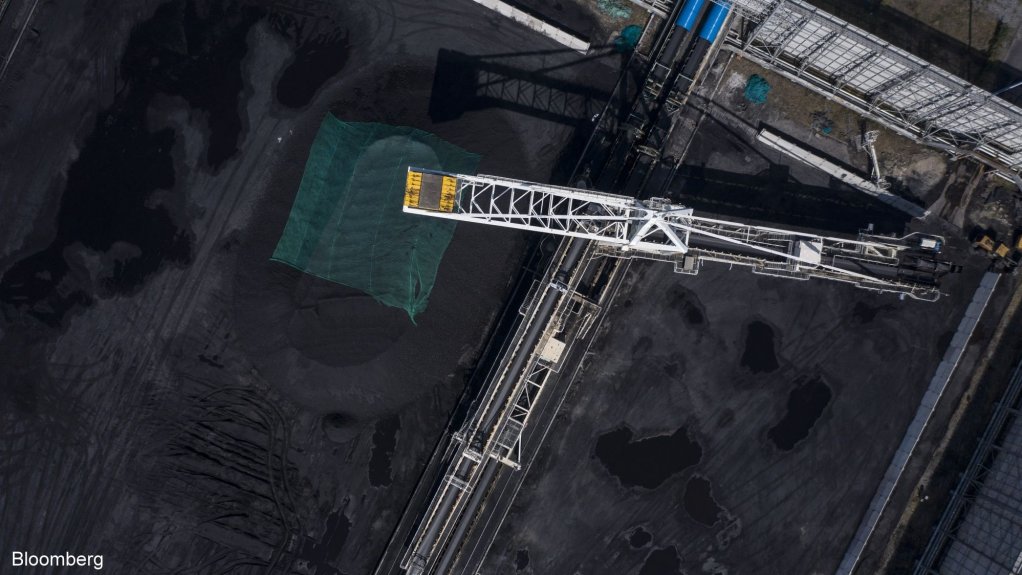


LAUNCESTON - China's latest five-year energy plan confirms two seemingly contradictory positions: it will continue to be the world's leader in both renewable energy and coal.
The trick is to view China's plans to massively expand renewable power while keeping coal production and consumption around record levels through the prism of energy security.
China's industrial leadership in renewables coupled with its vast domestic coal reserves and mining system is seen by Beijing as a way of reducing reliance on imports such as crude oil and liquefied natural gas (LNG).
The headline news from the plan released last week is that China, the world's biggest energy consumer, expects to generate half of its electricity from non-fossil fuel sources by 2030, up from a 42.3% target for 2025.
This will be achieved by increasing wind and solar generation to more than 50% of installed capacity, or 2 700 GW, an increase from 47% as of the end of last year.
The new plan may actually be conservative as China's solar and wind capacity additions have outstripped official targets in recent years.
But the positive news on renewable capacity additions has to be weighed against China's ongoing reliance on coal, both for power generation and increasingly for chemical and liquid fuel production.
China's coal production has actually eased so far in 2026, with output for the first five months at 1.98-billion tons, down 0.3% from a year earlier.
The small drop is largely because authorities ramped up safety inspections after an accident at a mine in Shanxi province on May 22 that left 82 people dead.
It's still possible output will recover in the second half, making it likely that annual production in 2026 will be close to matching last year's record 4.82-billion tons.
Coal production has nearly tripled since the 1.38-billion tons in 2000 and the latest five-year energy plan was coy on the future for the fuel, only reiterating that consumption will peak by 2030, but not providing any specific level.
COAL TO CHEMICALS
While coal's share of electricity generation is likely to decline as more renewables are installed, it's also likely that its use as a feedstock for chemical and liquid fuels will increase.
China has gone from using around 20-million tons of coal for conversion to chemicals in 2005 to an estimated 320-million to 380-million this year.
The majority of this is used to make methanol, while ammonia, olefins and other chemicals are also made.
The problem from an emissions perspective is that producing these chemicals from coal is more intensive than using crude oil and the sector is already responsible for between 5% and 7% of China's emissions.
China will be tempted to use more coal to produce chemicals in coming years, especially if its demand for crude oil drops as more of both its light and heavy vehicle fleets transition to using electricity.
China's crude oil imports reached a record 11.6-million barrels per day (bpd) in 2025, but are likely to decline this year as the world's biggest importer saw arrivals plunge in May amid the fallout from the Iran war.
May imports dropped to an eight-year low of 7.79-million bpd, lowering the average for the first five months to 10.56-million bpd, down 4.8% from the same period in 2025.
China's refiners cut back on imports after physical oil prices surged after the US and Israel attacked Iran on February 28, a move that resulted in the effective closure of the Strait of Hormuz, through which about 20% of global crude and LNG moved prior to the start of the conflict.
China's June oil imports are also expected to be weak as refiners chose to draw on stockpiles rather than pay high prices.
This means that 2026 oil imports may be lower than those for 2025, and if the pace of transport electrification continues, it may be that China's crude imports have peaked.
But reduced oil availability will cut production of naphtha, the refined product turned into petrochemicals, meaning that China may turn more to coal to produce these chemicals, used to make plastics and other products vital to a manufacturing economy.
Article Enquiry
Email Article
Save Article
Feedback
To advertise email advertising@creamermedia.co.za or click here
Research Reports

Projects

Latest Multimedia

Latest News


Showroom

Mitsubishi Chemical Advanced Materials South Africa (Pty) Ltd is a leading manufacturer of high-performance engineering plastics for the mining...
VISIT SHOWROOM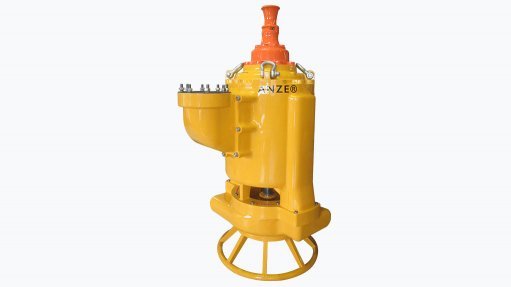
Goodwin Submersible Pumps Africa is sole distributors for Goodwin electrically driven, submersible, abrasion resistance slurry pumps.
VISIT SHOWROOM

Announcements
What's On
Subscribe to improve your user experience...
Option 1 (equivalent of R125 a month):
Receive a weekly copy of Creamer Media's Engineering News & Mining Weekly magazine
(print copy for those in South Africa and e-magazine for those outside of South Africa)
Receive daily email newsletters
Access to full search results
Access archive of magazine back copies
Access to Projects in Progress
Access to ONE Research Report of your choice in PDF format
Option 2 (equivalent of R375 a month):
All benefits from Option 1
PLUS
Access to Creamer Media's Research Channel Africa for ALL Research Reports, in PDF format, on various industrial and mining sectors
including Electricity; Water; Energy Transition; Hydrogen; Roads, Rail and Ports; Coal; Gold; Platinum; Battery Metals; etc.
Already a subscriber?
Forgotten your password?
Receive weekly copy of Creamer Media's Engineering News & Mining Weekly magazine (print copy for those in South Africa and e-magazine for those outside of South Africa)
➕
Recieve daily email newsletters
➕
Access to full search results
➕
Access archive of magazine back copies
➕
Access to Projects in Progress
➕
Access to ONE Research Report of your choice in PDF format
RESEARCH CHANNEL AFRICA
R4500 (equivalent of R375 a month)
SUBSCRIBEAll benefits from Option 1
➕
Access to Creamer Media's Research Channel Africa for ALL Research Reports on various industrial and mining sectors, in PDF format, including on:
Electricity
➕
Water
➕
Energy Transition
➕
Hydrogen
➕
Roads, Rail and Ports
➕
Coal
➕
Gold
➕
Platinum
➕
Battery Metals
➕
etc.
Receive all benefits from Option 1 or Option 2 delivered to numerous people at your company
➕
Multiple User names and Passwords for simultaneous log-ins
➕
Intranet integration access to all in your organisation