Chile’s copper to play major role in decarbonisation


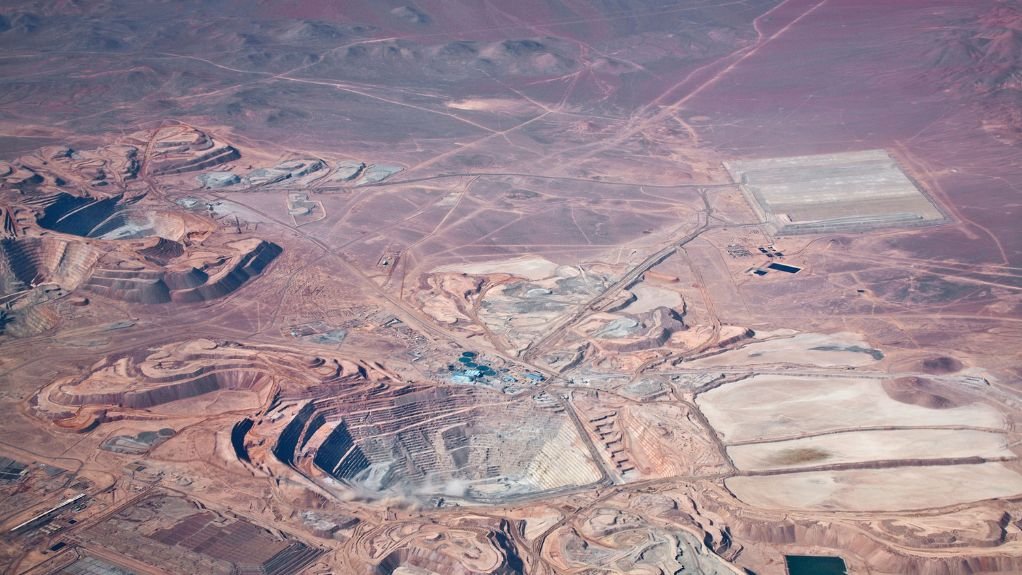
PATRICK HALL While Argentina is in the early stages of development, its deposits are large with a clear potential for significant growth
REINFORCING STRENGTH Chile’s strong resource base is likely to sustain copper production for many years, owing to significant reserves



As Chile targets net-zero carbon emissions by 2050, its continued production of copper and lithium are key elements of the country’s energy transition, with copper regarded as a longer-term opportunity, while lithium is likely to provide a more limited window of opportunity, says professional services firm Deloitte Chile energy resources and industrials leader Patrick Hall.
The country’s strong resource base is likely to sustain copper production for many years, owing to significant reserves, although copper grades in some other regions – particularly in some of the Argentinian discoveries such as critical minerals miner Lundin Mining’s copper projects in the Vicuña district, and new projects in the Democratic Republic Congo – are generally higher.
“This will likely mean that Chile’s global share may decline slightly over time, but the overall strength of Chile in the global market will remain. Additionally, Chile has the reserves, the established operations and a very strong mining ecosystem – something many other jurisdictions do not necessarily have,” he adds.
Meanwhile, Chile’s Atacama Salt Flat remains one of the most economically competitive lithium operations globally. There is a tendency for operations to remain viable – despite fluctuating prices falling significantly and many operations struggling to remain profitable – as a result of legacy processes and the specific characteristics of the lithium resources being extracted, says Hall.
This strength, he adds, has been reinforced by the Chilean National Lithium Strategy – a set of measures to incorporate capital, technology, sustainability and value addition, which has opened the sector to additional players and supported the development of new projects in other Chilean salt flats, including the adoption of new technologies, particularly direct lithium extraction.
The strategy aims to ensure the involvement of the State in the entire industrial cycle through the creation of a national lithium company and a Chilean economic development agency committee on lithium and salt resources.
The strategy includes capacity building through public–private partnerships for the growth of the industry and the exploration of resources, and political and social sustainability through the involvement of local territories and communities.
The new Chilean government, recently installed, also intends to modernise Chile’s mining industry institutional framework, consistent with the country’s challenges and objectives, says Hall.
This combination of policy support and technological innovation, he highlights, positions the country to remain highly competitive, with continued growth in copper and lithium production volumes, and mining efficiency, as well as the maintaining of strong margins.
In contrast to Chile, Argentina is still in the early stages of developing a mining ecosystem and will rely heavily on the Chilean network of mining suppliers. Although the country’s deposits are big and there is “clear potential” for significant growth, Argentina’s current mining operations are generally much smaller than those of Chile, he adds.
In particular, existing Argentinian lithium operations are about one-tenth of the scale of the major Chilean lithium operations.
While there is “considerable excitement” about Argentina’s lithium sector, it remains “some way off” in matching the scale of Chile’s established production base, notes Hall.
District Mining
By combining operations that are near to each other into a single territorial view, Hall says a major change – often referred to as “district logic” – can be developed, whereby multiple satellite mines feed into a central processing hub, allowing for a much bigger integrated mining area, rather than isolated operations.
This could enable Chile’s mining industry to optimise resource sharing and infrastructure development, as well as economic, social and governance compliance.
In one such instance, copper major Antofagasta Minerals has applied this to its Centinela portfolio – although its Centinela mine comprises two operations and satellite projects, the land in between both mining operations spans a 60 km distance.
This district logic is increasingly extending beyond single-company ownership and into partnerships between companies, he adds.
For example, as a result of the complexity near the bordering areas between the neighbouring operations of diversified miner Anglo American and Chile national copper corporation Codelco at Los Bronces and Andina, the higher-grade material lying between the two mines has been left unmined.
Article Enquiry
Email Article
Save Article
Feedback
To advertise email advertising@creamermedia.co.za or click here

Projects
Latest Multimedia
Latest News
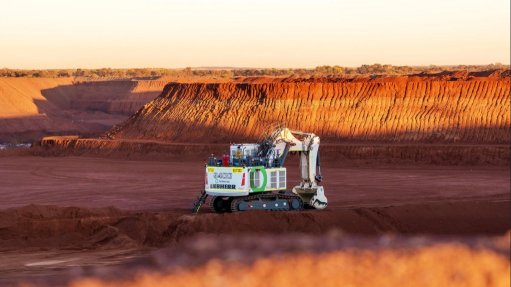
Showroom

Your global lifecycle technology & service partner for materials & minerals processing equipment for coal, iron ore, copper, manganese & other...
VISIT SHOWROOM
Established in 1983, the ASTPM is an industry association and representative body of the welded carbon steel tube and pipe manufacturers of South...
VISIT SHOWROOM
Press Office
Announcements
What's On
Subscribe to improve your user experience...
Option 1 (equivalent of R125 a month):
Receive a weekly copy of Creamer Media's Engineering News & Mining Weekly magazine
(print copy for those in South Africa and e-magazine for those outside of South Africa)
Receive daily email newsletters
Access to full search results
Access archive of magazine back copies
Access to Projects in Progress
Access to ONE Research Report of your choice in PDF format
Option 2 (equivalent of R375 a month):
All benefits from Option 1
PLUS
Access to Creamer Media's Research Channel Africa for ALL Research Reports, in PDF format, on various industrial and mining sectors
including Electricity; Water; Energy Transition; Hydrogen; Roads, Rail and Ports; Coal; Gold; Platinum; Battery Metals; etc.
Already a subscriber?
Forgotten your password?
Receive weekly copy of Creamer Media's Engineering News & Mining Weekly magazine (print copy for those in South Africa and e-magazine for those outside of South Africa)
➕
Recieve daily email newsletters
➕
Access to full search results
➕
Access archive of magazine back copies
➕
Access to Projects in Progress
➕
Access to ONE Research Report of your choice in PDF format
RESEARCH CHANNEL AFRICA
R4500 (equivalent of R375 a month)
SUBSCRIBEAll benefits from Option 1
➕
Access to Creamer Media's Research Channel Africa for ALL Research Reports on various industrial and mining sectors, in PDF format, including on:
Electricity
➕
Water
➕
Energy Transition
➕
Hydrogen
➕
Roads, Rail and Ports
➕
Coal
➕
Gold
➕
Platinum
➕
Battery Metals
➕
etc.
Receive all benefits from Option 1 or Option 2 delivered to numerous people at your company
➕
Multiple User names and Passwords for simultaneous log-ins
➕
Intranet integration access to all in your organisation