Capital discipline, not geology, is becoming the differentiator in global mining

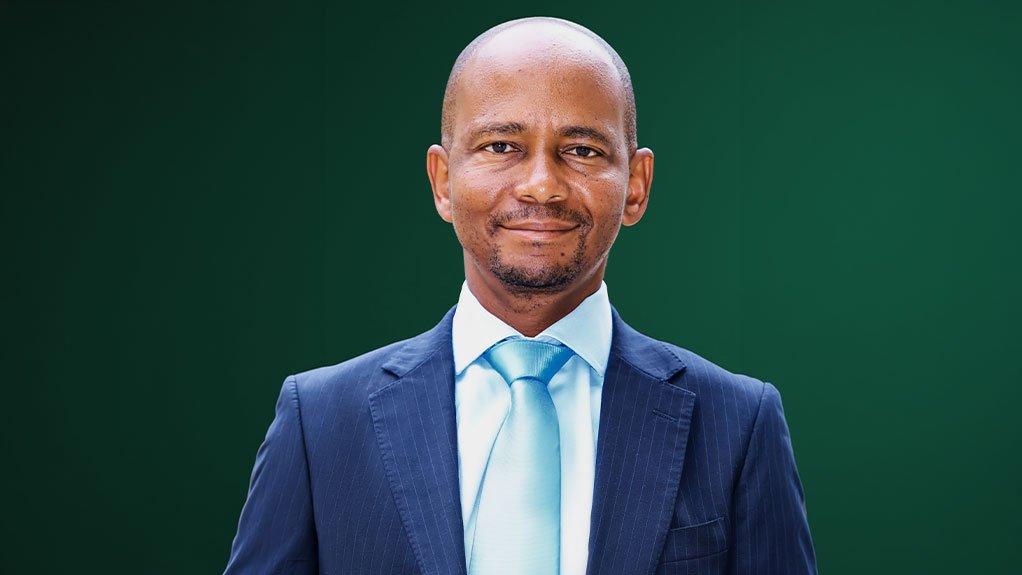
Tshepo Pitse is the Principal of Mining and Critical Minerals at Nedbank Corporate and Investment Banking



Capital is becoming the critical differentiator in mining as long lead times, rising costs and selective investors push companies to rethink how projects are funded.
Mining has always suited the patient and the few willing to navigate the long, uneven cycles that define the sector. It rewards those who can absorb risk, manage political uncertainty, and wait out commodity markets that move without warning. What has changed is not the volatility itself but the way projects must now be financed. Capital structure, once a technical detail buried deep in planning documents, has moved to the centre of competitiveness.
That shift was evident in 2024, when global producers invested about $88-billion in capital expenditure funded by operating cash flows of about $143-billion. In South Africa, the top 25 listed miners added R104-billion in capex while returning R58-billion to shareholders. These numbers reflect more than positive sentiment – they show the pressure under which funding decisions are made in a world shaped by long development timelines, more complex permitting requirements, and markets that can turn abruptly.
Average lead times of about 18 years between discovery and production leave little room for early mistakes. A decision taken during scoping can alter margins long after the commodity cycle has shifted. In this environment, capital allocation has become a strategic driver rather than a budgeting exercise. It determines whether long-term value is built into the mine or quietly eroded over time.
Mining remains capital-intensive and exposed to constant market swings, making the cost and composition of funding central to shareholder returns. Debt provides the lowest cost of capital but comes with the scrutiny of lenders whose diligence takes time. Equity is expensive and, in weak markets, can quickly dilute value. Today, miners have access to a much broader range of liquidity pools than they did a decade ago, including streams, royalties, prepayments, and hybrid structures, which now play a material role in project finance.
Streaming and royalty finance illustrate how the funding landscape has broadened. A sector now worth more than $15-billion has become an important source of liquidity for juniors and intermediates needing to keep projects moving. These structures tend to move quickly, require less documentation, and are less dilutive than equity. Their trade-offs, however, emerge later through break fees, reduced refinancing options, and costly upside participation when prices rise. Used well, they support progress. Used carelessly, they can limit a company's future flexibility.
The miners who tend to outperform are those who prioritise sequencing as much as selection. A well-constructed capital stack aligns risk with the parties best able to carry it, reduces the weighted average cost of capital, and builds resilience into the project.
Traditional project finance takes time, yet its discipline often prevents more expensive issues later. Additional liquidity can then be added at specific stages as funding needs shift. When executed well, this approach strengthens valuations.
Capital scarcity has made these decisions more consequential. The world will require more than $2-trillion in new mining investment by 2050 to meet net-zero commitments, yet capital raised by juniors and intermediates in 2024 fell to a five-year low. Investors are responding with greater scrutiny. They now assess technical maturity, permitting clarity, environmental, social and governance credibility, offtake certainty, and the strength of the management track record. Jurisdictional risk is significant. Commodities with liquid, transparent markets, such as gold, copper and nickel, attract capital more readily than minerals with weaker price signals, including graphite and lithium.
Part of the strain comes from a sector still adjusting to the scale of investment needed for the energy transition. It reinforces why miners need capital strategies that balance risk and return, optimise the weighted average cost of capital and blend diverse funding sources, with bank debt remaining the anchor at the top of the stack.
With the limited availability of capital to finance the energy transition, future successful financings will demand collaboration across diverse funding sources, with multiple stakeholders working together.
In this environment, early collaboration between miners and financiers creates measurable advantages. Nedbank Corporate and Investment Banking has seen this in practice. Engaging early helps shape feasibility studies, contracting strategies and capital plans around what will ultimately be required for bankability. Working with sponsors from scoping through structuring, syndication, and financial close improves pricing, accelerates execution, and balances risk more effectively. Increasingly, banks and specialist funds partner rather than compete, using subordinated capital to complete structures that might otherwise stall.
As Mining Week 2026 approaches, a central question persists: Which companies are positioned to outperform when capital is scarce and discipline carries more weight than scale? It is rarely those who raise the most money. The companies that pull ahead are the ones that stay disciplined. They avoid shortcuts that trade long-term upside for speed. They maintain the flexibility to adjust the capital stack as conditions change. They keep refinancing routes open. They align risk with the parties best placed to manage it. They view capital structure as a strategic asset that shapes competitiveness across the life of the mine.
As the industry enters a new investment cycle and expectations for a low-carbon economy strengthen, the advantage will rest with miners who treat capital with long-term discipline and foresight. Those who do will be positioned to seize the opportunities that follow.
Written by Nedbank Corporate and Investment Banking Principal of Mining and Critical minerals Tshepo Pitse
Article Enquiry
Email Article
Save Article
Feedback
To advertise email advertising@creamermedia.co.za or click here
Research Reports
Projects
Latest Multimedia

Latest News
Showroom
For over 30 years, Werner South Africa Pumps & Equipment (PTY) LTD has been designing, manufacturing, supplying and maintaining specialist...
VISIT SHOWROOM
ALBIS FLANGES — founded in 1965 — is a petro-chemical approved manufacturer of flanges and fittings in most grades of steel, listed with Sasol,...
VISIT SHOWROOM


Press Office
Announcements
What's On
Subscribe to improve your user experience...
Option 1 (equivalent of R125 a month):
Receive a weekly copy of Creamer Media's Engineering News & Mining Weekly magazine
(print copy for those in South Africa and e-magazine for those outside of South Africa)
Receive daily email newsletters
Access to full search results
Access archive of magazine back copies
Access to Projects in Progress
Access to ONE Research Report of your choice in PDF format
Option 2 (equivalent of R375 a month):
All benefits from Option 1
PLUS
Access to Creamer Media's Research Channel Africa for ALL Research Reports, in PDF format, on various industrial and mining sectors
including Electricity; Water; Energy Transition; Hydrogen; Roads, Rail and Ports; Coal; Gold; Platinum; Battery Metals; etc.
Already a subscriber?
Forgotten your password?
Receive weekly copy of Creamer Media's Engineering News & Mining Weekly magazine (print copy for those in South Africa and e-magazine for those outside of South Africa)
➕
Recieve daily email newsletters
➕
Access to full search results
➕
Access archive of magazine back copies
➕
Access to Projects in Progress
➕
Access to ONE Research Report of your choice in PDF format
RESEARCH CHANNEL AFRICA
R4500 (equivalent of R375 a month)
SUBSCRIBEAll benefits from Option 1
➕
Access to Creamer Media's Research Channel Africa for ALL Research Reports on various industrial and mining sectors, in PDF format, including on:
Electricity
➕
Water
➕
Energy Transition
➕
Hydrogen
➕
Roads, Rail and Ports
➕
Coal
➕
Gold
➕
Platinum
➕
Battery Metals
➕
etc.
Receive all benefits from Option 1 or Option 2 delivered to numerous people at your company
➕
Multiple User names and Passwords for simultaneous log-ins
➕
Intranet integration access to all in your organisation