Building people, not just businesses


This article has been supplied and will be available for a limited time only on this website.
For Alison Johnston, Managing Director of DomusTech Services and former Managing Director of Tactile Technologies, success is measured not only by what you do with the opportunities you are given, but by what you do to create opportunities for others.
That outlook has been shaped by her own career and, in turn, has influenced how she thinks about skills development and the responsibility businesses have to help people realise their potential. Johnston has never waited until she felt completely ready before taking on a new challenge. Instead, she has built her career by stepping forward, learning as she went and deliberately expanding her skills and responsibilities.
“Allow the action and skill to become the confidence,” she says. “Rather than waiting until I felt completely confident before taking on new challenges, I learned to let action, experience and developing skills build that confidence along the way.”
Recognising potential, creating opportunity
This approach that has taken Johnston from building her skills and credibility in the technology sector, to executive leadership at Tactile Technologies and, most recently, to establishing her own business, DomusTech Services.
Her experience has also shaped her views on how businesses should identify and develop talent. In a country grappling with high youth unemployment, skills shortages and a persistent gap between education and workplace readiness, Johnston believes employers need to take a more open-minded approach to assessing potential.
“We need to consider more than degrees, psychometric assessments and previous experience and start identifying what people are actually capable of becoming,” she says.
In her experience, people often discover what they are capable of only when they are given the opportunity to learn, take responsibility and put their developing skills into practice. That belief has become central to the way she approaches skills development – and to the opportunities she now creates for others.
Giving potential a chance
Johnston describes herself as driven and willing to learn, even when something was not formally part of her job description. She actively sought out new responsibilities, built her capabilities and progressed into an executive position before joining Tactile Technologies.
“It was not easy,” she reflects. “This experience taught me that perseverance and skills development open doors. You cannot sit back and wait for opportunity, especially if you are a woman.”
She has also seen first-hand what can happen when a company takes a chance on youth. One young employee joined Tactile Technologies without technical experience or formal
qualifications. What he did have was drive, and when given the opportunity to learn within the business, he developed into a senior technician and earned the respect of customers.
“Look beyond what someone has on paper and recognise what they are capable of delivering,” she says.
This is especially relevant in technology, where adaptability, practical capability and a willingness to learn can be as important as formal qualifications.
Skills development with a purpose
Johnston also ensures that skills development has a meaningful purpose.
“At Tactile Technologies, we did not want to invest in training simply because we were required to. We wanted to make a meaningful difference,” she says, adding that DomusTech Services will take the same approach.
For her, meaningful development equips people with the capabilities and confidence to create their own paths.
“That can mean progressing into a better job, becoming a qualified technician, starting a business or acquiring the basic literacy and numeracy skills needed to participate meaningfully in the economy and society,” she says.
Johnston remains concerned that too much attention is often directed towards people who are already performing well, while adults who lack basic literacy and numeracy can be overlooked.
“Businesses have a responsibility to address these fundamental challenges rather than focusing their development initiatives exclusively on already high-performing students,” she says.
Her continued support for ABET initiatives through Triple E Training reflects her belief that literacy is one of the foundations on which economic opportunity is built.
Opening doors to independence
For Johnston, the ultimate measure of development is independence.
This means giving people the skills and confidence to prepare their own CVs, perform well in interviews and secure better employment. More importantly, it should help them improve their circumstances, support their families and, where they have the ambition and potential, create businesses of their own.
“I see entrepreneurship everywhere – including among people selling goods on the side of the road,” she says. “These individuals may not fit conventional definitions of business owners, but they are creating income and, within their communities, generating economic activity.”
This is why she rejects the idea that developing an employee who eventually leaves the business represents a failure of skills development.
“If someone leaves to build a better career, qualify as a technician, become a leader or start a business, that is evidence that the investment was worth it,” she says.
Confidence and perseverance
Her own career also gives weight to her views on the advancement of women in technology.
Johnston acknowledges that women can feel pressure to work harder and repeatedly prove themselves, particularly in traditionally male-dominated environments. Confidence, she says, can also be interpreted differently depending on how it is expressed: too much may be labelled difficult or emotional, while too little can be mistaken for weakness.
Her response has been perseverance and continuous learning.
She has experienced imposter syndrome and periods of self-doubt but has refused to allow them to determine what she could achieve. Instead, she continued building her technical and leadership capabilities.
She has also sought to create opportunities for other women. At Tactile Technologies, she mentored and trained three women who went on to succeed in technical roles. Two became qualified technicians, while a third progressed into quality control, despite barriers including limited formal education and health challenges that had previously made employment difficult.
Johnston believes women bring important strengths to leadership, including relationship building, collaboration, communication, resilience and an ability to understand the dynamics within a team.
However, she wants the next generation to spend less time proving that they belong and more time developing and using their capabilities.
Building people through DomusTech
As Johnston builds DomusTech Services, her ambitions therefore extend beyond establishing another successful technology business.
She wants to continue helping to change the trajectory of individuals’ lives.
Some may become technicians, while others may become leaders. Some may eventually leave to establish businesses of their own. Others may simply gain the literacy, confidence and workplace skills needed to create a better future for themselves and their families.
“In this way, I have achieved the objective of skills development,” she concludes. “What is the point of building a better life for yourself if you are not going to help the next person also grow?”
Article Enquiry
Email Article
Save Article
Feedback
To advertise email advertising@creamermedia.co.za or click here
Research Reports


Projects



Latest News


Showroom

Developed to exceed the latest EN 15964 standards for police breathalysers proving that it will remain accurate and reliable for many years to come.
VISIT SHOWROOM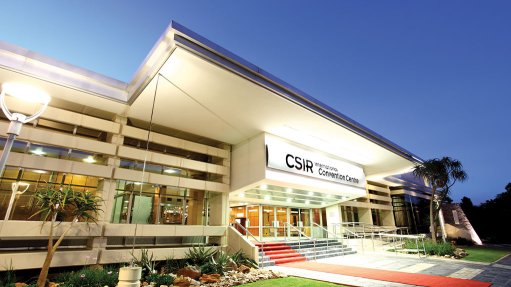
CSIR International Convention Centre (CSIR ICC) - the leading conference and events venue in Pretoria/Tshwane.
VISIT SHOWROOM


Announcements
What's On
Subscribe to improve your user experience...
Option 1 (equivalent of R125 a month):
Receive a weekly copy of Creamer Media's Engineering News & Mining Weekly magazine
(print copy for those in South Africa and e-magazine for those outside of South Africa)
Receive daily email newsletters
Access to full search results
Access archive of magazine back copies
Access to Projects in Progress
Access to ONE Research Report of your choice in PDF format
Option 2 (equivalent of R375 a month):
All benefits from Option 1
PLUS
Access to Creamer Media's Research Channel Africa for ALL Research Reports, in PDF format, on various industrial and mining sectors
including Electricity; Water; Energy Transition; Hydrogen; Roads, Rail and Ports; Coal; Gold; Platinum; Battery Metals; etc.
Already a subscriber?
Forgotten your password?
Receive weekly copy of Creamer Media's Engineering News & Mining Weekly magazine (print copy for those in South Africa and e-magazine for those outside of South Africa)
➕
Recieve daily email newsletters
➕
Access to full search results
➕
Access archive of magazine back copies
➕
Access to Projects in Progress
➕
Access to ONE Research Report of your choice in PDF format
RESEARCH CHANNEL AFRICA
R4500 (equivalent of R375 a month)
SUBSCRIBEAll benefits from Option 1
➕
Access to Creamer Media's Research Channel Africa for ALL Research Reports on various industrial and mining sectors, in PDF format, including on:
Electricity
➕
Water
➕
Energy Transition
➕
Hydrogen
➕
Roads, Rail and Ports
➕
Coal
➕
Gold
➕
Platinum
➕
Battery Metals
➕
etc.
Receive all benefits from Option 1 or Option 2 delivered to numerous people at your company
➕
Multiple User names and Passwords for simultaneous log-ins
➕
Intranet integration access to all in your organisation