Automation, efficiency drive equipment demand

MACHINE INNOVATION Mining houses and contractors are focusing on machine innovation and reliable after-sales support networks as they seek to improve operational performance


Productivity, automation, safety and sustainability initiatives are increasingly shaping investment decisions in South Africa’s earthmoving and surface mining equipment sector, says diesel engine supplier YC Diesel South Africa CEO Jianyu Hao.
Mining houses and contractors are focusing on machine innovation and reliable after-sales support networks as they aim to improve operational performance.
While surface mining remains the dominant equipment segment in South Africa – driven by coal, platinum, iron-ore and manganese operations – there is growing demand for large excavators, articulated dump trucks, wheel loaders, hydraulic shovels and drilling equipment, he adds.
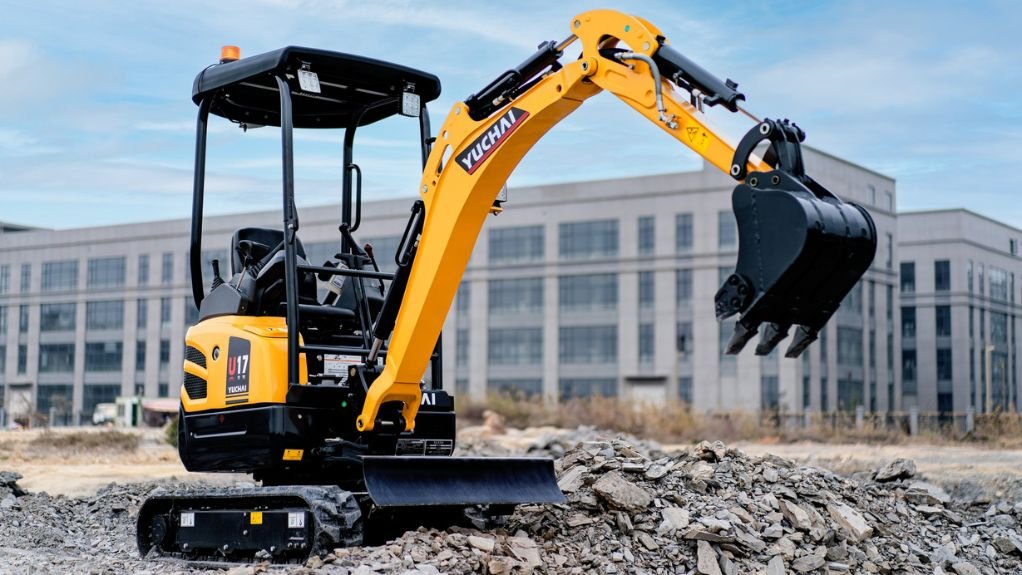
However, there is also increasing demand for smaller, more versatile machines such as mini excavators, which are easier to transport between sites and can improve efficiency across a range of applications.
In addition, automation and smart mining technologies are becoming increasingly important, with mining companies adopting real-time equipment monitoring, telematics, AI-based fleet management and predictive maintenance systems to improve productivity, decrease downtime and enhance worker safety.
With this in mind, Jianyu says safety compliance has also become a significant driver of equipment modernisation, with mines upgrading trackless mobile machinery through the introduction of collision prevention systems, proximity detection technologies, fatigue monitoring systems and advanced operator-assistance systems.
Mining firms are also facing growing pressure to reduce carbon emissions and fuel costs, thereby driving interest in fuel-efficient engines, hybrid and electric mining vehicles, renewable-energy-powered operations and lower-emission excavators, trucks and power-generation equipment.
Jianyu says fleet modernisation programmes are, therefore, resulting in the replacement of ageing equipment with more fuel-efficient excavators and digitally connected equipment, consequently requiring less maintenance.
But despite these trends, he still identifies high equipment costs, power and infrastructure constraints, commodity price volatility and long equipment lead times, as well as skills shortages that do not support advanced technologies, as ongoing challenges in the sector. For this reason, there are still some contractors who can consider only refurbished or rental equipment to reduce capital expenditure.
Strongest Demand
Jianyu says the strongest demand for equipment in sub-Saharan Africa is for heavy surface mining equipment and technologies such as load-sensing hydraulic systems, variable displacement hydraulic pumps, economical operating modes on equipment, intelligent engine management systems, auto-idle functions and electronically controlled fuel injection systems.
“Advanced hydraulic systems can improve efficiency by reducing pressure losses and unnecessary flow, while hybrid hydraulic systems and electric drivetrains are being introduced to reduce fuel consumption and CO2 emissions further.”
Demand, adds Jianyu, is being driven by copper and cobalt expansion projects in the Democratic Republic of Congo and Zambia; iron-ore projects in Guinea; gold mine expansions in Ghana, Mali, Burkina Faso and Tanzania; and platinum and chrome investments in South Africa and Zimbabwe.
The original-equipment manufacturers (OEMs) best positioned for growth are those able to provide reliable equipment suited to African mining conditions, he notes.
Meanwhile, in terms of new energy machinery, Jianyu says the adoption of hybrid and battery-electric machinery remains gradual in South Africa and the broader African market as mining companies continue to evaluate capital costs, charging infrastructure requirements, power reliability, machine range and long-term maintenance support.
Although battery-electric and hybrid technologies are gaining some traction in compact equipment categories, underground mining and low-carbon-emission operating zones, Jianyu says that diesel-powered equipment continues to dominate large-scale surface mining applications.
As for other priority equipment features, safety features are attracting attention, with items such as rollover and falling-object protection structures, safety glass, collision avoidance systems, ergonomic cabin designs, 360º camera systems and LED work lights being incorporated into modern equipment.
Operator training is another critical factor in improving performance, as properly trained operators can improve productivity, reduce component wear, identify potential mechanical issues earlier and operate equipment more safely.
Jianyu also emphasises the importance of after-sales support, maintenance services and spare-parts availability in decreasing downtime.
As a supplier of diesel engine solutions and support services to the mining and industrial sectors, YC Diesel South Africa also contributes through the provision of reliable diesel engines, parts support and technical expertise across Southern Africa.
He expects automation, emerging autonomous equipment systems, advanced telematics, electrification and alternative-fuel technologies to gain further traction.
“Expected developments include emerging autonomous and semi-autonomous equipment solutions, remote-controlled equipment, hybrid machinery, battery-electric compact equipment, growing industry interest in hydrogen-powered machinery and more energy efficient hydraulic technologies.”
He concludes that digital support technologies – including remote diagnostics, augmented-reality-assisted technical support and online operator training platforms – are expected to become increasingly common across the industry.
Article Enquiry
Email Article
Save Article
Feedback
To advertise email advertising@creamermedia.co.za or click here


Latest Multimedia
Latest News
Showroom
Design, Construction and Maintenance of Site Erected, Welded Bulk Storage Tanks for the Petrochemical, LNG, Ammonia and Sustainable fuel Sectors.
VISIT SHOWROOM


Press Office
Announcements
What's On
Subscribe to improve your user experience...
Option 1 (equivalent of R125 a month):
Receive a weekly copy of Creamer Media's Engineering News & Mining Weekly magazine
(print copy for those in South Africa and e-magazine for those outside of South Africa)
Receive daily email newsletters
Access to full search results
Access archive of magazine back copies
Access to Projects in Progress
Access to ONE Research Report of your choice in PDF format
Option 2 (equivalent of R375 a month):
All benefits from Option 1
PLUS
Access to Creamer Media's Research Channel Africa for ALL Research Reports, in PDF format, on various industrial and mining sectors
including Electricity; Water; Energy Transition; Hydrogen; Roads, Rail and Ports; Coal; Gold; Platinum; Battery Metals; etc.
Already a subscriber?
Forgotten your password?
Receive weekly copy of Creamer Media's Engineering News & Mining Weekly magazine (print copy for those in South Africa and e-magazine for those outside of South Africa)
➕
Recieve daily email newsletters
➕
Access to full search results
➕
Access archive of magazine back copies
➕
Access to Projects in Progress
➕
Access to ONE Research Report of your choice in PDF format
RESEARCH CHANNEL AFRICA
R4500 (equivalent of R375 a month)
SUBSCRIBEAll benefits from Option 1
➕
Access to Creamer Media's Research Channel Africa for ALL Research Reports on various industrial and mining sectors, in PDF format, including on:
Electricity
➕
Water
➕
Energy Transition
➕
Hydrogen
➕
Roads, Rail and Ports
➕
Coal
➕
Gold
➕
Platinum
➕
Battery Metals
➕
etc.
Receive all benefits from Option 1 or Option 2 delivered to numerous people at your company
➕
Multiple User names and Passwords for simultaneous log-ins
➕
Intranet integration access to all in your organisation