AI is changing cybersecurity careers: here are the skills professionals need for the future


This article has been supplied and will be available for a limited time only on this website.
The cybersecurity industry is facing a paradox. While businesses around the world continue to report a shortage of cybersecurity skills, finding the right talent is becoming increasingly complex. The challenge is no longer simply finding more cybersecurity professionals, it is finding people with the skills and knowledge needed to navigate a rapidly changing threat landscape.
As AI accelerates this shift, cybersecurity professionals will need to develop new capabilities, while businesses will need to rethink how they identify and attract talent.
According to Daniela Thom, Head of Client and Talent Experience at Strider Digital, the cybersecurity job market remains strong but businesses are becoming more deliberate about the capabilities they need.
“The focus is shifting beyond traditional qualifications,” Thom explains. “Businesses are looking for professionals who can demonstrate practical experience, solve complex problems and apply their knowledge in real-world environments.”
AI is creating a new layer of cybersecurity challenges
AI is changing the way businesses operate, creating new opportunities for innovation while introducing security challenges that barely existed a few years ago. As businesses integrate AI into their operations, they need to think beyond adoption and consider how to protect the systems they use, the data they rely on and the information they process.
The rapid evolution of increasingly powerful AI models, including Anthropic’s Claude Fable 5, highlights why securing AI systems is becoming a critical focus area. As businesses adopt these technologies, cybersecurity professionals will increasingly need to understand how AI changes the threat landscape and how to protect systems that are becoming more complex. That work is creating demand for a new kind of cybersecurity professional, one with the skills to secure AI-driven environments while managing the risks that come with them.
“AI is expanding the role of cybersecurity professionals,” says Thom. “Their responsibility will no longer be limited to protecting traditional infrastructure. They will now also need to help businesses understand, manage and navigate the risks that come with adopting new technologies.”
The entry-level pathway is evolving
Traditionally, many cybersecurity careers began with roles focused on foundational activities such as monitoring alerts and identifying potential threats. However, as AI becomes capable of automating some routine tasks, the pathway into the profession is changing.
This does not mean there will be fewer opportunities in cybersecurity, but it does mean aspiring professionals will need to develop a more specialised skillset and demonstrate their ability to apply knowledge in practical environments.
“The cybersecurity professionals of the future won’t just be defenders of technology, they’ll be architects of how businesses use technology safely,” says Thom. “This requires a different mindset, one built on continuous learning, adaptability and the ability to anticipate risks before they become threats.”
Skills are becoming the new differentiator
As cybersecurity roles become more specialised, the ability to demonstrate practical capability is becoming increasingly important. Portfolios, hands-on experience, certifications and real-world problem-solving can help candidates stand out by demonstrating how they apply their knowledge in practice.
“For businesses, the challenge is not only finding cybersecurity professionals but also recognising potential beyond traditional career paths. The strongest candidates may not always come from the most conventional backgrounds, but those who can demonstrate curiosity, problem-solving ability and the capacity to grow with the role can bring significant value,” says Thom.
The future of cybersecurity talent
As technology continues to evolve, new areas of opportunity are developing within cybersecurity. Professionals with expertise in securing AI systems will become increasingly valuable as businesses adopt AI tools and look to manage the risks associated with these technologies. At the same time, regulations such as the EU's AI Act, alongside other emerging governance frameworks, are driving demand for specialists who can support cybersecurity governance, navigate evolving compliance requirements and help businesses adopt AI responsibly.
Looking ahead, advances such as quantum computing will create further demand for professionals who can prepare businesses for the next generation of security challenges, particularly the transition to post-quantum cryptography, as quantum computers are expected to be capable of breaking many of today's widely used public-key encryption algorithms.
Recognising this risk, the National Institute of Standards and Technology (NIST) has recommended that these algorithms be deprecated by 2030 and retired entirely by 2035. Businesses will need cybersecurity professionals with the expertise to assess their cryptographic environments, plan migration strategies and manage what is expected to be one of the most complex security transitions in decades.
Together, these shifts are redefining what it means to build a successful career in cybersecurity. Technical expertise will remain essential but professionals will also need to combine it with critical thinking, sound judgement and an understanding of the broader business and regulatory context in which security decisions are made.
“The cybersecurity profession has always evolved alongside technology. The professionals who continue to build new skills, embrace change and stay curious will be the ones who help businesses navigate whatever comes next,” concludes Thom.
Article Enquiry
Email Article
Save Article
Feedback
To advertise email advertising@creamermedia.co.za or click here


Projects

Latest Multimedia


Latest News


Showroom
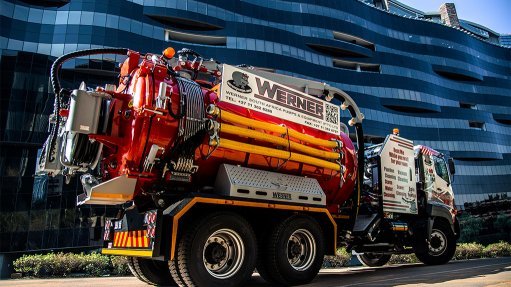
For over 30 years, Werner South Africa Pumps & Equipment (PTY) LTD has been designing, manufacturing, supplying and maintaining specialist...
VISIT SHOWROOM
For over 15 years, Lilak Aluminium, a trusted leader in architectural extrusion supply, has delivered excellence to businesses like yours.
VISIT SHOWROOM


Press Office
Announcements
What's On
Subscribe to improve your user experience...
Option 1 (equivalent of R125 a month):
Receive a weekly copy of Creamer Media's Engineering News & Mining Weekly magazine
(print copy for those in South Africa and e-magazine for those outside of South Africa)
Receive daily email newsletters
Access to full search results
Access archive of magazine back copies
Access to Projects in Progress
Access to ONE Research Report of your choice in PDF format
Option 2 (equivalent of R375 a month):
All benefits from Option 1
PLUS
Access to Creamer Media's Research Channel Africa for ALL Research Reports, in PDF format, on various industrial and mining sectors
including Electricity; Water; Energy Transition; Hydrogen; Roads, Rail and Ports; Coal; Gold; Platinum; Battery Metals; etc.
Already a subscriber?
Forgotten your password?
Receive weekly copy of Creamer Media's Engineering News & Mining Weekly magazine (print copy for those in South Africa and e-magazine for those outside of South Africa)
➕
Recieve daily email newsletters
➕
Access to full search results
➕
Access archive of magazine back copies
➕
Access to Projects in Progress
➕
Access to ONE Research Report of your choice in PDF format
RESEARCH CHANNEL AFRICA
R4500 (equivalent of R375 a month)
SUBSCRIBEAll benefits from Option 1
➕
Access to Creamer Media's Research Channel Africa for ALL Research Reports on various industrial and mining sectors, in PDF format, including on:
Electricity
➕
Water
➕
Energy Transition
➕
Hydrogen
➕
Roads, Rail and Ports
➕
Coal
➕
Gold
➕
Platinum
➕
Battery Metals
➕
etc.
Receive all benefits from Option 1 or Option 2 delivered to numerous people at your company
➕
Multiple User names and Passwords for simultaneous log-ins
➕
Intranet integration access to all in your organisation