AI helps Discovery Green manage renewable energy procurement risk

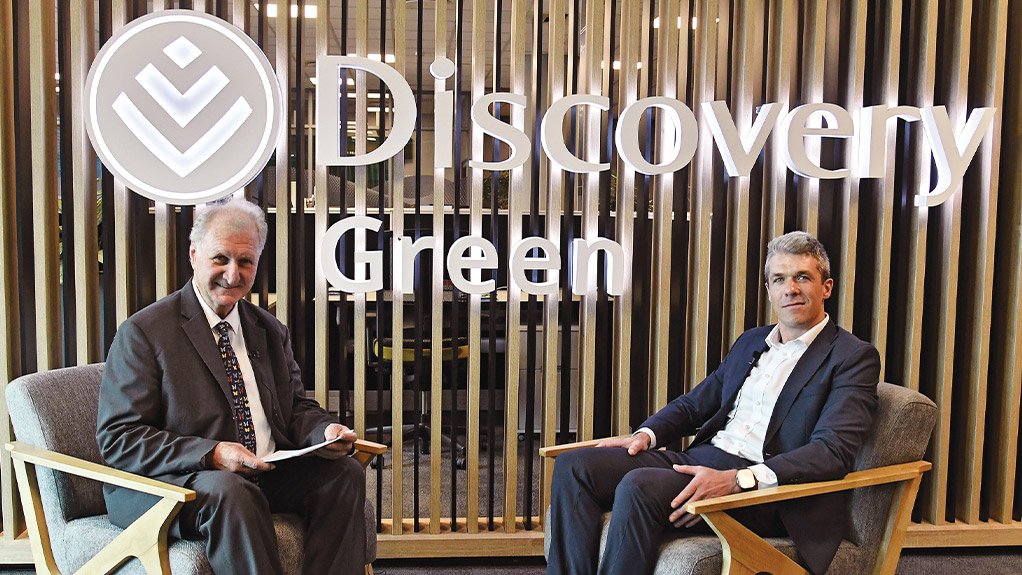



Discovery Green, the renewable-energy business of financial services and insurance group Discovery, is using AI to manage the risks its business clients face when procuring renewable energy. Launched three years ago, the licensed electricity trader is one of South Africa’s largest energy traders, with more than 740 MW under construction and over 50 business customers.
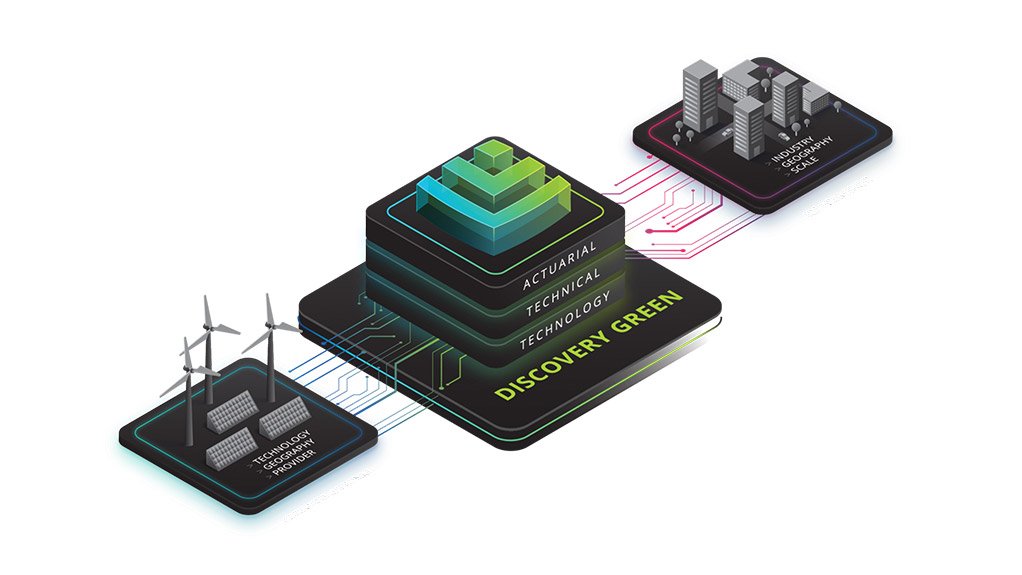
Its proprietary EnergyOS system combines AI with the actuarial skills Discovery has built over more than 30 years in health and life insurance, a business that CEO Andre Nepgen says is fundamentally about managing variables and risk.
Comparing EnergyOS with other ways in which companies procure renewable energy, such as solar on its own or wind and solar combined, Nepgen says initial results show that it has reduced the risk of companies not achieving their expected returns by 88%. At the same time, it has doubled the net present value or savings that businesses get out of it.
“This is sort of version one really of it. I think we’ve got a lot more to do, but the initial results are quite compelling.”
Nepgen says it is unusual for actuarial capability to be extended to renewable energy. In South Africa’s wheeling environment, he explains, the best engineers build the plants, but “once it comes into the grid, it really becomes a mathematical equation”.
Long-term contracts must be managed in much the same way as long-term insurance risk, and the numbers flowing through the system allow that risk to be modelled, assessed, priced and managed.“
I think we’ve only just cracked the start of how we can apply that skill set in this new industry,” he says.
Three Objectives
Nepgen says clients, including mining companies, are after three things. The chief financial officer wants a strong business case. The head of environmental, social and governance wants a high level of renewable energy to reduce emissions. The chief risk officer wants this done in as low-risk a way as possible.
Energy is a massive cost for the mining industry and an increasing portion of operating spend, he notes, so mines want to achieve all three.
The problem has always been that a trade-off must be made between the three, which Discovery Green refers to as a trilemma. “You can always achieve two, you can’t achieve all three,”
epgen says. A company could take a small amount of renewable energy, get some savings and take on little risk. Alternatively, it could take a large amount, potentially save a lot, but take on a lot of risk.
EnergyOS uses generation, consumption and market price data, together with AI-powered risk modelling and management, to try to achieve all three. Nepgen says that, for the first time, a mining client can achieve a high return, replace 90% of its consumption with renewable energy and do so with very low risk.
The system continually assesses the three factors and determines the best strategy for allocating energy across plants and sites, keeping the chance of not achieving the objective as low as possible.
Take-or-Pay Risk
Nepgen describes take-or-pay, under which a client pays for the energy that is generated rather than what it consumes, as often the biggest risk in renewable energy. This is because a company cannot be sure how much energy will be generated or how much it will actually consume.
“You have an idea, but it can be exceptionally volatile,” he says of generation. “Everyone believes that their consumption is stable. We’ve seen in our data that it is actually incredibly volatile,” he adds.
As a result, there are points at which a company pays for energy that it does not consume. This means it is not producing output at that point but is paying more for electricity.
Previously, it would be assumed that a wind farm would generate a certain amount of energy and a business would consume a certain amount. Nepgen says that, in reality, nobody knows where either will end up.
“But what you can do is to say, let’s model out all the scenarios.” EnergyOS treats generation and consumption as distributions rather than single points. Discovery Green has run 87- million generation simulations for a particular plant. For every customer, it has generated 10 000 consumption paths, taking into account the sector, gross domestic product, once-off shocks and maintenance patterns.
The system also draws on more than 200 000 future market-price points. Together, this data feeds three linked models. An AI-driven forecasting model informs a second model that tailors a solution to each client by selecting the best combination of solar, wind and storage. A third model then allocates the energy to meet the client’s environmental and commercial objectives without increasing financial and operational risk.
In doing so, it aims to minimise the chance of a client paying for energy it does not consume across these millions of scenarios. It continually adjusts allocations as generation and consumption change. When there is more generation and enough consumption to take it, for example, clients are given more energy so that their needs are always met.
“It looks at a range of possibilities instead of just one, and it constantly adapts,” says Nepgen.
Client Reaction
Nepgen says the reaction from clients since the launch of EnergyOS has been positive. “People are starting to see a bit of sophistication being injected into the space, which they really, really welcome,” he says.
Some clients have asked for EnergyOS to be included in their agreements with Discovery Green.
He says that, when clients are introduced to the system, there is often “a bit of a penny drop” moment. The industry has typically looked at procurement from a single point, often using P50 estimates, which Nepgen describes as the average of what clients expect.
Once clients assess a contract based on the full range of where market prices, generation and consumption could end up, their understanding of the risk they were procuring originally changes completely.
When that happens, he says, clients realise the importance of having a system that manages the risk.
EnergyOS is being rolled out to all existing business clients during 2026 and is available immediately to new clients. A public interactive tool based on the system also allows clients and prospective clients to test different technology and pricing scenarios.
Procurement
EnergyOS is also changing Discovery Green’s own procurement.
“This was not necessarily the intention originally. There’s actually a wonderful benefit that has come out of it,” Nepgen says.
He explains that projects, whether wind, solar or batteries, are usually assessed on how much energy they will produce, when and at what price. The effect of a project on risk and volatility across the customer portfolio was not previously a central consideration.
Connecting the two has brought new insights. Discovery Green now looks at which months a project is more likely to generate, at seasonality, and at different technologies in a different way.
“You’re not approaching it based on price and quantum anymore,” he says. The question is now whether a project helps the client, which is priority number one.
As a result, Discovery Green is learning, adapting and changing its generation procurement strategy as it goes along.
Beyond Energy
Nepgen believes the approach could be extended beyond energy, although not to every sector.
Rail would be less suited, he says, because it involves more physical delivery and infrastructure. Green hydrogen, however, could be a good application.
“If you have a commodity on the one side, and a long-term commitment or expectation of clients on the other side, this operating system works,” he says.
While the details would still need to be worked out, Nepgen says the same principles of risk, return and emissions reduction apply wherever there is a variable commodity and a need for long-term risk management.
For now, Nepgen describes what Discovery Green has done with EnergyOS as “really a start”.
The initial results have been “really amazing”, he says, and Discovery Green intends to develop the system further in future versions.
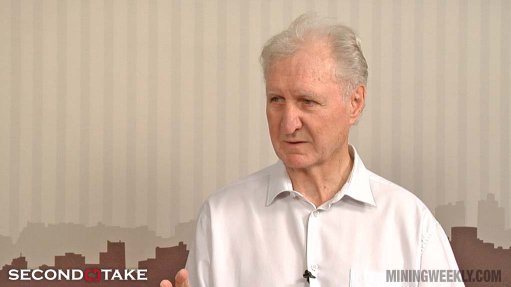
Click here to watch the full interview with Discovery Green CEO Andre Nepgen, who explains how AI-powered EnergyOS is helping businesses maximise renewable-energy savings while minimising risks.
Article Enquiry
Email Article
Save Article
Feedback
To advertise email advertising@creamermedia.co.za or click here

Projects
Latest Multimedia
Latest News


Showroom

ESAB South Arica, the leading supplier of high-end welding and cutting products to the Southern African industrial market is based in...
VISIT SHOWROOM
Complete range of security sealing solutions including security seals bags and labels.
VISIT SHOWROOM

Press Office
Announcements
What's On
Subscribe to improve your user experience...
Option 1 (equivalent of R125 a month):
Receive a weekly copy of Creamer Media's Engineering News & Mining Weekly magazine
(print copy for those in South Africa and e-magazine for those outside of South Africa)
Receive daily email newsletters
Access to full search results
Access archive of magazine back copies
Access to Projects in Progress
Access to ONE Research Report of your choice in PDF format
Option 2 (equivalent of R375 a month):
All benefits from Option 1
PLUS
Access to Creamer Media's Research Channel Africa for ALL Research Reports, in PDF format, on various industrial and mining sectors
including Electricity; Water; Energy Transition; Hydrogen; Roads, Rail and Ports; Coal; Gold; Platinum; Battery Metals; etc.
Already a subscriber?
Forgotten your password?
Receive weekly copy of Creamer Media's Engineering News & Mining Weekly magazine (print copy for those in South Africa and e-magazine for those outside of South Africa)
➕
Recieve daily email newsletters
➕
Access to full search results
➕
Access archive of magazine back copies
➕
Access to Projects in Progress
➕
Access to ONE Research Report of your choice in PDF format
RESEARCH CHANNEL AFRICA
R4500 (equivalent of R375 a month)
SUBSCRIBEAll benefits from Option 1
➕
Access to Creamer Media's Research Channel Africa for ALL Research Reports on various industrial and mining sectors, in PDF format, including on:
Electricity
➕
Water
➕
Energy Transition
➕
Hydrogen
➕
Roads, Rail and Ports
➕
Coal
➕
Gold
➕
Platinum
➕
Battery Metals
➕
etc.
Receive all benefits from Option 1 or Option 2 delivered to numerous people at your company
➕
Multiple User names and Passwords for simultaneous log-ins
➕
Intranet integration access to all in your organisation