Why solar and VSD upgrades fail without proper pump engineering

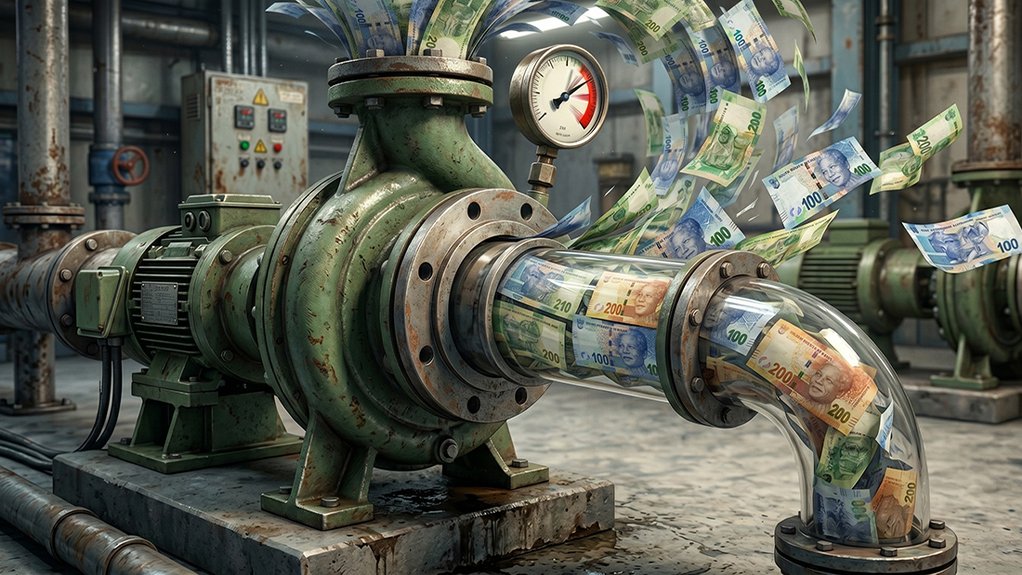

Proper hydraulic sizing of water pumps is the foundational step for achieving energy efficiency before VSD or solar integration. (Image courtesy of M Bond Engineering)
Photo by Courtesy of M Bond Engineering
M Bond Pumps Mega Water Pumps Online Official Logo




South Africa’s industrial, mining and agricultural sectors are in the midst of a massive energy transition. Driven by grid instability and escalating tariffs, millions of rands are being poured into high-tech variable speed drives (VSDs) and commercial solar arrays. The goal is simply to achieve energy autonomy and reduce operational overheads.
However, a critical engineering blind spot is causing many of these expensive electrical upgrades to fail to deliver their promised return on investment. The problem is a heavy reliance on electrical solutions to fix fundamentally flawed mechanical systems.
In the rush to automate and digitise, many procurement officers and plant managers are overlooking the foundational law of fluid dynamics: you cannot fix a mechanical problem with an electrical patch.
The Danger of the "Plug-and-Play" Procurement Model
The rise of generic business-to-business e-commerce has flooded the South African market with "box-dropping" suppliers. These platforms allow buyers to procure heavy rotational equipment based purely on capital expenditure rather than engineering specification.
Consequently, plants are frequently outfitted with pumps that are either drastically oversized "just in case" or severely undersized to save on initial costs. When these systems inevitably draw excessive power or suffer premature mechanical wear, the modern reflex is to install a VSD or attach a solar inverter to "smooth out" the power consumption.
This approach is fundamentally flawed. If a centrifugal pump is operating far off its best efficiency point (BEP) owing to incorrect hydraulic sizing, attaching a VSD simply means you are automating and regulating an inherently inefficient process. The equipment will still suffer from cavitation, vibration, and excessive radial loads, leading to catastrophic failure regardless of how clean the electrical input is.
Engineering the Baseline
True energy efficiency does not start at the switchgear; it starts at the fluid level. Before any capital is allocated to electrical optimisation, the mechanical baseline must be perfected.
This requires a return to first-principle engineering. System designers must calculate exact friction losses, static heads, and fluid viscosities before specifying equipment. By ensuring that the foundational water pumps are perfectly matched to the specific hydraulic demands of the site, engineers can drastically reduce the baseline power requirement before a single solar panel is installed.
Only once the mechanical drivetrain—the pump, the coupling, and a high-efficiency IE3 or IE4 motor—is operating seamlessly at its BEP should electronic control systems be introduced. When a VSD is applied to a perfectly sized mechanical system, the energy savings are exponential. When applied to a poorly sized system, the VSD merely masks the mechanical bleeding.
Bridging this gap requires a shift in how the South African industrial sector procures equipment. Standard retail e-commerce is insufficient for heavy industry. Buyers require digital procurement platforms that are backed by physical, brick-and-mortar engineering expertise.
When a mine in the Northern Cape or an agricultural hub in the Western Cape requires a critical dewatering solution, they do not just need a product catalogue; they need technical validation. They need the assurance that the equipment being dispatched has been vetted by qualified professionals who understand the realities of African operational environments.
Further, robust cross-border and local supply chains require distributors who hold significant physical stock and possess the in-house capabilities to customise, test and repair the equipment they sell. Supplying a pump is only the first step; maintaining its efficiency over a 15-year lifecycle is where true industrial value is generated.
As South Africa continues to modernise its industrial infrastructure, the focus must remain balanced. Intelligent electrical grids and solar integration are the future of power generation, but they rely entirely on the integrity of the mechanical systems they drive.
By prioritising precise hydraulic engineering and partnering with technically verified suppliers, the industrial sector can stop masking mechanical inefficiencies and start achieving true, sustainable energy autonomy.
Written by M Bond Engineering MD Conrad Strehlau (Pr Eng, MBA). Combining his background as a Professional Civil Engineer with advanced business administration, Strehlau bridges the gap between heavy-duty mechanical engineering and streamlined digital procurement through his online division, M Bond Pumps. For engineering specifications, technical catalogues, and customised fluid management solutions, visit mbondpumps.co.za.
This article is Part 1 of a four-part Industry Insights series by M Bond Pumps focusing on industrial fluid management and energy autonomy.
Article Enquiry
Email Article
Save Article
Feedback
To advertise email advertising@creamermedia.co.za or click here

Projects

Latest Multimedia

Latest News
Showroom
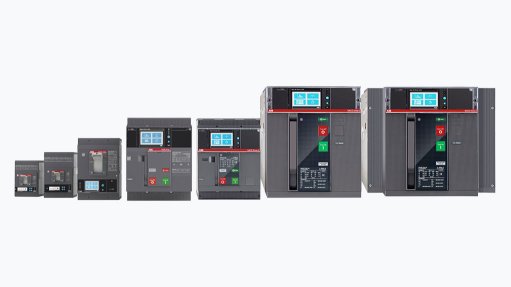
Electrifying the world in a safe, smart, and sustainable way, ABB Electrification is a global technology leader in electrical distribution and...
VISIT SHOWROOM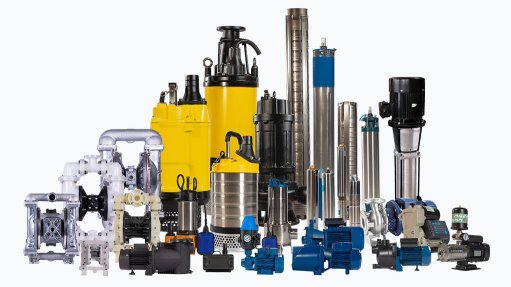
AxFlow AQS Liquid Transfer (Pty) Ltd is an Importer and Distributor of Pumps in Southern Africa
VISIT SHOWROOM
Announcements
What's On
Subscribe to improve your user experience...
Option 1 (equivalent of R125 a month):
Receive a weekly copy of Creamer Media's Engineering News & Mining Weekly magazine
(print copy for those in South Africa and e-magazine for those outside of South Africa)
Receive daily email newsletters
Access to full search results
Access archive of magazine back copies
Access to Projects in Progress
Access to ONE Research Report of your choice in PDF format
Option 2 (equivalent of R375 a month):
All benefits from Option 1
PLUS
Access to Creamer Media's Research Channel Africa for ALL Research Reports, in PDF format, on various industrial and mining sectors
including Electricity; Water; Energy Transition; Hydrogen; Roads, Rail and Ports; Coal; Gold; Platinum; Battery Metals; etc.
Already a subscriber?
Forgotten your password?
Receive weekly copy of Creamer Media's Engineering News & Mining Weekly magazine (print copy for those in South Africa and e-magazine for those outside of South Africa)
➕
Recieve daily email newsletters
➕
Access to full search results
➕
Access archive of magazine back copies
➕
Access to Projects in Progress
➕
Access to ONE Research Report of your choice in PDF format
RESEARCH CHANNEL AFRICA
R4500 (equivalent of R375 a month)
SUBSCRIBEAll benefits from Option 1
➕
Access to Creamer Media's Research Channel Africa for ALL Research Reports on various industrial and mining sectors, in PDF format, including on:
Electricity
➕
Water
➕
Energy Transition
➕
Hydrogen
➕
Roads, Rail and Ports
➕
Coal
➕
Gold
➕
Platinum
➕
Battery Metals
➕
etc.
Receive all benefits from Option 1 or Option 2 delivered to numerous people at your company
➕
Multiple User names and Passwords for simultaneous log-ins
➕
Intranet integration access to all in your organisation