



Where are the management level women in mining?


This article has been supplied.
A recent global study by McKinsey found that CEO’s believe the top four attributes for leadership success are intellect and stimulation, inspiration, participatory decision-making and setting expectations and rewards. As these attributes were most commonly found in female leaders, it begs the question, why are there so few on the top rung, and even fewer still in male dominated industries such as mining?
The problem really is industry-wide within mining. A Women in Mining report (2013) by Amanda van Dyke (Chair of the organization Women in Mining) and Stephney Dallmann (of PriceWaterhouseCoopers) found that mining companies have the lowest number of women on boards of any listed industry group in the world. There are, of course, many companies at early stages of development and they have only a few board seats to fill; but if they expect to grow and mature, there is no time like the present to lead the way in increasing women at executive management level roles within mining. The likelihood that women will have a board seat or participate in a board committee not only varies by company size, but also by geography. For example, 21% of the committee seats of listed South African mining companies are occupied by women. Prior to the 1990s, South African women were prohibited or otherwise constrained by legislation from being employed in mining activities underground, so they did not get the chance to attain any experience which would have opened the doors to senior positions within the industry.
Another country with a positive story to tell is Canada, which has the highest number of listed mining companies. They are also further forward in terms of understanding the importance of the role women play on boards, with the top-tier Canadian companies having nearly 14% of board directorships held by women. But these are two countries are in the minority. An inability to embrace women at high level management has real-world consequences for shareholders and stakeholders in the communities where the miners operate. Mining companies with women on their boards see performance improvements on a number of fronts, from financial to social as well as environmental performance. Additionally the amount that mining companies spend on community initiatives does seem to exponentially increase with the number of women on the board. The WIM report also stated that profit margins are higher for mining companies with women on their boards and this is consistent with the findings of other studies. It cited a similar survey undertaken by Catalyst, a Canadian pressure group, which showed that companies with women on their boards also benefited from higher return on sales, equity and invested capital. Similarly, a study by the Credit Suisse Research Institute found that companies with women on their boards have a higher return on equity, lower gearing, higher price/book value and better than average growth.
When the WIM report was issued, women occupied 8% of the board seats of the top 100 global mining companies, and just 4% when this widened to include the top 500 companies. However just 1% of the executive directors of the top 100 companies are women, with the rest holding non-executive roles. Among the next 101-500 companies the figure is slightly higher, at 3%. Overall, among the top 500 mining companies, women hold just 3% of the directorships. The WIM report also acknowledges that mining is a sector where finding women to undertake senior roles is a “challenge”, partly because women are less likely to stay in mathematics and science education. Other factors include the need to travel abroad and take roles in remote or obscure areas – which is not always a viable option owing to family responsibilities.
However women are making the necessary strides to succeed in the industry and one such example is Neala Gillespie, whose career in mining has spanned over 25 years and taken her all over Australia, as well as Africa, North America and South America. She currently works in an operational capacity on a remote mine site in Ghana and is their Occupational Health Safety Manager.
Article Enquiry
Email Article
Save Article
Feedback
To advertise email advertising@creamermedia.co.za or click here
Research Reports

Projects
Latest Multimedia
Latest News
Showroom
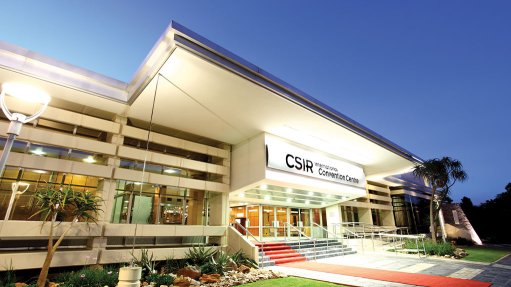
CSIR International Convention Centre (CSIR ICC) - the leading conference and events venue in Pretoria/Tshwane.
VISIT SHOWROOM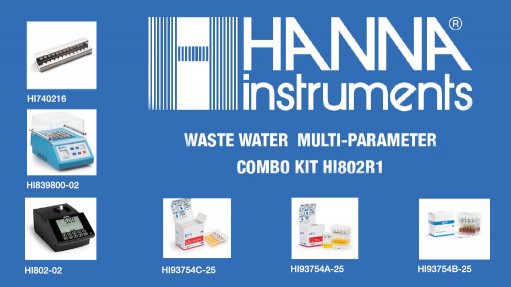
We supply customers with practical affordable solutions for their testing needs. Our products include benchtop, portable, in-line process control...
VISIT SHOWROOM
Announcements
What's On
Subscribe to improve your user experience...
Option 1 (equivalent of R125 a month):
Receive a weekly copy of Creamer Media's Engineering News & Mining Weekly magazine
(print copy for those in South Africa and e-magazine for those outside of South Africa)
Receive daily email newsletters
Access to full search results
Access archive of magazine back copies
Access to Projects in Progress
Access to ONE Research Report of your choice in PDF format
Option 2 (equivalent of R375 a month):
All benefits from Option 1
PLUS
Access to Creamer Media's Research Channel Africa for ALL Research Reports, in PDF format, on various industrial and mining sectors
including Electricity; Water; Energy Transition; Hydrogen; Roads, Rail and Ports; Coal; Gold; Platinum; Battery Metals; etc.
Already a subscriber?
Forgotten your password?
Receive weekly copy of Creamer Media's Engineering News & Mining Weekly magazine (print copy for those in South Africa and e-magazine for those outside of South Africa)
➕
Recieve daily email newsletters
➕
Access to full search results
➕
Access archive of magazine back copies
➕
Access to Projects in Progress
➕
Access to ONE Research Report of your choice in PDF format
RESEARCH CHANNEL AFRICA
R4500 (equivalent of R375 a month)
SUBSCRIBEAll benefits from Option 1
➕
Access to Creamer Media's Research Channel Africa for ALL Research Reports on various industrial and mining sectors, in PDF format, including on:
Electricity
➕
Water
➕
Energy Transition
➕
Hydrogen
➕
Roads, Rail and Ports
➕
Coal
➕
Gold
➕
Platinum
➕
Battery Metals
➕
etc.
Receive all benefits from Option 1 or Option 2 delivered to numerous people at your company
➕
Multiple User names and Passwords for simultaneous log-ins
➕
Intranet integration access to all in your organisation

