


Wesizwe has not ruled out purchase of Amplats, Lonmin, Implats mines

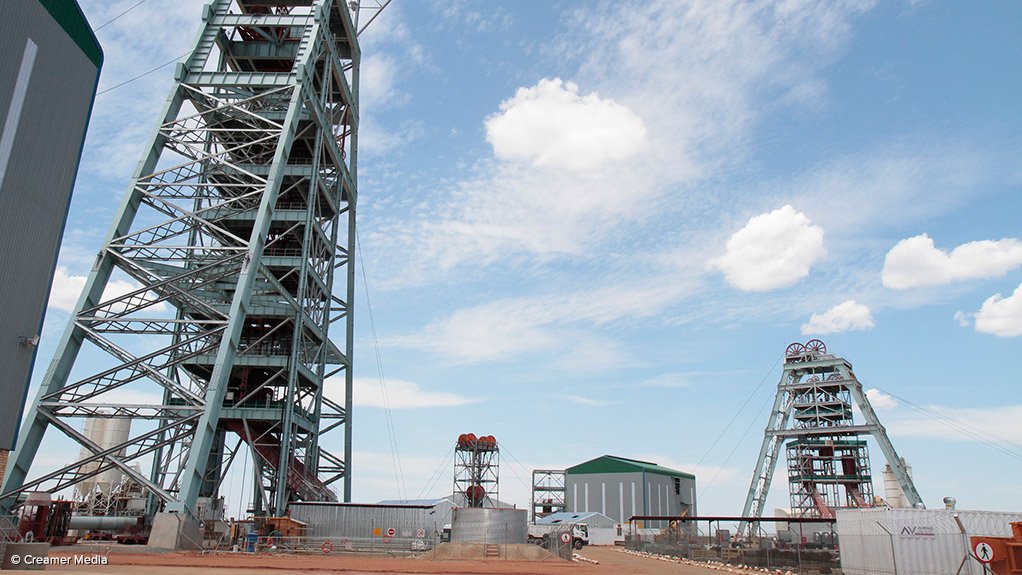


JOHANNESBURG (miningweekly.com) – As platinum majors Lonmin, Impala Platinum (Implats) and Anglo American Platinum (Amplats) continue to haemorrhage funds amid a seemingly irreconcilable battle with labour, a junior platinum player is keeping its ear to the ground, hoping to potentially snap up platinum assets that may be shed by the beleaguered trio.
Wesizwe projects executive Jacob Mothomogolo told Mining Weekly Online on Friday that the Chinese-backed company was always “looking around” for acquisition opportunities, adding that these may include platinum assets in the vicinity of its flagship Bakubung project, near Rustenburg, in the North West.
“We’re open to looking around the market, but we haven’t formally started with the process of acquiring any assets yet,” he said.
“In terms of funding, we won’t [necessarily] return to our existing China-based backers [of the Bakubung development], because the acquisition will be a separate purchase. We will probably look at separate sources of funding, such as investment banks.”
This supported statements made last week by Wesizwe COO Paul Smith, who Reuters last week quoted as saying that the company was “acutely aware” of what was going on around it in terms of restructuring and possible divestments.
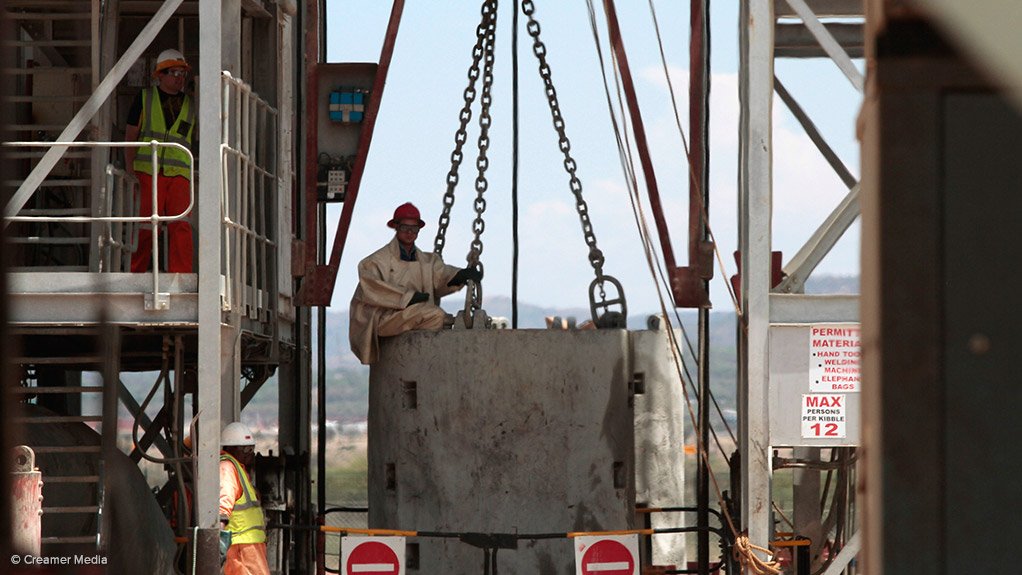
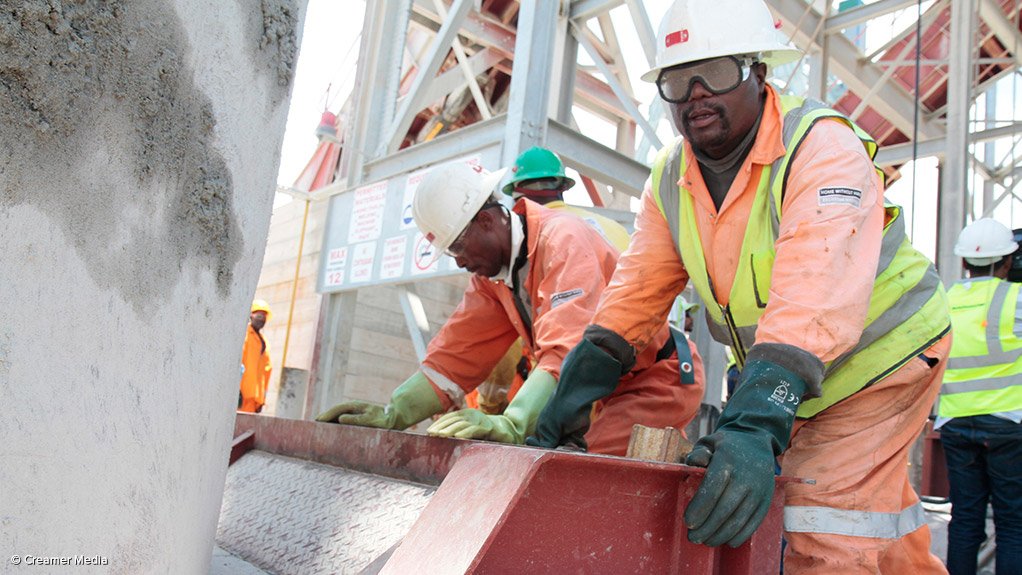
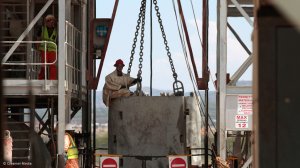
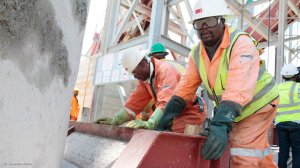
Mothomogolo’s comments came during a Friday site visit to Wesizwe’s envisaged 420 000-tonne-a-year Bakubung platinum mine, to mark the cutting of the first level of the ventilation shaft, some 690 m below the shaft level and 45 m above the first intersection of the platinum-rich Merensky reef.
Horizontal development would start on this level to connect it to the same level of the analogous main shaft.
The drilling of the rock engineering-modelled support had also been initiated with a view to bolster any intersected geological fault in the area in which the station would be cut.
Mothomogolo added that the latest milestone was one of a number of targets achieved thus far this year, with continual progress made in sinking the main and ventilation shafts, precommissioning the ventilation shaft winder and overall project sinking.
“At the end of April, the main shaft had reached a depth of 520 m and the project had sunk over 1 200 m in total,” he noted.
DEVELOPMENT UPDATE
Wesizwe had made good progress on the development of its main shaft, now forecasting the completion date for the 970 m shaft – October 15, 2015 – to be 85 days ahead of the initially expected completion date in January the following year.
Similarly, the ventilation shaft was expected to reach its final depth of 880 m in November 2016 – some 72 days ahead of schedule.
“The focus of project development work at Bakubung until the end of the year will now be on improving shaft sinking rates, creating station breakaways,
developing stations and levels, and advancing further optimisation work around ventilation and compressors,” Mothomogolo explained.
Earlier this year the prospective miner commissioned an optimisation study at Bakubung to investigate ways of bolstering the project’s business case by incorporating recent changes in the platinum business environment.
Factors that were considered in the study to develop an “improvement plan” included lower metal process, increasing cost pressures – particularly increases in electricity and labour – the social climate, the need for improved working conditions, the investment climate and the need to reduce overall business risk.
The plan had now been approved for implementation and had seen cost savings of some R2.2-billion.
ABOUT BAKUBUNG
Once completed in the latter half of 2018, Bakubung would be an underground mine accessed by twin independent vertical shafts and a shorter third shaft during its 30-year life.
The primary shaft would be used to transport men and materials, the second shaft would be used for ventilation and the third shaft would be used for support functions, added ventilation and as an escape route.
The main shaft would have a hoisting capacity of 250 000 t/m of ore and 15 000 t/m of waste material.
An initial 230 000 t/m would be mined from the Merensky reef, with the balance sourced from the secondary upper group two (UG2) reef.
Once the Merensky reef was depleted, between 10 and 15 years from the start of full production in 2021, the full 25 000 t capacity would comprise UG2 ore only.
Full project funding had been secured from the China Development Bank, which had provided a 15-year, $650-million facility as well as through a $227-million capital injection from investment group China Africa Jinchuan in 2011.
Wesizwe also held a 22.5% interest in two neighbouring projects majority-owned by Maseve Investments 11 and subsidiary African Wide Mineral Prospecting & Exploration. Maseve is operated by Toronto-listed Platinum Group Metals.
Article Enquiry
Email Article
Save Article
Feedback
To advertise email advertising@creamermedia.co.za or click here
Research Reports

Projects

Latest Multimedia
Latest News

Showroom
Established in 1983, the ASTPM is an industry association and representative body of the welded carbon steel tube and pipe manufacturers of South...
VISIT SHOWROOM
CSIR International Convention Centre (CSIR ICC) - the leading conference and events venue in Pretoria/Tshwane.
VISIT SHOWROOM

Announcements
What's On
Subscribe to improve your user experience...
Option 1 (equivalent of R125 a month):
Receive a weekly copy of Creamer Media's Engineering News & Mining Weekly magazine
(print copy for those in South Africa and e-magazine for those outside of South Africa)
Receive daily email newsletters
Access to full search results
Access archive of magazine back copies
Access to Projects in Progress
Access to ONE Research Report of your choice in PDF format
Option 2 (equivalent of R375 a month):
All benefits from Option 1
PLUS
Access to Creamer Media's Research Channel Africa for ALL Research Reports, in PDF format, on various industrial and mining sectors
including Electricity; Water; Energy Transition; Hydrogen; Roads, Rail and Ports; Coal; Gold; Platinum; Battery Metals; etc.
Already a subscriber?
Forgotten your password?
Receive weekly copy of Creamer Media's Engineering News & Mining Weekly magazine (print copy for those in South Africa and e-magazine for those outside of South Africa)
➕
Recieve daily email newsletters
➕
Access to full search results
➕
Access archive of magazine back copies
➕
Access to Projects in Progress
➕
Access to ONE Research Report of your choice in PDF format
RESEARCH CHANNEL AFRICA
R4500 (equivalent of R375 a month)
SUBSCRIBEAll benefits from Option 1
➕
Access to Creamer Media's Research Channel Africa for ALL Research Reports on various industrial and mining sectors, in PDF format, including on:
Electricity
➕
Water
➕
Energy Transition
➕
Hydrogen
➕
Roads, Rail and Ports
➕
Coal
➕
Gold
➕
Platinum
➕
Battery Metals
➕
etc.
Receive all benefits from Option 1 or Option 2 delivered to numerous people at your company
➕
Multiple User names and Passwords for simultaneous log-ins
➕
Intranet integration access to all in your organisation

